Stop Buying Black Chanel: The ‘Investment’ Lie We Need to Unlearn
The fashion industry has been gaslighting you for decades. We’ve all heard the lecture from vintage dealers, financial advisors, and that one "chic" aunt: if you’re going to drop five figures on a handbag, it has to be black. They tell you it’s the only safe bet, the only piece that holds its value, the "smart" way to shop. But at Into Archive, we’re calling time on the boring, black-quilted status quo. The truth is that the "safe" investment has become a commodity, and in a world where everyone owns the same black flap, the real value—both cultural and financial—has shifted toward the experimental.
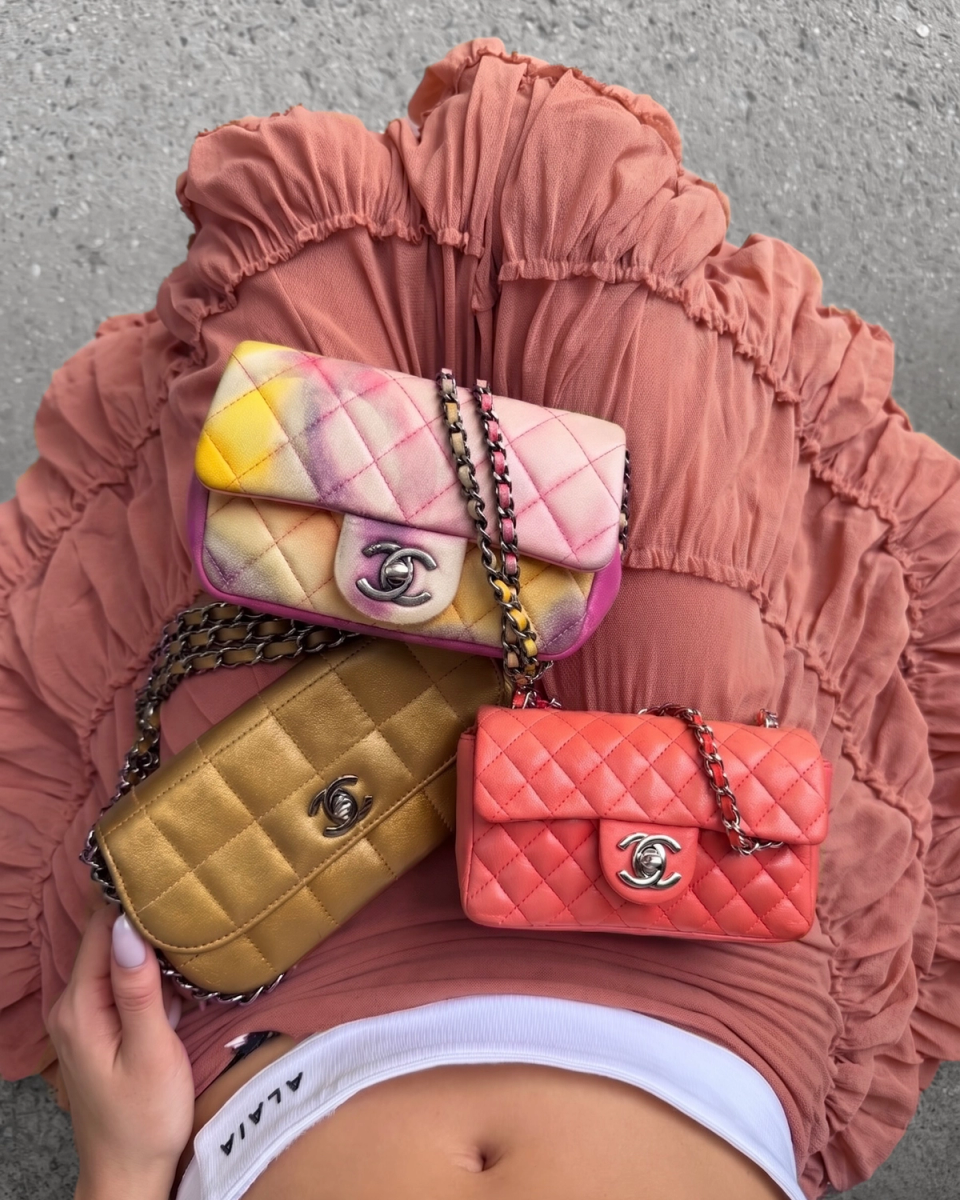
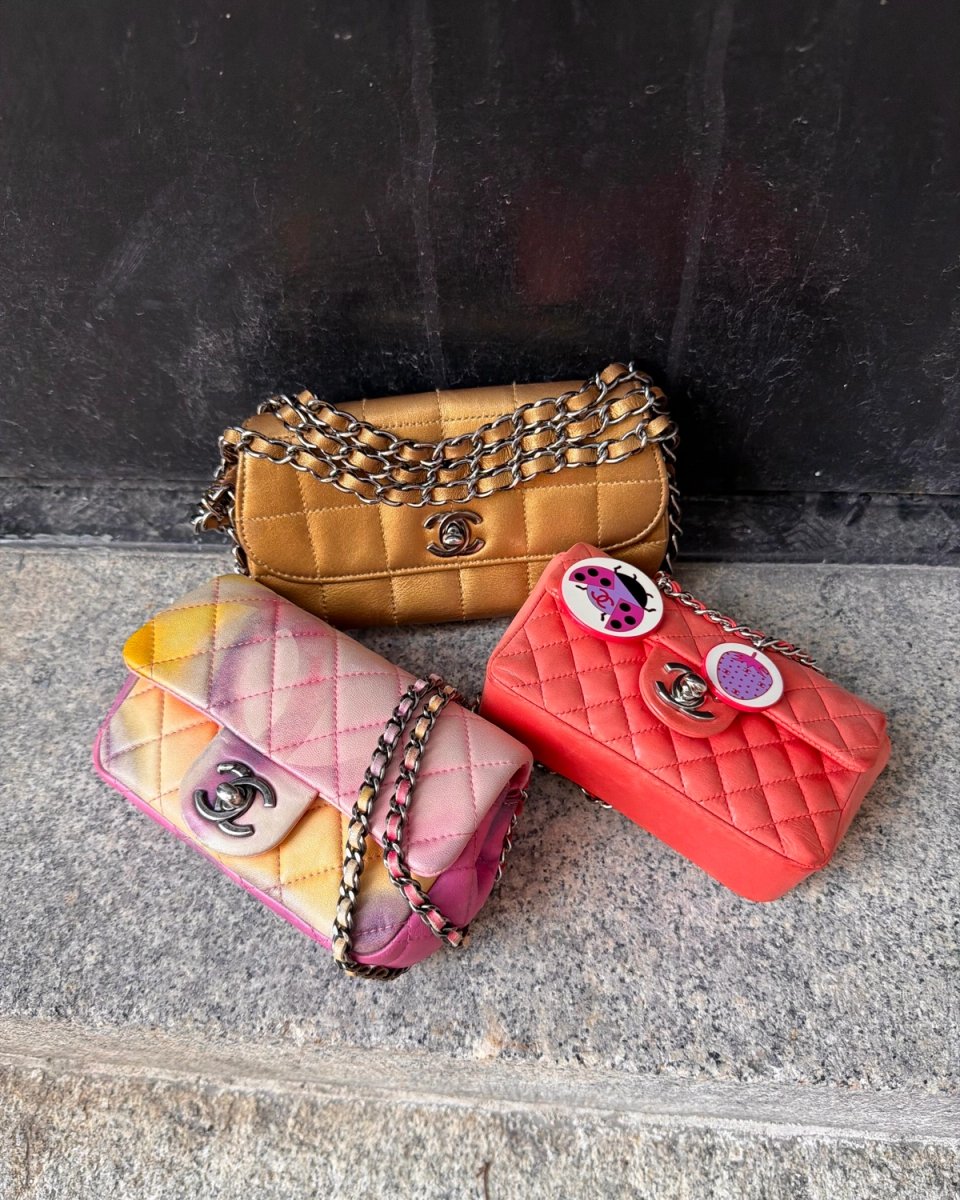
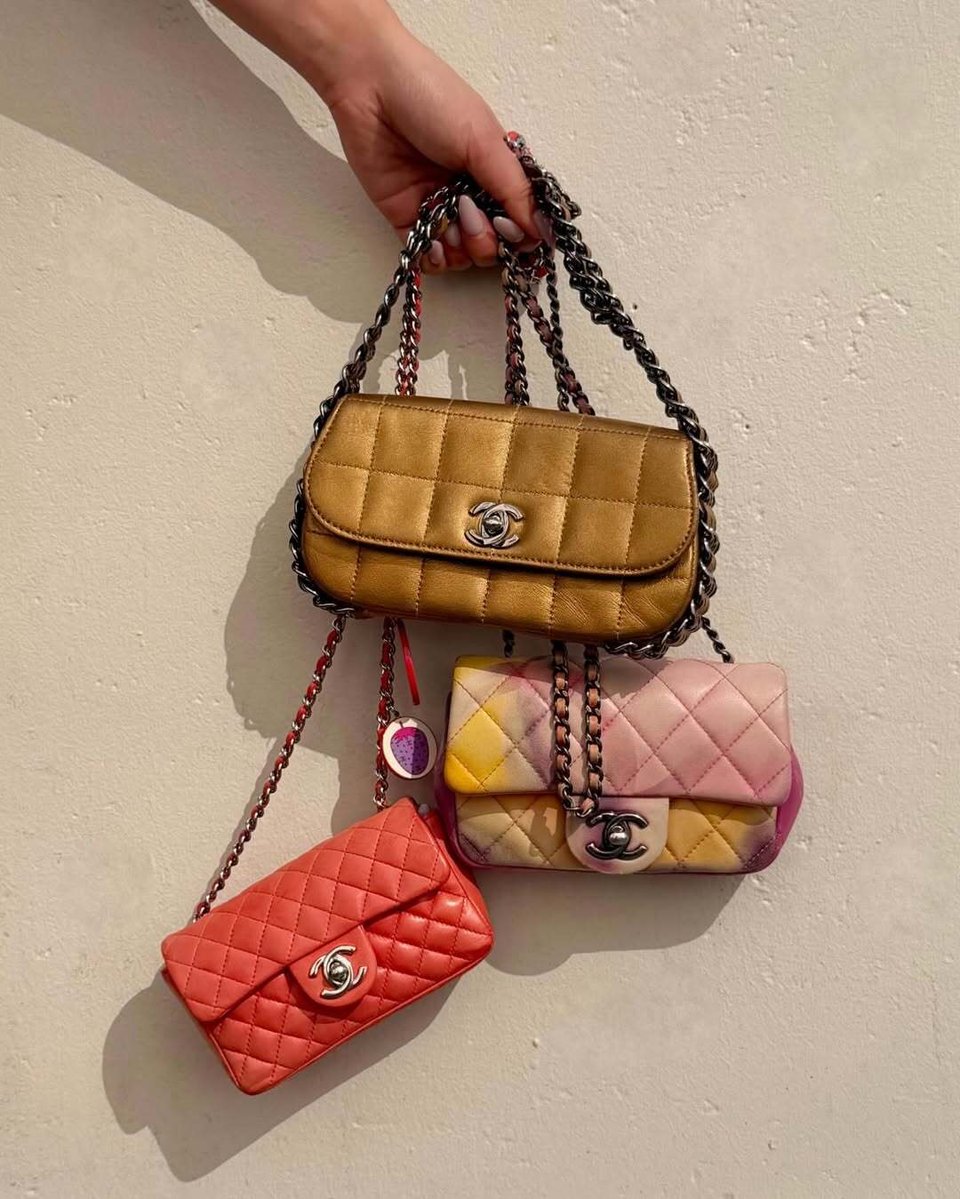
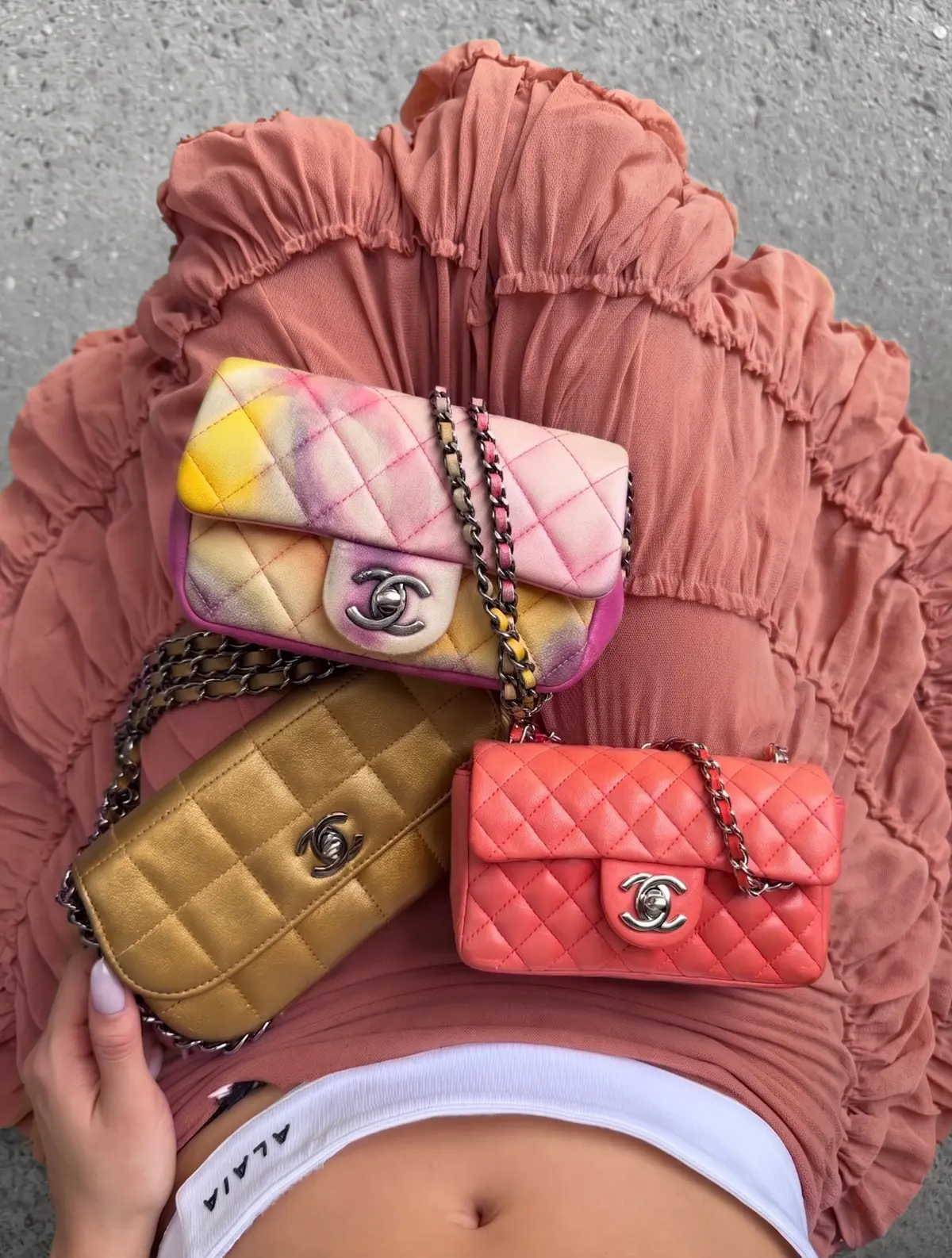
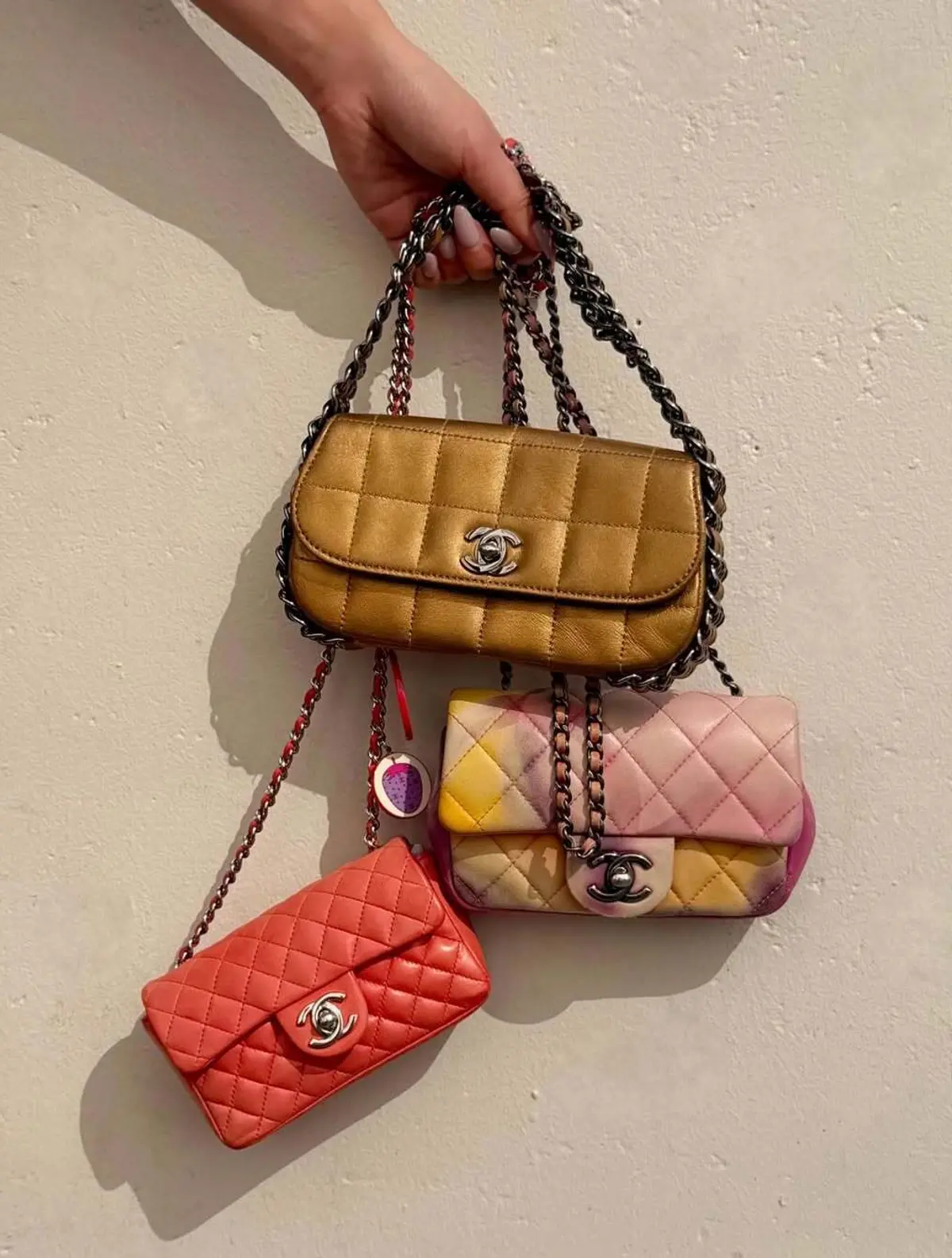
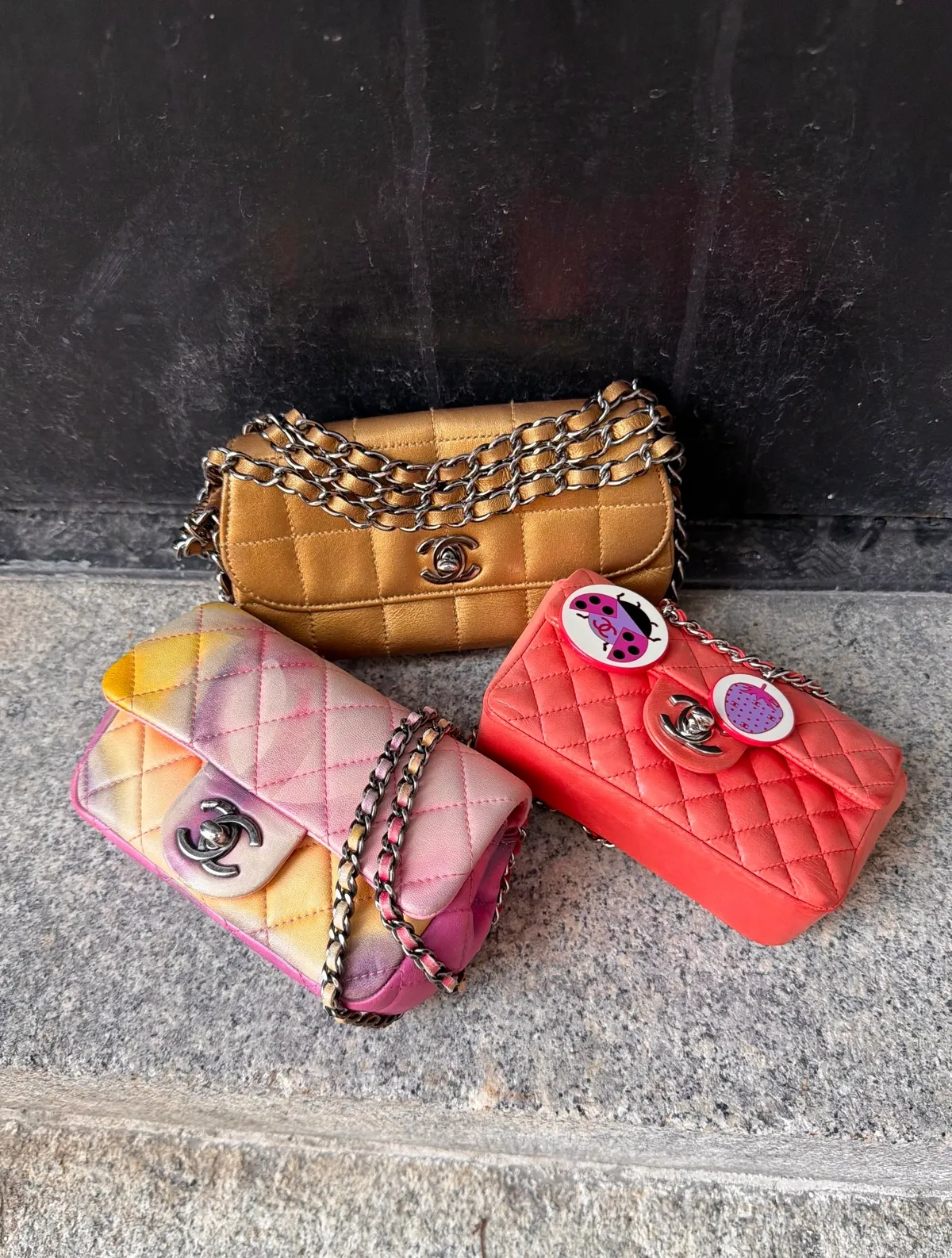
We are officially entering the era of the "Sugar Crash," where we prioritize the high-voltage, candy-coated grails that traditionalists were too afraid to buy. When you look at a trio like this—a watercolor gradient that looks like a melted sorbet, a metallic bronze that mimics a high-end chocolate wrapper, and a coral pop that hits like a shot of citrus—you aren't just looking at accessories. You are looking at the specific, lightning-in-a-bottle moments of Karl Lagerfeld and Virginie Viard’s creative tenures. These are the pieces that were produced in limited batches, the ones that weren't restocked every six months, and the ones that collectors are now hunting with a ferocity that a standard black lambskin will never command.
The Myth of the "Safe" Black Flap
The obsession with black leather as an investment is rooted in a scarcity mindset that no longer exists. Decades ago, owning a Chanel flap was a rare marker of status. Today, the "Classic Flap" in black caviar is the entry-level uniform of the global elite. It is the "safe" choice, which in the world of high-fashion curation, is often synonymous with "common." When a product is mass-produced to meet the demand of every luxury mall on the planet, its soul begins to dilute.
True archival value is found in the outliers. It is found in the pieces that were polarizing at launch—the ones that the "investment shoppers" skipped because they were too loud, too seasonal, or too difficult to match. Those are the pieces that, ten years later, become the "Impossible Finds." If you’re still buying black Chanel because you’re worried about resale value, you’re playing a game that’s already been won by the masses. The real market growth is in the "flavor"—the corals, the gradients, and the textures that defined a specific mood in fashion history.
Tasting the Sorbet: The Watercolor Grail
The watercolor gradient flap is the perfect example of why the "rules" of investing are broken. When it first hit the runway, critics dismissed it as too whimsical or "too young." They claimed it lacked the gravitas of a legacy piece. Fast forward to today, and its rarity has turned it into a holy grail. Because the dye placement is unique to every single bag, owning one is like owning a piece of a sunset that no one else can claim.
This isn't just leather; it’s a canvas. The way the lilac bleeds into lemon and soft pink creates a visual sugar rush that black leather simply cannot replicate. It’s an archival flex precisely because it’s unapologetically expressive. It doesn't try to blend in with a corporate blazer or a safe evening gown; it demands that the rest of your outfit catches up to its energy. In the secondary market, these "printed" leather pieces are increasingly outperforming the classics because they represent a specific era of Chanel's playfulness that we may never see again.
Foil Wrappers and Chocolate Bars
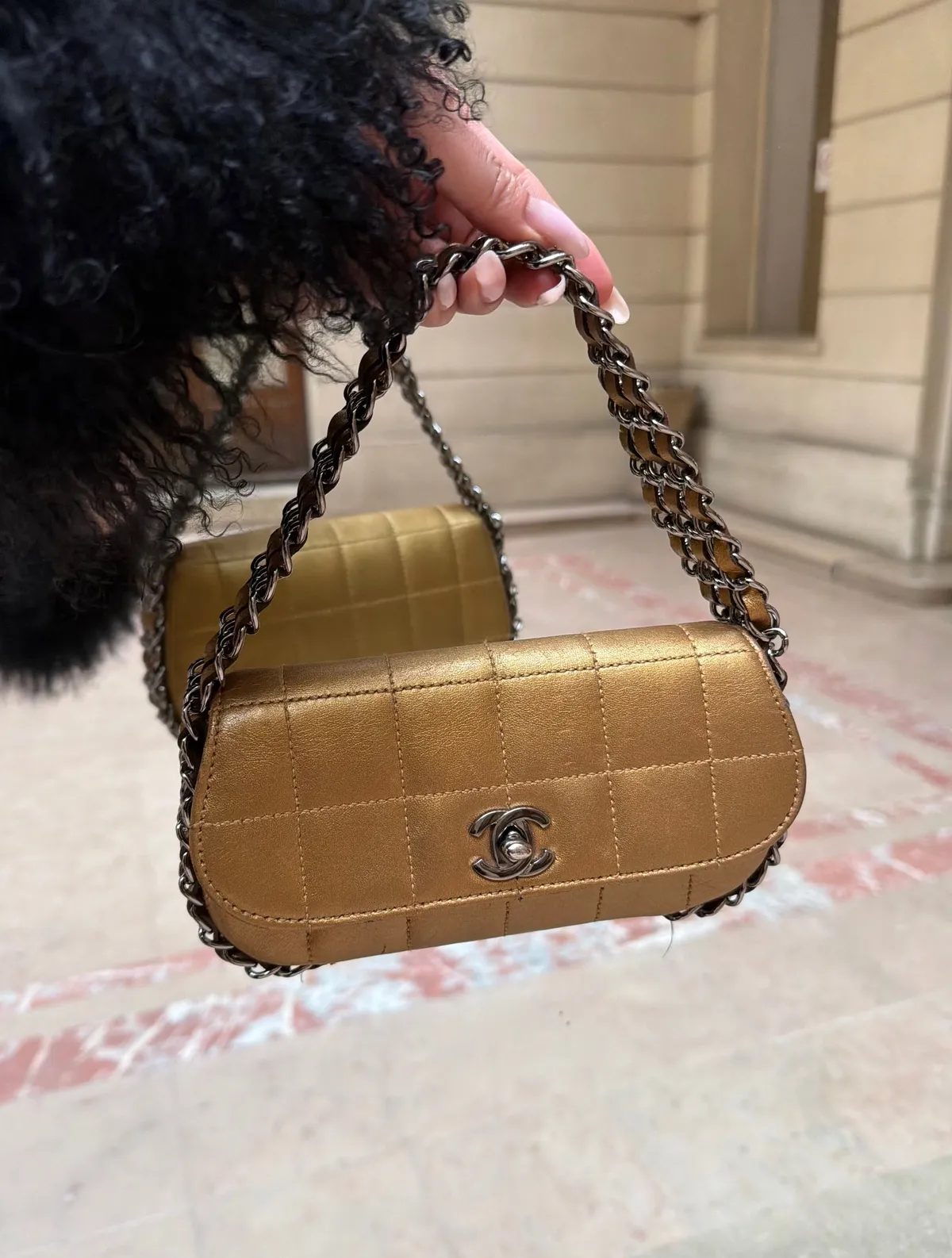
Then there is the metallic "Chocolate Bar" flap, a piece that feels like a literal foil-wrapped treat from the early 2000s. For years, people shied away from metallics, fearing they were "dated" or too difficult to style. But as we see in our recent styling with a ruffled Alaïa skirt and a sporty logo waistband, the contrast is exactly what makes it work. The rectangular grid quilting—a departure from the traditional diamond stitch—gives it a structural, almost architectural edge.
True style isn't about being "appropriate" or "safe." It’s about the friction between the athletic and the ornate. Pairing a high-performance Alaïa waistband with a pile of sugary, metallic Chanel bags creates a visual dissonance that screams modern luxury. The metallic bronze acts as a "new neutral." It has the depth of a dark earth tone but the reflective finish of a precious metal. It is the "salted caramel" of the handbag world—sophisticated, unexpected, and infinitely more interesting than a standard matte finish.
The Case for Confectionary Collecting
If you want to build a wardrobe that actually says something, you have to be willing to indulge your sweet tooth. Collecting should be an emotional response, not a spreadsheet calculation. When you carry a bag that looks like dessert—whether it’s the vibrant "Coral Crunch" mini or the iridescent sheen of a seasonal runway piece—you are signaling that you dress for your own pleasure rather than the approval of the resale market.
The irony is that this emotional approach to collecting often yields the highest returns. As the market becomes oversaturated with "vanilla" classics, the demand for "confectionary" pieces—the weird, the bright, and the bold—skyrockets. Collectors are tired of seeing the same five bags on their feed. They want the pieces that evoke a memory, the ones that make people stop you on the street to ask, "What season is that from?" That curiosity is the real currency of the archive world.
Is the classic black flap dead? Of course not. It will always have a place in the history books. But it’s certainly no longer the most interesting thing in the room. It’s time to stop shopping like a banker and start collecting like a curator. Take the risk on the watercolor print. Buy the metallic gold that looks like a candy wrapper. Because in ten years, no one is going to be talking about the black bag everyone else had. They’ll be talking about the one that looked like a dream.
Are you playing it safe with your "investments," or are you ready for a sugar high?
You can view all pieces at our NYC showroom. Book an appointment HERE.