Chanel Serial Numbers: How to Read 7- and 8-Digit Codes
A Guide to Chanel Serial Numbers: How to Date and Verify Your Vintage Bag
If you’re dating or authenticating a vintage Chanel bag, understanding serial numbers is key. From the late 1980s to 2021, Chanel placed serial stickers inside handbags and small leather goods (SLGs). Each sticker holds a unique 7- or 8-digit code that corresponds to a specific production period. While the code alone doesn’t confirm authenticity, it’s an invaluable clue—especially when read alongside other details like materials, hardware, and brand stamps.
The Origins: 7-Digit Serial Numbers (1986–2005)
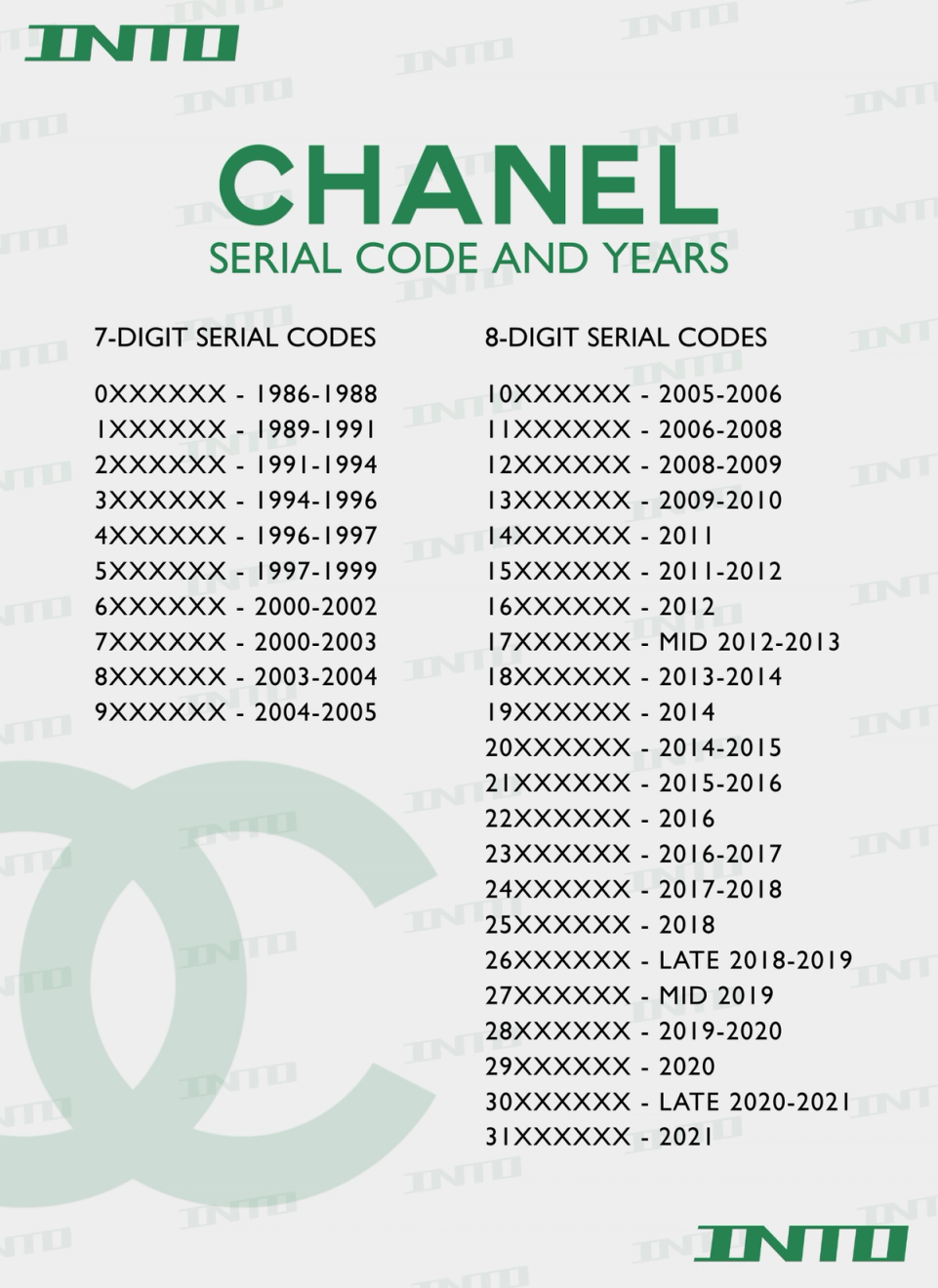
Chanel introduced serial numbers in the mid-1980s, beginning with 7-digit codes that ran from series 0 through 9. These help pinpoint production windows:
- 0XXXXXX → 1986–1988
- 1XXXXXX → 1989–1991
- 2XXXXXX → 1991–1994
- 3XXXXXX → 1994–1996
- 4XXXXXX → 1996–1997
- 5XXXXXX → 1997–1999
- 6XXXXXX → 2000–2002
- 7XXXXXX → 2000–2003
- 8XXXXXX → 2003–2004
- 9XXXXXX → 2004–2005
The “X” simply masks the remaining digits. So if your bag begins with a 5, it dates to the late 1990s—a period known for rich lambskin, 24k hardware, and rounded quilting.
The Transition: 8-Digit Serial Numbers (2005–2021)
From 2005 onward, Chanel expanded to 8-digit serials starting with “10.” Each new series roughly aligns with a year:
- 10–11 → 2005–2008
- 12–14 → 2008–2011
- 15–19 → 2011–2014
- 20–24 → 2014–2018
- 25–29 → 2018–2020
- 30–31 → 2020–2021
Dating becomes much simpler—just check the first two digits. Our chart above offers a quick visual guide when matching your code to its year range.
Where to Find the Serial Sticker
The sticker is usually hidden deep within the bag—along a base corner, inside a pocket, or under a flap.
- On Classic Flaps, look in the lower corners of the interior.
- On wallets and SLGs, check inside main compartments.
Older stickers are rectangular with rounded corners and may feature holograms, glitter flecks, or layered threads depending on the year. Normal aging includes faded ink, slight peeling, or soft edges—especially on 1990s lambskin. What’s not normal? Brand-new stickers, misaligned fonts, or styles that don’t match their supposed era.
Serial Stickers vs. Authenticity Cards
Until 2021, Chanel also included an authenticity card with the same serial code. While matching cards are nice to have, they aren’t proof on their own—cards are easier to fake than bags.
Instead, cross-reference your serial with design cues from its period.
- 1–2 series: 24k gold-plated hardware and correct interior stamps.
- Mid-2010s: Verify caviar texture, tone, and stitching density.
- 26–29 series: Check zipper branding, leather hue, and logo embossing for consistency.
Common Mistakes to Avoid
- Serial ≠ Style Code. The serial dates the bag; the style code describes its model, color, and material.
- Be cautious with replaced stickers. Fresh glue marks, floating stickers, or shifted shadows are red flags.
- Mismatch warning: A 5-series sticker on a bag with modern features should raise suspicion.
The Modern Era: From Stickers to Microchips
Starting in 2021, Chanel phased out stickers and cards in favor of embedded microchips—tiny NFC-enabled plates linked to internal records. If your bag has a 31 series sticker, it sits right at the edge of this transition. Pieces made after that point have no visible code; authenticity is verified digitally and through craftsmanship details.
Why Serial Numbers Matter
For collectors and buyers, knowing serial ranges offers practical advantages. You can:
- Date a bag accurately
- Confirm that its materials and hardware fit the correct era
- Understand why certain series are more desirable
Many collectors seek out 5-series lambskin for its buttery softness, or 21–24 series caviar for its structure and durability. When selling, listing the serial series and year range builds trust—and improves visibility—especially with clear photos of the sticker and card.
At Into Archive
We use serial-code analysis as one layer in our multi-point authentication process, alongside stitching, quilting alignment, logo font, hardware engraving, and wear patterns.
If you’d like help dating your Chanel bag, send us clear photos of the sticker, logo stamp, zipper head, back plate, and exterior—we’ll gladly take a look.
The takeaway: For Chanel bags made between 1986 and 2021, serial numbers provide a reliable roadmap through time. Use the first digits to locate the production window, then verify that the bag’s construction matches that era. With practice—and a sharp eye—you’ll read a Chanel serial at a glance and know exactly where it sits in the house’s storied history.