Christian Lacroix Couture, Late 1990s: A Love Letter to Excess
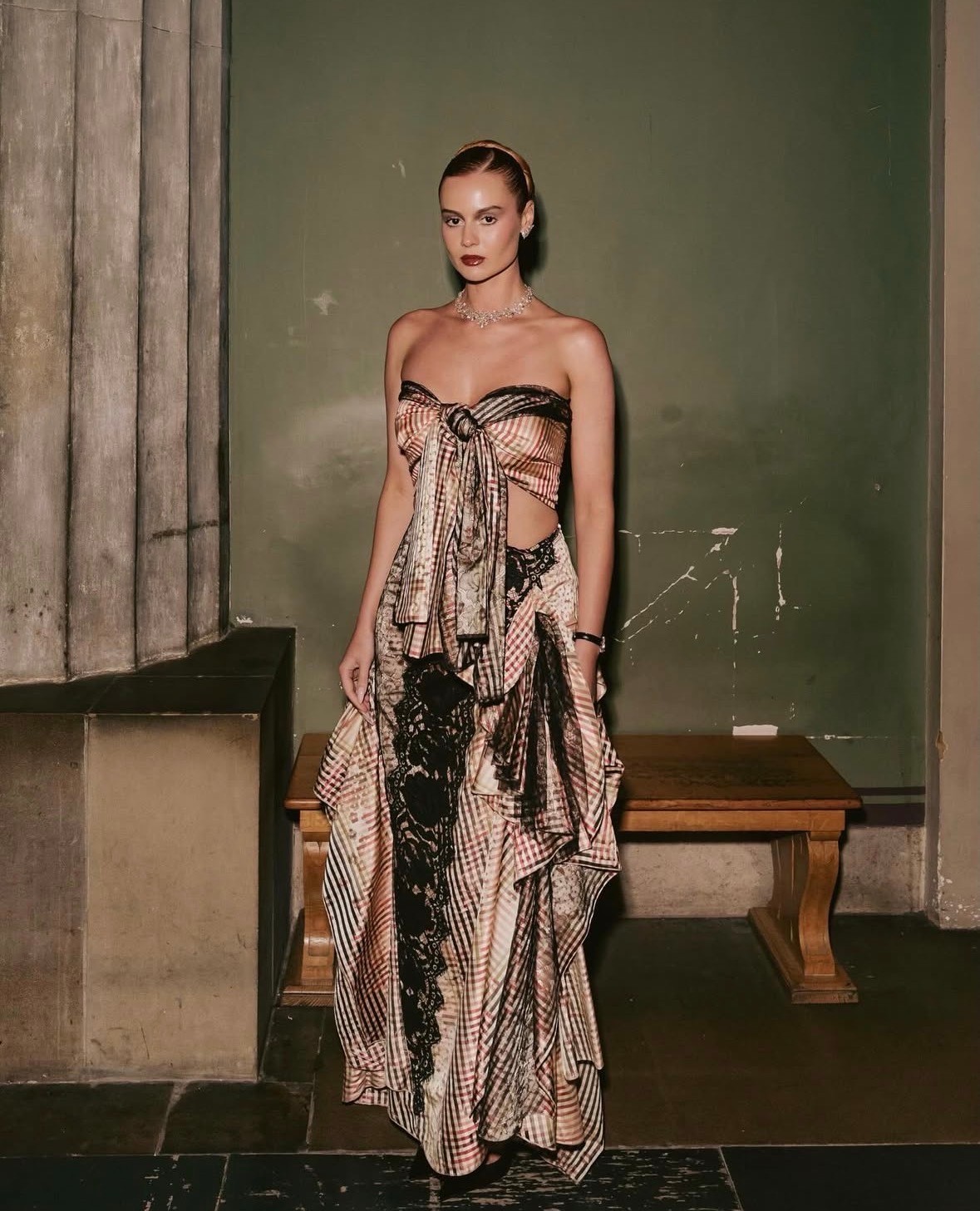
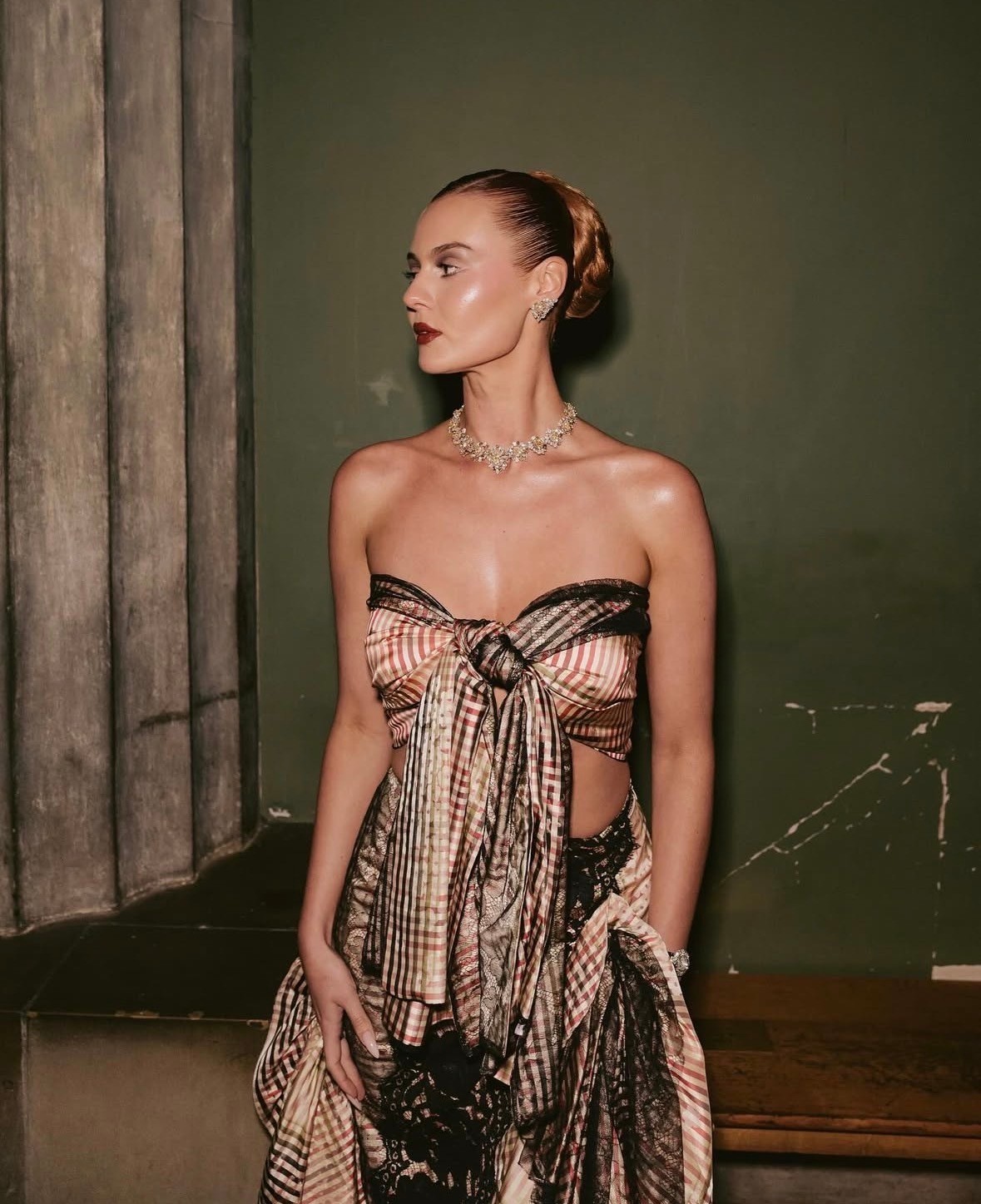
This Christian Lacroix couture gown captures everything that made the late 1990s such a thrilling chapter in fashion: fearless romance, high craft, and a sense that eveningwear could be both theatrical and witty. The bodice ties in a generous bow at the center, a Lacroix hallmark that turns structure into ornament. Cutouts at the waist break the formality and expose just enough skin to feel modern, while a column of black lace cascades down the front like ink spilled deliberately—strict in silhouette, extravagant in texture. The skirt is a study in movement: rippling ruffles, asymmetric drapery, and a patchwork of checks softened to antique tones so the drama reads as aristocratic rather than loud.
Lacroix’s couture language has always been about collisions—Arlésienne folklore with ballrooms, boudoir lace with day-dress gingham, religious pageantry with nightclub sheen. This gown threads those references with characteristic precision. Look closely and you see the couture hand everywhere: the way the bow sits without collapse, the controlled weight of the ruffles, the appliquéd lace stitched to follow the body rather than fight it. It’s exuberance, yes, but built on discipline—architecture disguised as romance.
Seen today, the dress feels startlingly right. Fashion’s current appetite for historical gestures—lace, ruching, corsetry, Old World ornament—finds one of its purest expressions here. The neckline frames a bare clavicle beautifully; the vertical lace panel elongates the figure; the layered hem trails with a cinematic sweep. Style it minimally—slick hair, a single jewel, and a clean evening sandal—and the complexity of the gown becomes the entire story. In photographs, it reads as heirloom; in motion, it’s alive.
For collectors, late-90s Lacroix couture remains a sweet spot: unmistakable house codes, uncompromising fabrication, and pieces that are instantly legible to those who know. Condition is paramount—inspect stress points at the bow, the lace appliqué, and the inner corsetry—and preserve the gown on a wide hanger with tissue to keep the drape intact. Properly cared for, it’s the kind of work that anchors a collection and commands any room it enters.
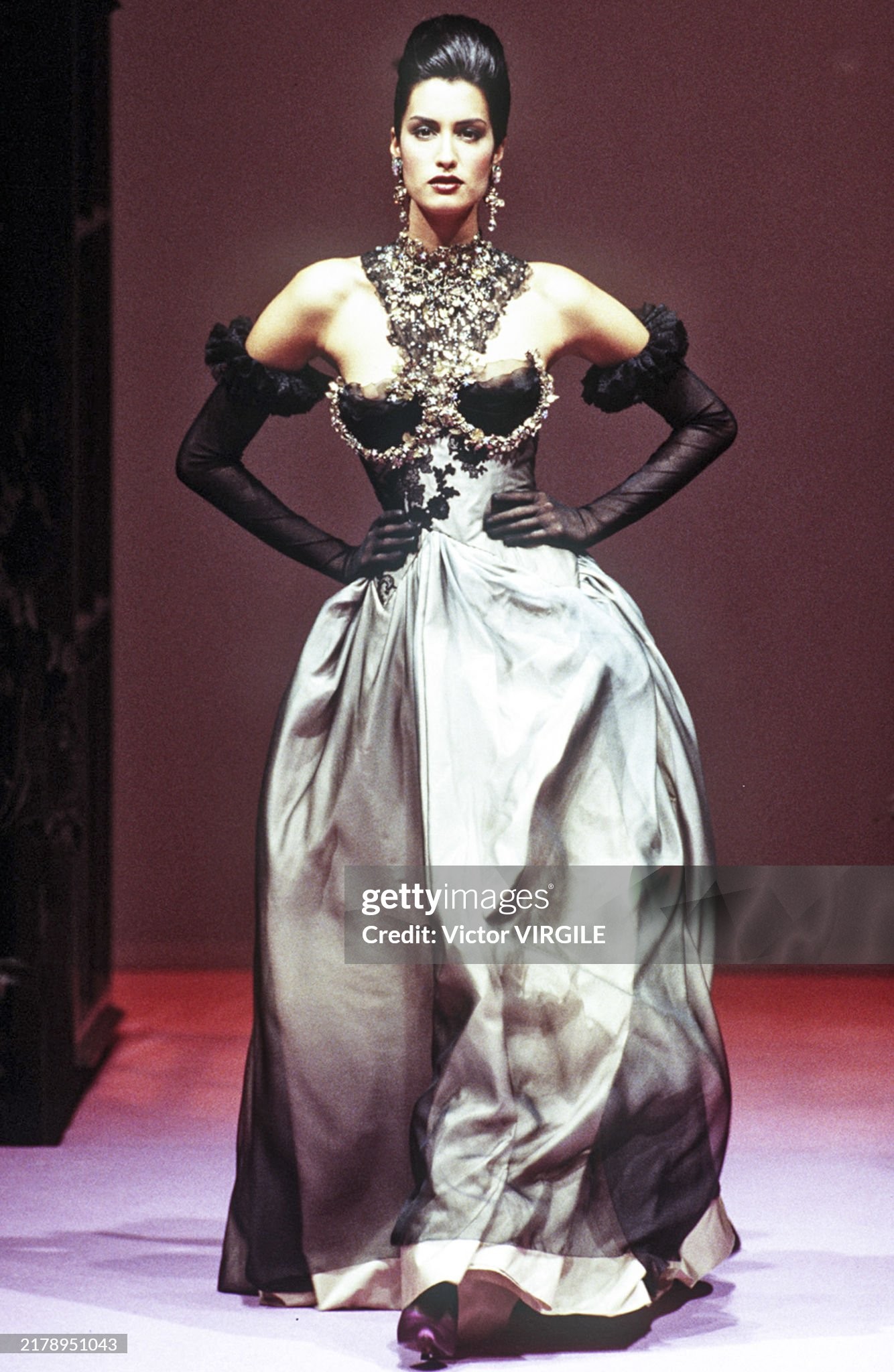
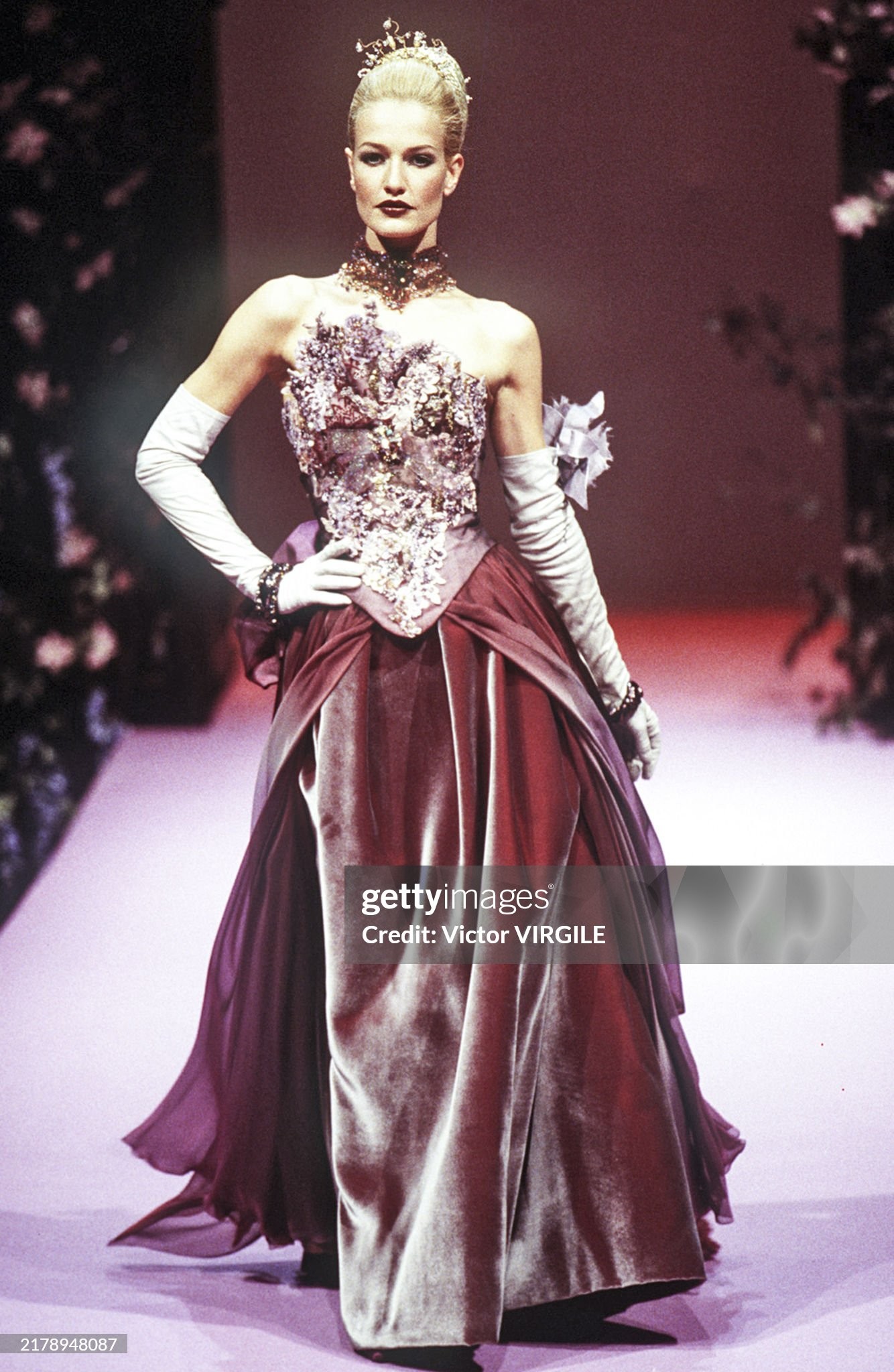
Christian Lacroix’s couture history is defined by baroque maximalism with scholarly roots. When Lacroix launched his couture house in 1987, he re-ignited Paris’s appetite for opulence at a time when minimalism and power dressing dominated. Trained as an art historian before entering fashion, Lacroix saw clothing as narrative — a stage for French heritage, costume, and fantasy. He borrowed from 18th-century panniers, Provençal folk costume, bullfighting jackets, ecclesiastical embroidery, and Belle Époque corsetry, translating them into garments that were unapologetically theatrical yet rigorously constructed.
By the late 1990s, the house was at its creative peak. This period balanced Lacroix’s exuberant spirit with a slightly refined silhouette — less circus, more aristocratic romance. The gowns from these collections often paired rich surface decoration (lace, brocade, and ribbon work) with unexpected everyday prints, like gingham or plaid, a deliberate act of “democratizing” luxury. The result was couture that felt human: extravagant, but with a knowing wink. He once described his work as “a marriage between the sacred and the profane,” which perfectly captures a gown like this — where lingerie-like lace and pastoral checks are elevated to haute couture.
Into Archive is proud to champion the opulent, joyous spirit of Christian Lacroix. To view couture pieces like this gown in person, book an appointment at our NYC showroom, 37 W 26th Street.