Why the Woke Era Can’t Kill the 2003 Dior Chinoiserie Saddle Bag
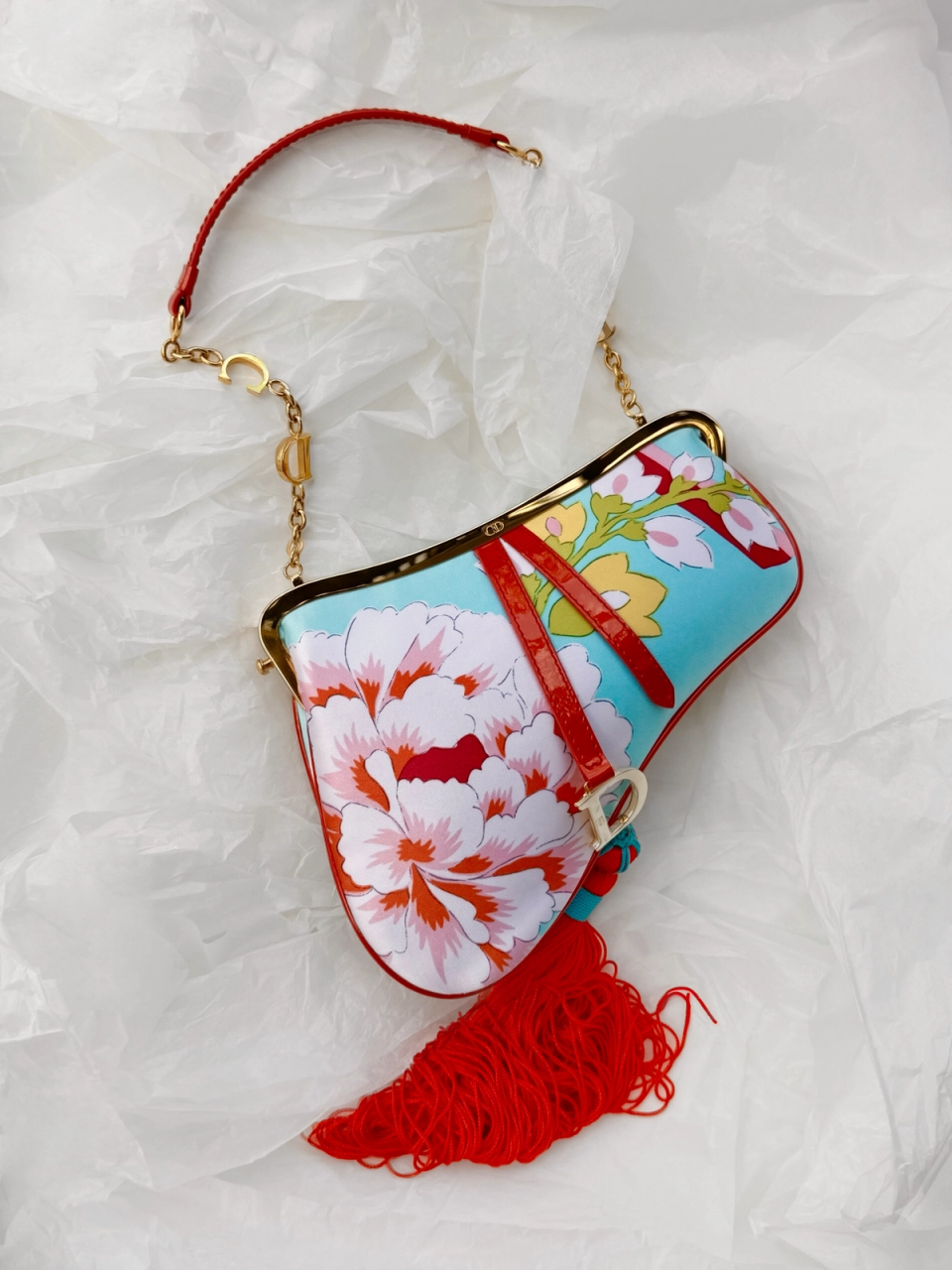

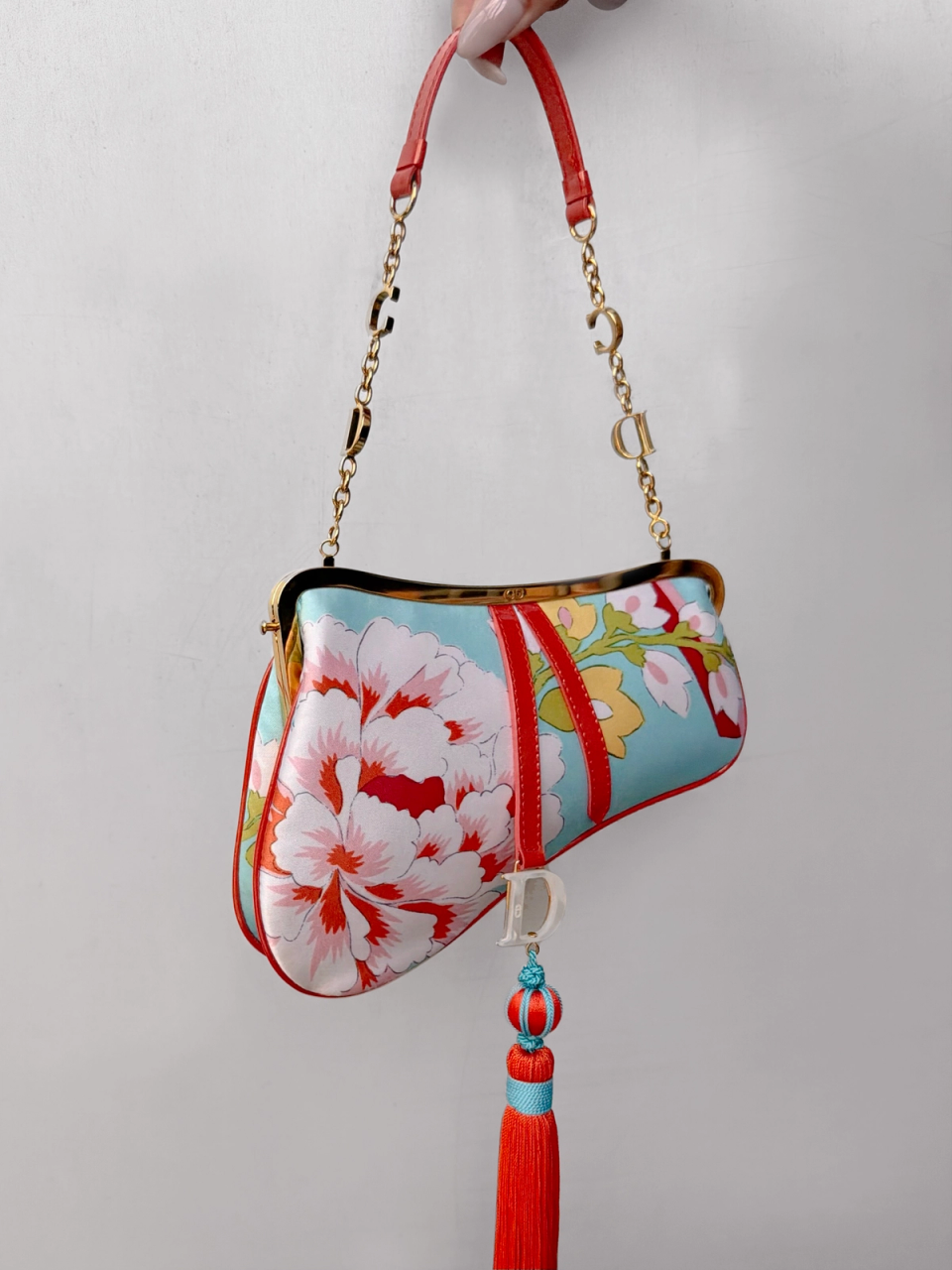
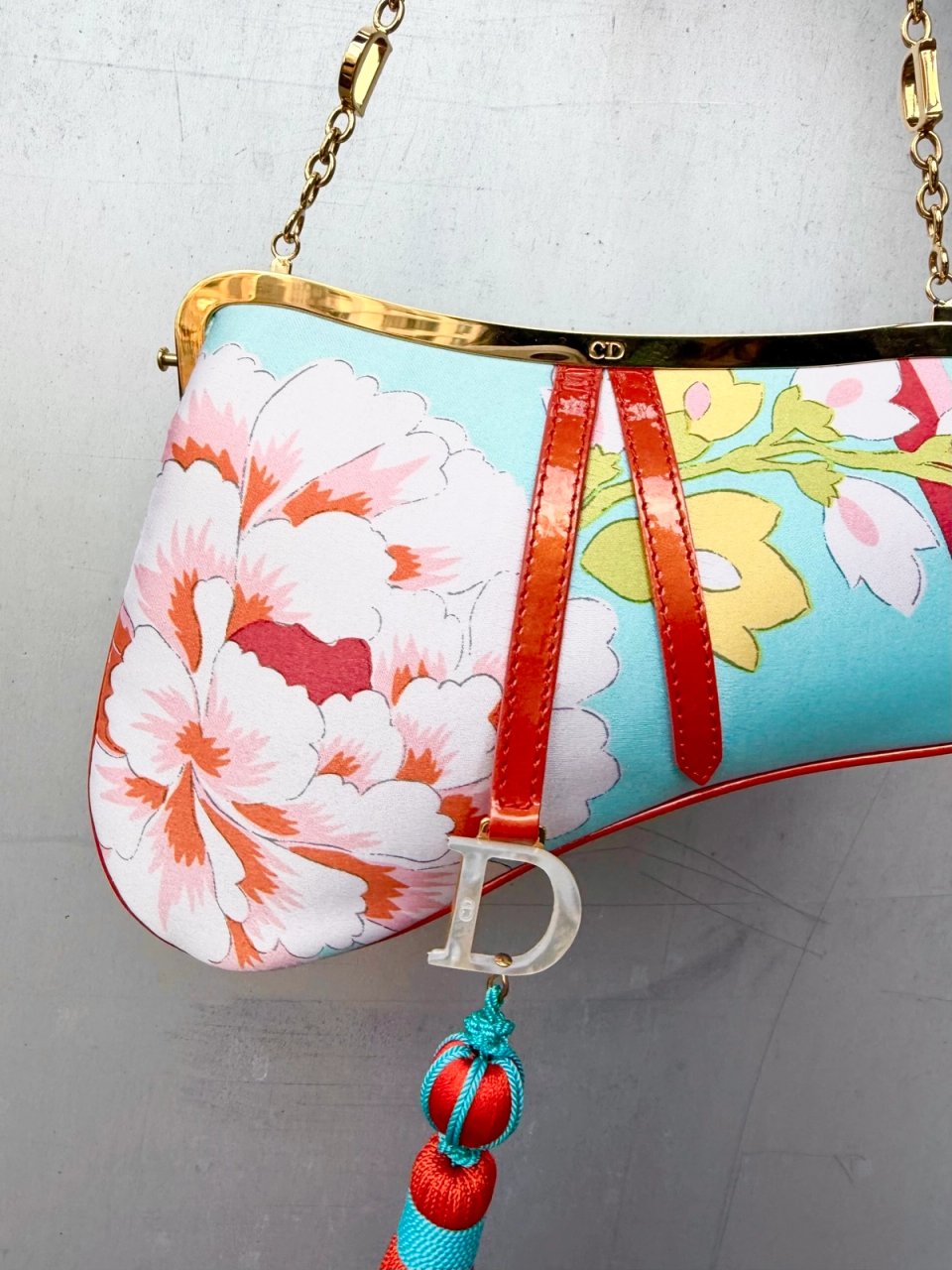
In the current landscape of "quiet luxury" and surgical-grade political correctness, the Christian Dior Fall/Winter 2003 Chinoiserie Saddle Bag should, by all accounts, be canceled. It is loud. It is unapologetic. It is a neon-blue, silk-wrapped cocktail of cultural appropriation and "trash-chic" fetishism.
Yet, as we look at the resale markets of 2026, the price tags are hitting five figures. The more the fashion world tries to sanitize itself, the more collectors crave the beautiful, dangerous energy of John Galliano’s peak Dior era. This bag doesn’t just sit in a closet; it demands a conversation that many in the industry are now too afraid to have.
The Most Beautiful Sin in Fashion History
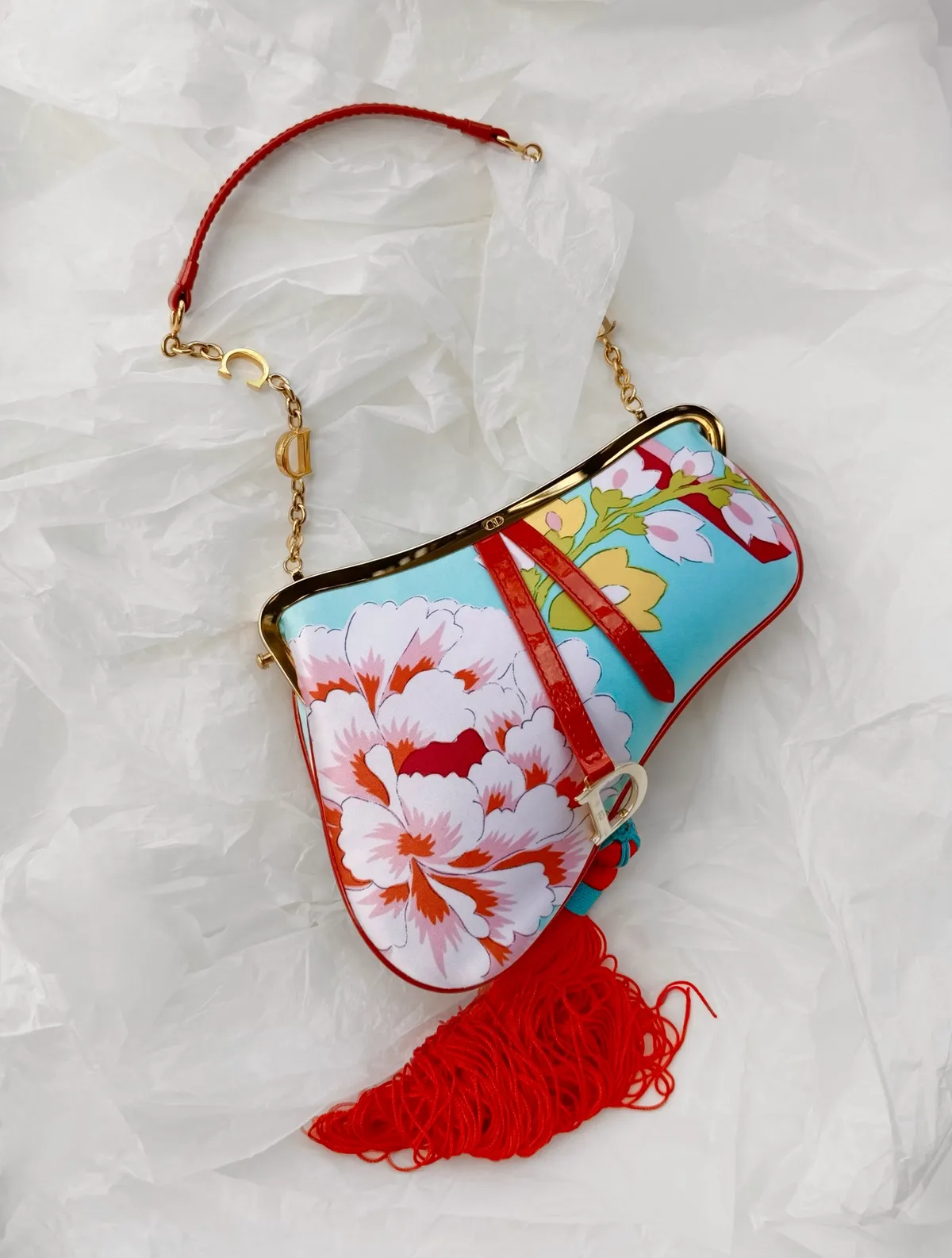
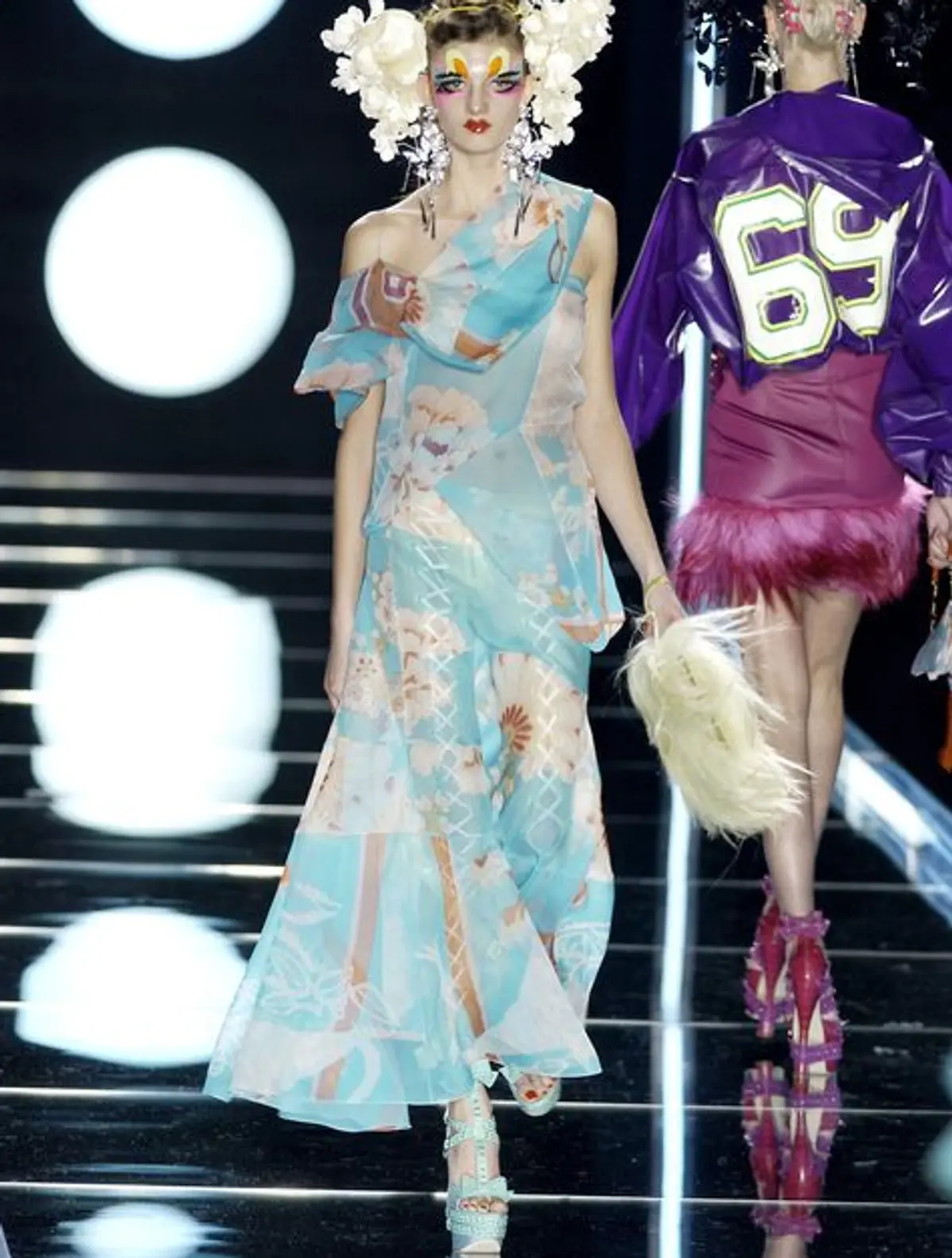
The bag in question—a silk masterpiece featuring oversized peonies, blood-red leather piping, and a literal hanging tassel—was the crown jewel of Galliano’s FW 2003 collection. This wasn't a collection meant for "everyday wear." It was a high-octane collision between Chinese historical motifs and the gritty, "Hardcore" streetwear aesthetic that Galliano pioneered. At a glance, it’s a masterpiece of craftsmanship, but through a modern lens, it’s a lightning rod. It asks the uncomfortable question of whether we can still love art that flagrantly ignores the rules of the road.
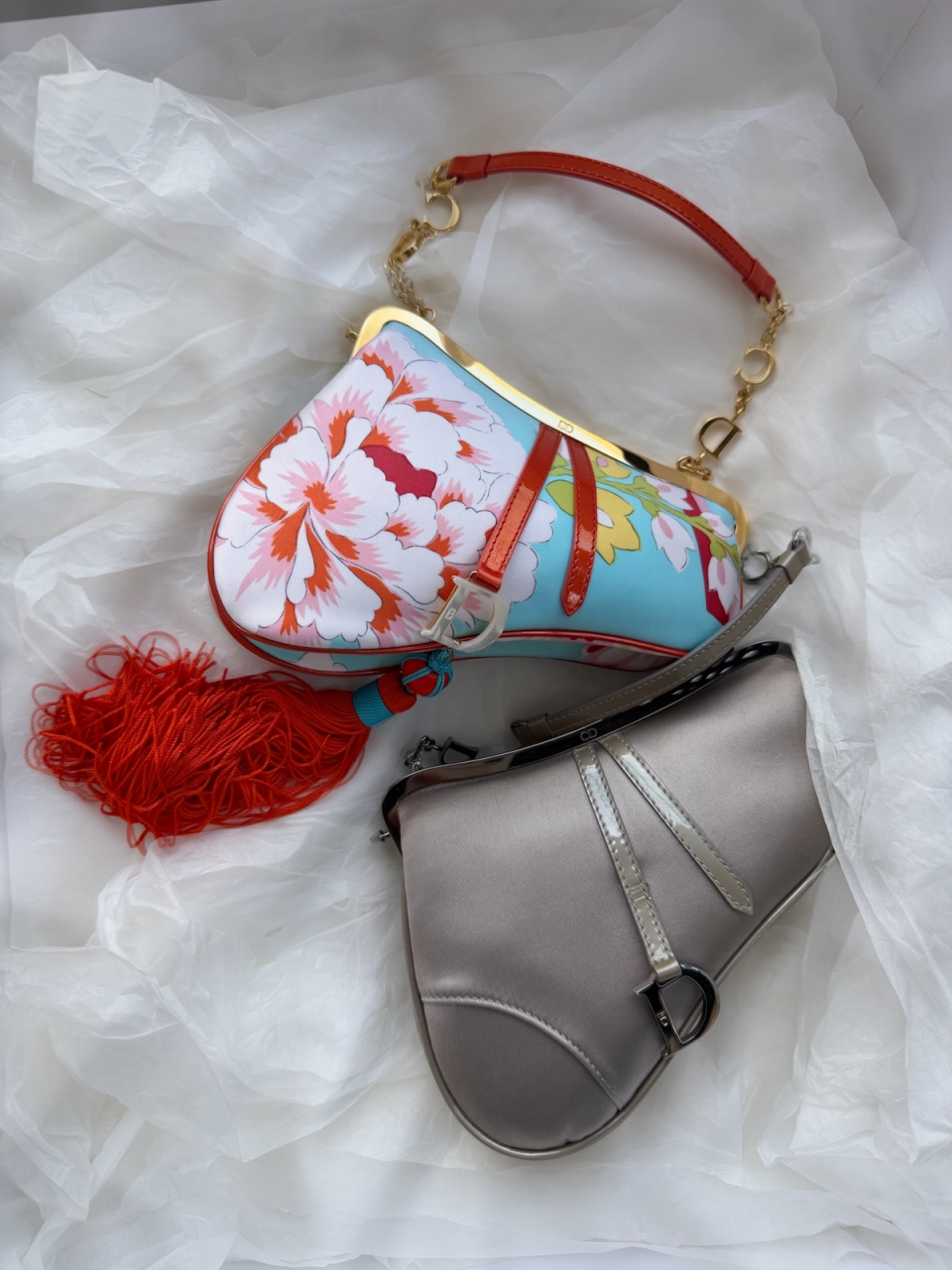
From the Fall-Winter 2003 Christian Dior collection, this limited edition saddle bag is designed with a silk exterior. It features a blue base with an oriental floral motif print throughout. The bag has a metal frame closure engraved with the CD logo, a Dior D metal logo accent at the front with an oriental motif tassel below, a looping CD chain link and strap with a leather shoulder pad and gold-tone metal hardware.
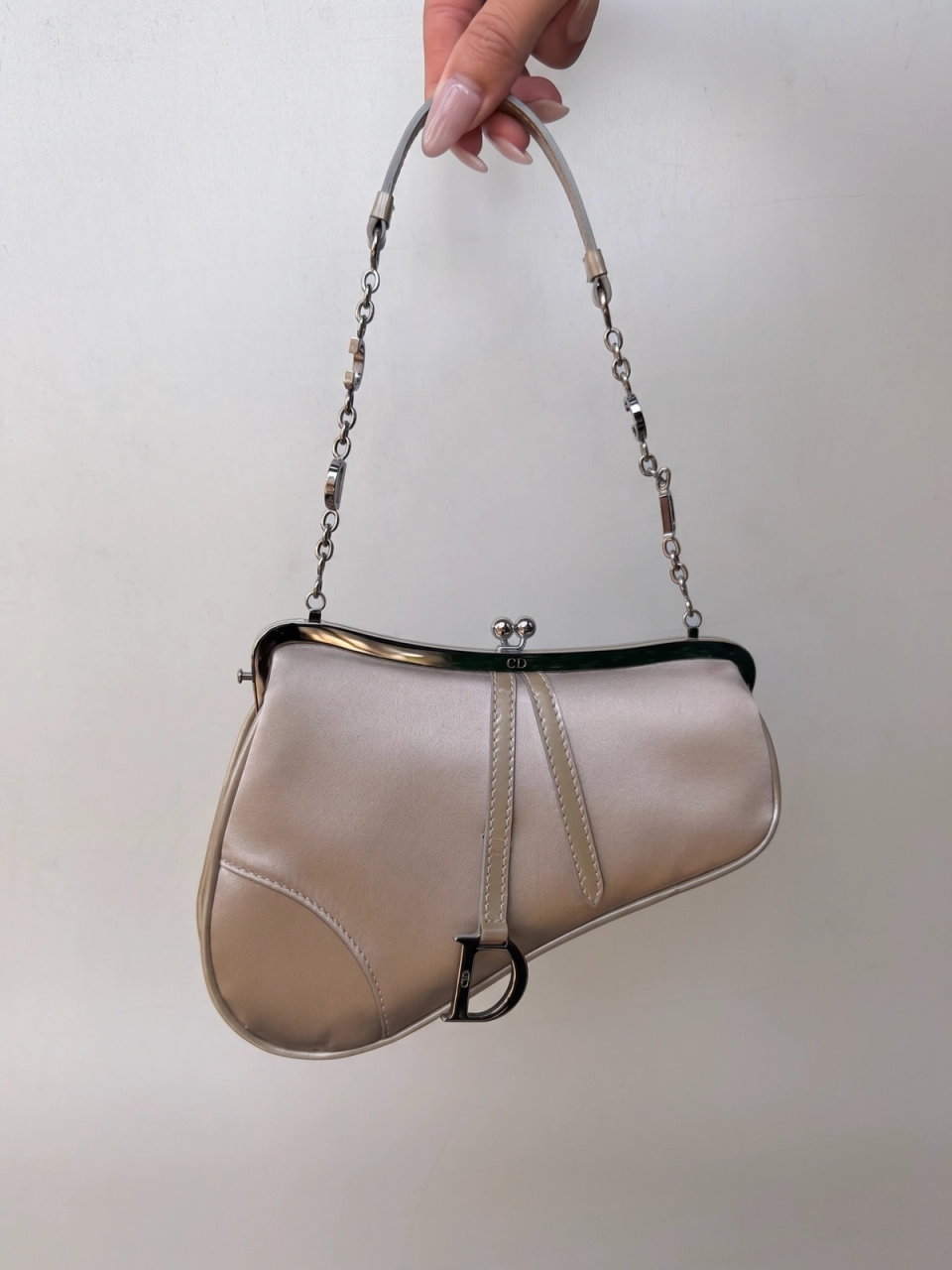
From the 2002 Christian Dior collection by John Galliano, this saddle bag is designed out of satin in a taupe silver tone with matching patent leather trim. It features a mini saddle bag silhouette with a metal frame closure engraved with the CD logo. The bag is accented with the Dior D metal logo at the front, a looping CD chain link and strap with a leather shoulder pad, and silver metal hardware. Has minor signs of wear.
The Rarity of Pure Rebellion
Modern luxury has become a sea of beige trench coats and "stealth wealth" meant to blend into the background. Galliano’s Chinoiserie is the direct antidote to that boredom. It represents a "Hardcore" era where the runway was a theater of the absurd, not a focus-group-approved marketing campaign. There is a psychological thrill in owning something this polarizing. Carrying this bag is a signal that you aren't just a consumer—you’re a curator of fashion’s most volatile history, choosing the "forbidden fruit" over the mass-produced safety of the present day.
The Craftsmanship Trap
You can argue about the ethics of the inspiration, but you cannot argue with the execution. The intricate silk weaving, the heavy gold-tone hardware, and the sculptural silhouette are things that modern mass-production simply cannot replicate. Collectors aren't just buying into the controversy; they are buying into a level of textile artistry that has largely been replaced by canvas and "vegan" plastics. This is an artifact of a creative freedom that no longer exists in the corporate-owned halls of modern luxury houses.
Investment or Offense?
By today’s strict standards, this piece is a textbook case of cultural appropriation. But it is also undeniably one of the most important pieces of fashion history to ever grace a runway. The Dior 2003 Chinoiserie Saddle Bag isn't just surviving the woke era—it’s thriving in it. It stands as a defiant, silk-covered middle finger to the idea that fashion should be safe or predictable. As long as there are people who value the thrill of the "wrong" over the safety of the "right," this bag will remain the most wanted item in the world.
You can view all pieces at our NYC showroom. Book an appointment HERE.