The Baguette Blueprint: How to Spot a Real Fendi Icon in a Market Full of Fakes
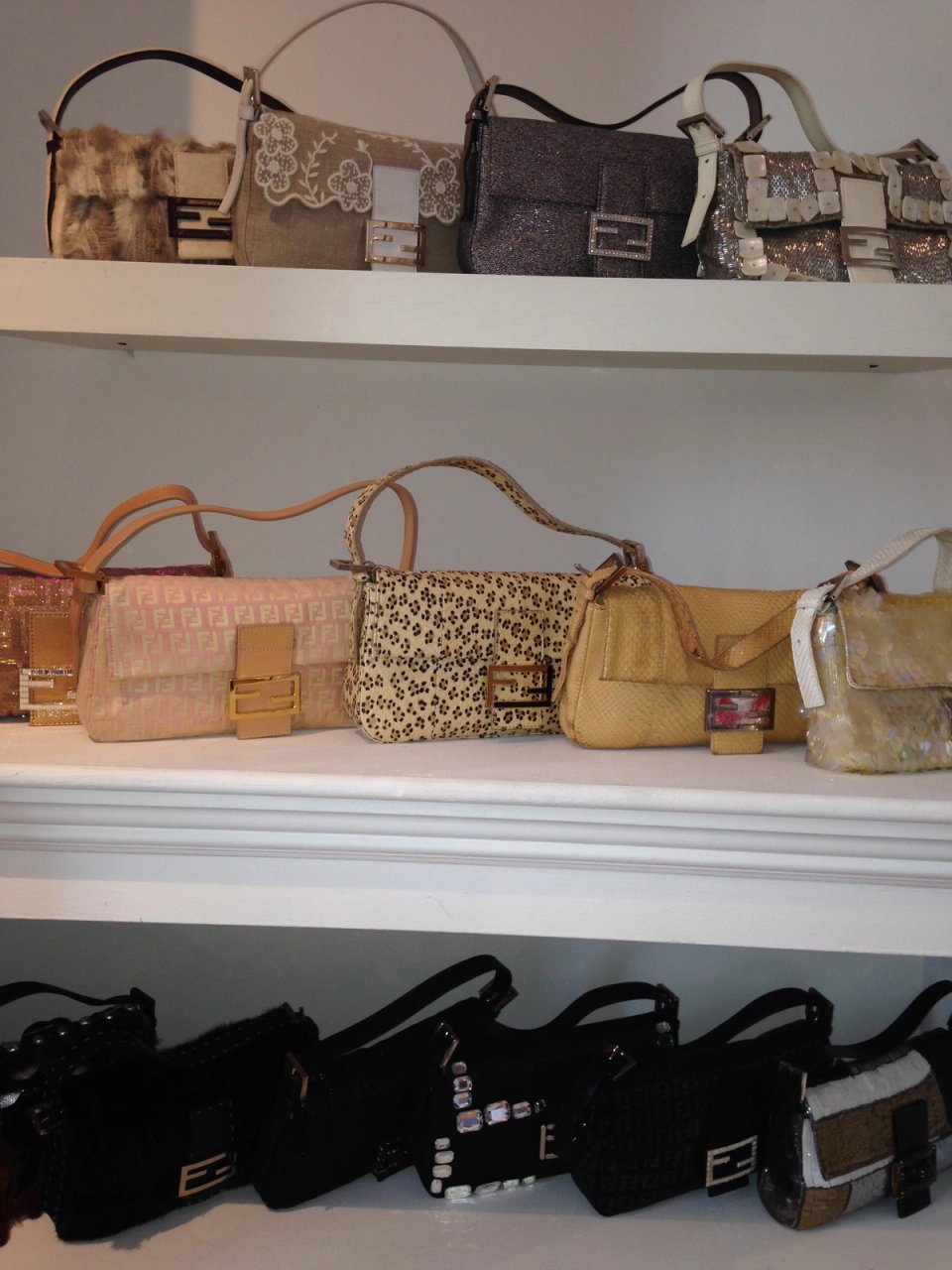
Ever since Carrie Bradshaw famously declared that her accessory wasn't just a bag, but rather a Baguette, this piece has held its crown as the ultimate luxury IT-bag. Decades later, its chokehold on the fashion world has not loosened a bit. In fact, the booming secondary market has made the Baguette more coveted, and consequently more targeted by counterfeiters, than ever before.
Fendi stands as one of Italy's most counterfeited luxury houses, and today’s superfakes are convincing enough to fool even seasoned fashionistas unless you know exactly where to look. Whether you are hunting for a vintage nineties masterpiece or a modern reissue, you need a foolproof strategy to protect your investment. Consider this your ultimate multi-point inspection guide to keeping your collection authentic.
Shopping with Peace of Mind: Want to skip the guessing game entirely? Browse our curated collection of 100% authenticated masterpieces in our Fendi Collection, or experience their luxury in person by scheduling an exclusive viewing at our Showroom Booking Link.
Before you even open the bag, set it down on a flat surface and look closely at its silhouette. Fendi's impeccable craftsmanship dictates a specific structural response to its own hardware. The heavy-duty, solid metal FF buckle should create a signature drape, meaning that when the bag is closed, the middle will naturally dip slightly lower than the sides. Counterfeit buckles are often made of cheap, lightweight alloys. Because the replica buckle lacks the proper weight, a fake bag will sit completely flat and rigid against the table.
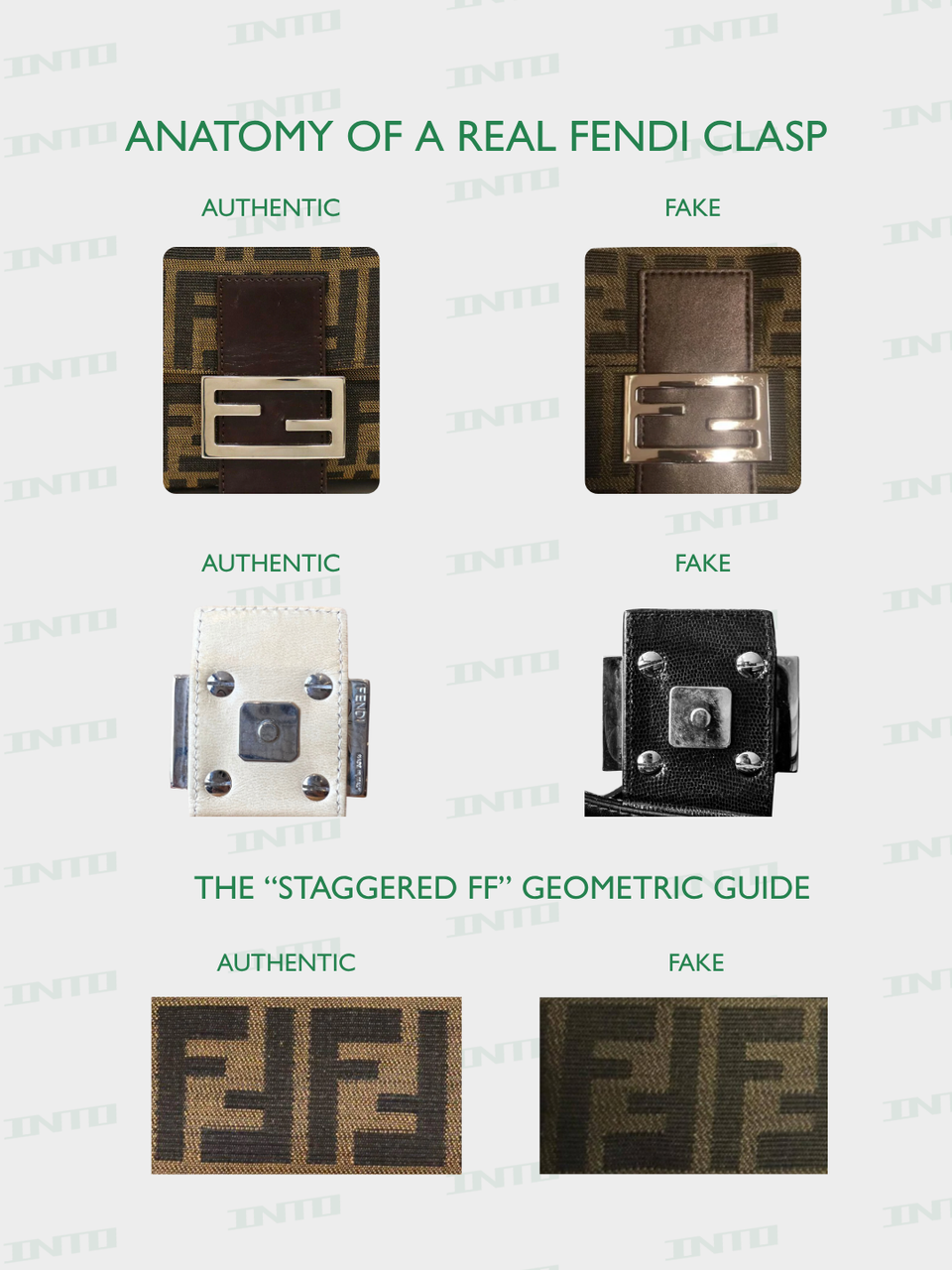
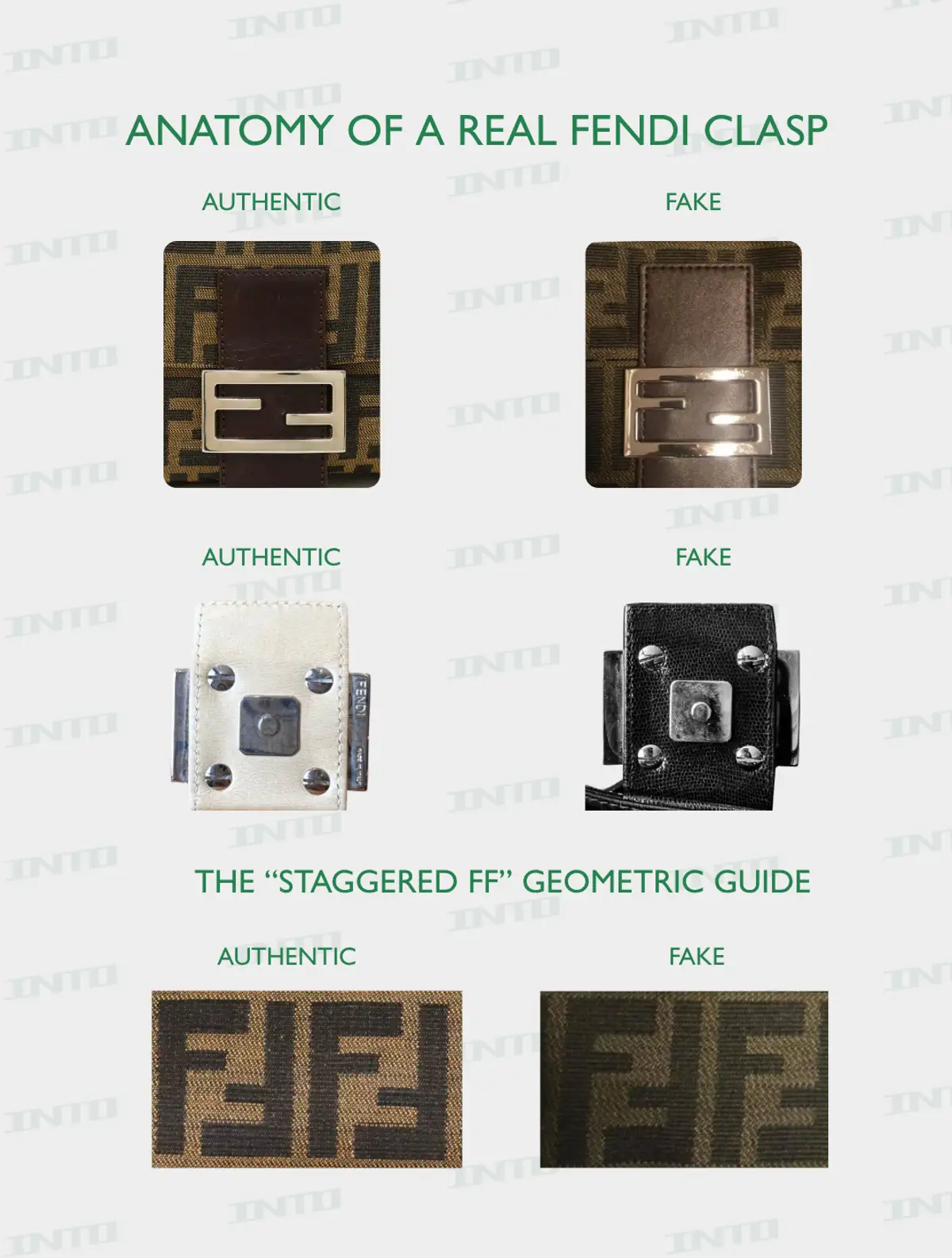
The interlocking FF logo itself is a masterclass in geometric precision, and counterfeiters mess up the spacing constantly. On an authentic piece, the two F blocks are always staggered, meaning you will find one F on either side of the central rectangle rather than sitting directly across from one another. When looking closely at the individual letters, both should be the exact same size and perfectly aligned with a small, clean gap between them. They must never touch, and the horizontal arms of each letter should feature one arm that is slightly shorter than the other. If it is a canvas Baguette, this pattern is woven directly into the fabric to create a rich, textured hand-feel, whereas replicas often feature a flat, printed pattern with warped block sizes.
Flip the front flap up and inspect the reverse side of the metal FF clasp, as this is one of the quickest ways to separate a modern reissue from a replica. Authentic Baguette hardware is thick, heavy, and sounds solid rather than hollow when tapped. The reverse of the clasp must feature four screws, and they must all face the exact same direction. Crucially, on current modern reissues, the back of the clasp should read simply FENDI. If you notice an engraving that reads "FENDI Made in Italy" on a recent reissue, you are looking at an inaccurate fake.
The interior of the bag tells an equally important story. A genuine leather Fendi bag is constructed from premium leather that smells cleanly earthy, never chemical or plasticky, and is firm enough to stand upright on its own without collapsing. The most common giveaway on a counterfeit Baguette is a lazy interior label. An authentic Fendi label is a pristine leather tag deeply stitched into the lining. If you take the label between your fingers and it easily peels up or feels like it was attached with glue, it is not genuine. Furthermore, authentic Fendi stitching on the exterior flap is deep and pronounced, giving the bag its characteristically plush, full, and structured look. Fakes often feature thin, shallow machine stitching that looks flat or barely visible.
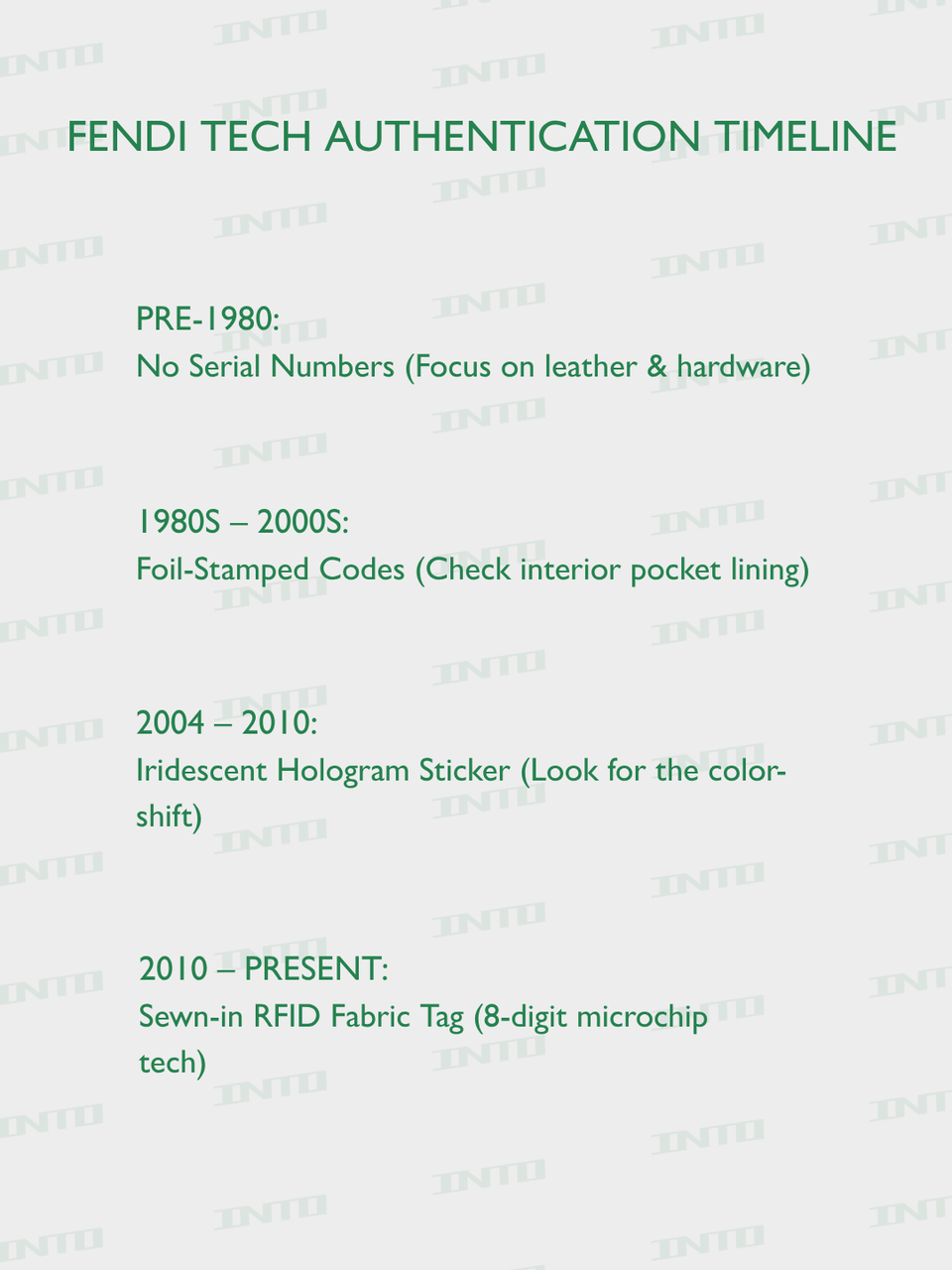
Finally, navigating Fendi's internal security systems requires a solid understanding of the brand's history, because the technology has changed multiple times over the decades. Vintage bags made before 1980 carry no serial numbers at all, meaning authentication relies entirely on evaluating the craftsmanship. From the 1980s into the early 2000s, Fendi utilized foil-stamped serial numbers printed directly on the interior pocket lining. Because this metallic foil is prone to flaking over time, you may need a bright light to check for remaining glue lines or partial indentations.
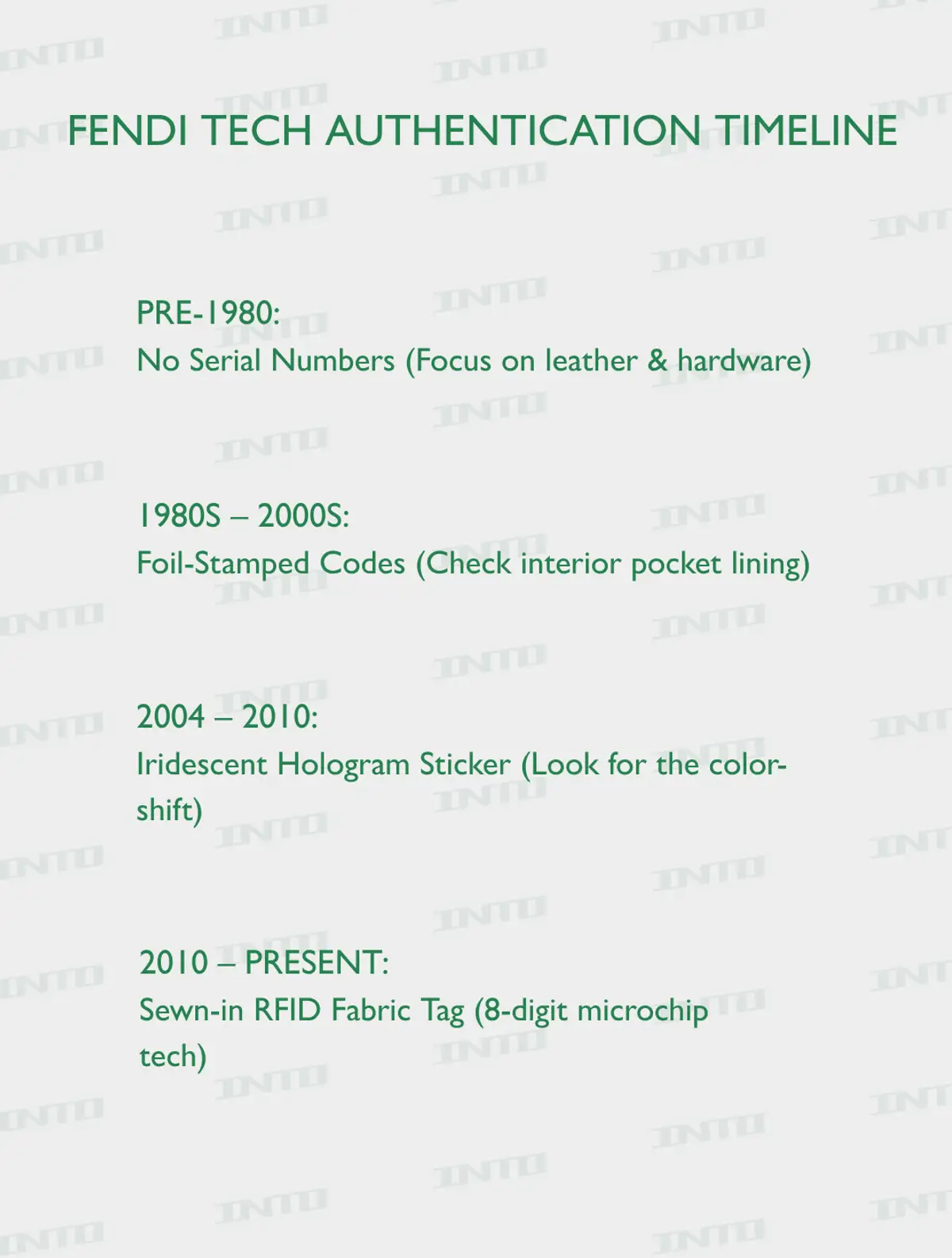
The timeline shifted dramatically in 2004 when Fendi introduced a physical hologram sticker inside the bag, which should exhibit a distinct color-shift when tilted under light. By 2010, the hologram was entirely replaced by an RFID chip embedded into a fabric tag with eight digits sewn, not printed, directly into it. Beware of the ultimate authenticity trap: if you find a Fendi Baguette that features both a hologram sticker and an RFID tag, it is almost certainly a fake, as only a highly specific, brief window of production around 2015 ever carried both features simultaneously.
Authenticating a Fendi Baguette requires looking at the whole picture, from the angle of the stitches to the weight of the metal. If a deal on the secondary market feels too good to be true, your intuition is likely right. If you want to skip the stress of multi-point inspections and buy with absolute confidence, let us do the heavy lifting. Every single piece in our collection undergoes rigorous verification.
- Ready to find your dream bag? Shop our verified, authentic Fendi Shop.
- Want an up-close look? Book a private luxury consultation at our Showroom Booking Link to inspect our collection in person.