Behind the Numbers: Decoding Maison Margiela’s Secret Label System and the Philosophy That Defined a Generation of Fashion
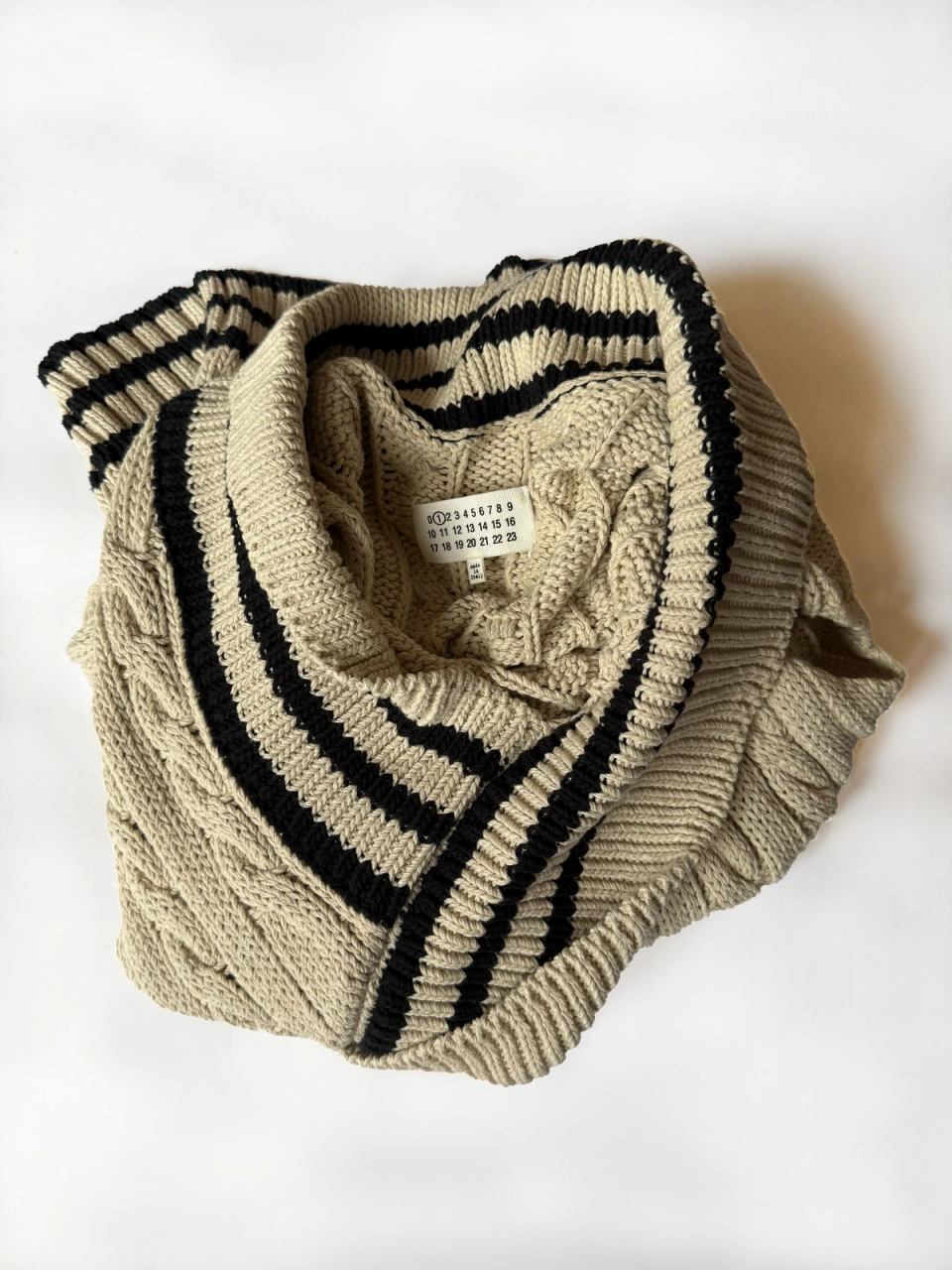

Maison Margiela has always been a mystery. From faceless designers to deconstructed silhouettes, the house built an entire identity around anonymity and quiet rebellion. But perhaps the most fascinating element of Margiela’s world is one of its smallest details — the simple white label stitched with numbers from 0 to 23.
To most, it looks cryptic. To collectors and fashion insiders, it’s a secret code — one that reveals which line a garment belongs to, from the Artisanal collection to MM6. The circled number on that label is the key, unlocking the world behind each piece and offering a glimpse into one of fashion’s most conceptual systems.
The Origins of Maison Margiela
Maison Martin Margiela was founded in Paris in 1988 by the Belgian designer Martin Margiela and business partner Jenny Meirens. A graduate of the Royal Academy of Fine Arts in Antwerp (and often linked to the Antwerp Six), Margiela quickly stood apart from his contemporaries. While other designers chased celebrity and visibility, Margiela erased himself.
He refused photographs, avoided interviews, and never appeared on the runway. His team answered all press communications collectively as “we.” Even the atelier coats — plain white lab coats — reinforced the idea of a team rather than a singular creative genius. This anonymity wasn’t just aesthetic; it was a protest against the fashion system’s obsession with personality over product.
Margiela’s shows were radical. Models walked in repurposed garments, reconstructed vintage pieces, and objects turned into clothing — gloves became tops, wigs became jackets, and clear plastic turned into coats. He pioneered deconstruction before it became a buzzword, treating garments as living, transformable things.
The Birth of the Numbers System
In the late 1980s and early 1990s, Margiela’s pieces featured completely blank white labels sewn with four visible stitches. The idea was simple: remove the label and the garment becomes unbranded, belonging only to the wearer.
Then in 1997, Margiela introduced a new version — a white label printed with numbers 0 to 23 in neat black type. This system wasn’t chronological but categorical. Each number corresponded to a line within the Maison’s expanding universe, covering everything from couture and ready-to-wear to fragrances, accessories, and home objects.
The number of the relevant line would be circled, discreetly indicating where the piece belonged. A small, almost hidden detail — yet a genius way of structuring an entire fashion house.
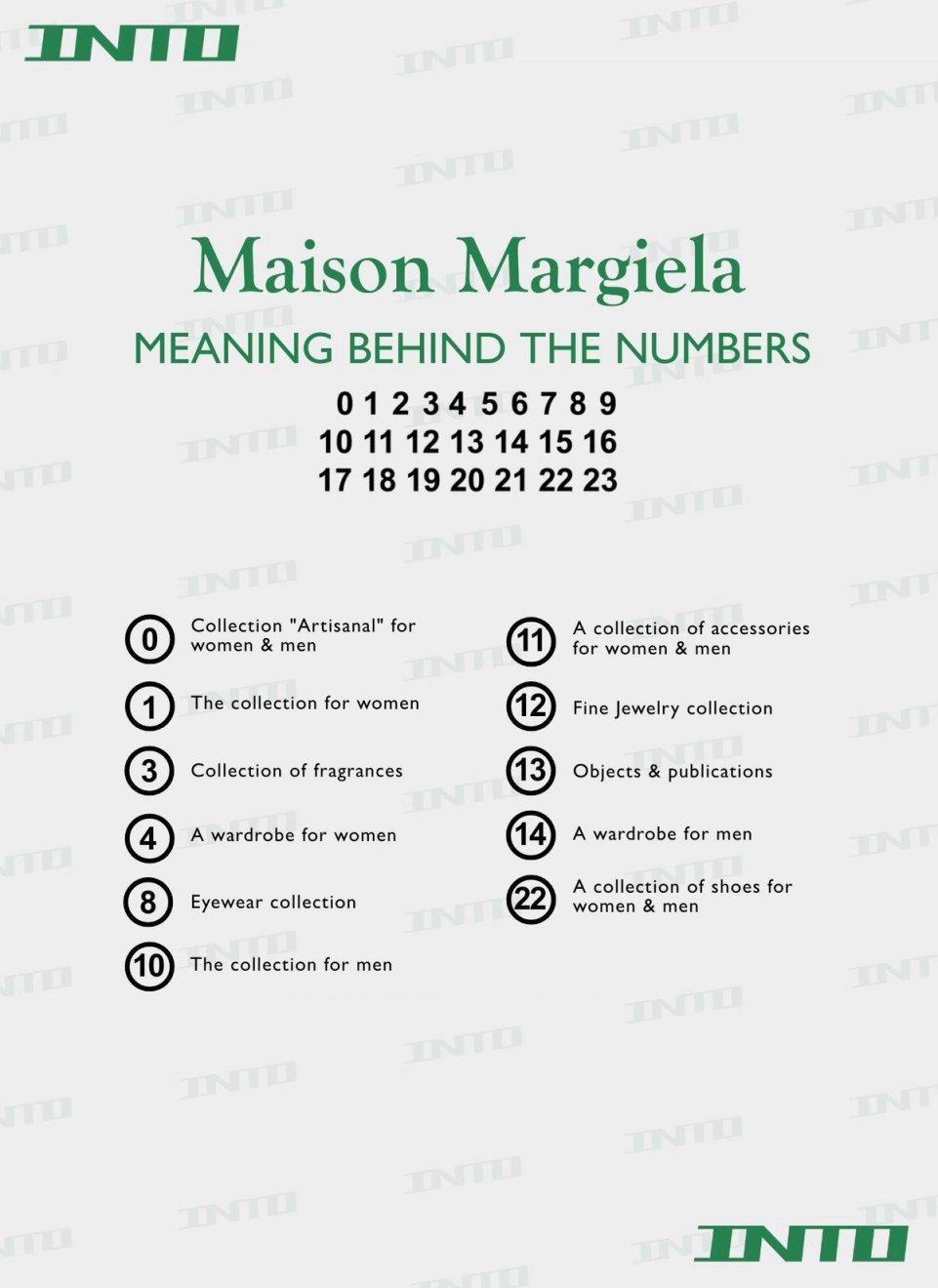
Each number represents a distinct world within the Maison:
- 0 – Artisanal (Women & Men): Hand-crafted, one-of-a-kind couture pieces made in the Maison’s Paris atelier — the pinnacle of Margiela’s craftsmanship and conceptual design.
- 1 – Women’s Collection: The main women’s ready-to-wear line, known for its deconstructed tailoring, conceptual silhouettes, and quiet elegance.
- 3 – Fragrances: The olfactory extension of the brand, best known today through the Replica perfume line.
- 4 – Women’s Wardrobe: A refined, timeless selection of essentials designed for everyday wear.
- 6 – MM6: The more contemporary and accessible diffusion line, playful yet intelligent — carrying the Margiela DNA with a modern twist.
- 8 – Eyewear: Sunglasses and optical frames that translate Margiela’s sculptural vision into accessories.
- 10 – Men’s Collection: The counterpart to Line 1, featuring men’s ready-to-wear with subtle experimentation in proportion and construction.
- 11 – Accessories: A unisex line of leather goods, jewellery, and small accessories.
- 12 – Fine Jewellery: Precious and conceptual jewellery, crafted with the Maison’s signature restraint.
- 13 – Objects & Publications: Conceptual homeware, books, and art projects — a reflection of Margiela’s world beyond fashion.
- 14 – Men’s Wardrobe: Classic menswear and essentials, reimagined with quiet subversion.
- 22 – Shoes: The footwear line — home to some of Margiela’s most iconic designs, including the Tabi boots.
Some numbers were experimental or temporary — such as 15, used for a mail-order project with 3 Suisses in 1999 — while others have been retired or merged over time. Occasionally, two numbers appear together, like 0 10, indicating a handcrafted Artisanal piece made for the men’s line.
A Philosophy in Code
Margiela’s numbering system wasn’t just practical — it was philosophical. Each label acted as both archive and manifesto. The white background symbolized neutrality. The visible stitches became a design signature. The absence of branding invited curiosity.
For Margiela, fashion was not about spectacle but substance. The numbers created order within chaos, allowing the brand to expand while preserving its anonymity. Every piece, from an Artisanal gown to a pair of MM6 sneakers, existed within a coded universe where the same logic applied: design first, identity second.
This idea carried through to how the Maison functioned — collective creation, recycled materials, shows in unconventional spaces, and a deliberate refusal of glamour. Even after Martin Margiela quietly left the brand in 2009, the system remained intact — a legacy that continued under creative directors like John Galliano, who has kept the spirit of experimentation alive while infusing his own romantic storytelling.
Why the Numbers Matter Today
For collectors, archivists, and fashion historians, understanding Margiela’s numbers is essential. They offer clues to the era, intent, and category of each piece — vital for authentication and research.
Knowing whether a piece belongs to Line 1 or 10 can tell you if it’s men’s or women’s mainline; seeing a circled 0 confirms it’s part of the coveted Artisanal range. And beyond identification, these numbers reflect the Maison’s enduring approach to design: understated, intellectual, and quietly radical.
Even as fashion becomes louder and more digital, Margiela’s system remains timeless. The label needs no logo — only a set of numbers, a few stitches, and a story that fashion lovers continue to decode decades later.
Margiela’s Legacy
Today, Maison Margiela stands as one of the few fashion houses that successfully turned anonymity into an identity. Its influence can be felt everywhere — in quiet luxury, in conceptual fashion, and in the growing appreciation for garments that challenge convention.
The numbered label continues to be one of fashion’s most brilliant inventions: at once a catalogue, a code, and a manifesto. It invites curiosity rather than recognition, reflection rather than spectacle.
Behind those 23 digits lies the DNA of a house that redefined what fashion could mean — not as a display of fame, but as a study of form, function, and philosophy.