Why Are We Paying More for Less Craftsmanship?
Luxury has never been more expensive. Every season seems to bring another round of price increases from the world's biggest fashion houses, with handbags climbing into five figures and ready-to-wear reaching prices once reserved for couture. Yet many collectors, stylists, and longtime fashion enthusiasts are asking the same question: are we actually getting more for our money?
For many, the answer isn't found on today's runways. It's found in the archives.
Long before luxury became a game of logos, scarcity marketing, and viral drops, fashion houses competed on something much harder to manufacture: craftsmanship. A garment had to justify its price through the quality of its construction, the complexity of its embroidery, and the hours of handwork hidden inside the seams. The label mattered, but the workmanship mattered even more.
Few collections demonstrate that philosophy better than Dolce & Gabbana Fall/Winter 1998.
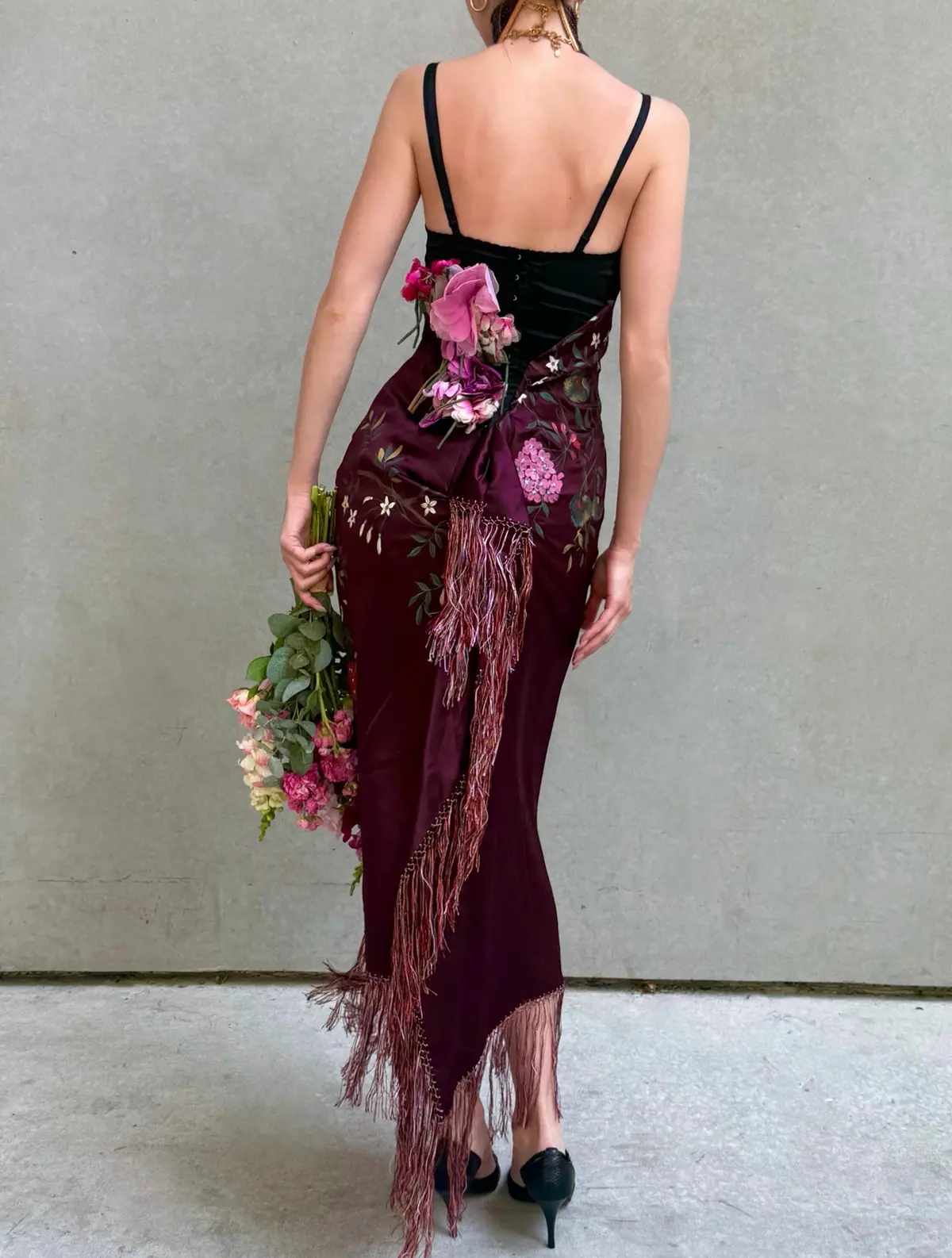
By 1998, Domenico Dolce and Stefano Gabbana had already established themselves as masters of Italian sensuality. Throughout the decade, they built a distinct visual language rooted in Sicilian heritage, corsetry, lingerie-inspired dressing, and old Hollywood glamour. While many designers embraced stark minimalism, Dolce & Gabbana doubled down on romance, texture, and unapologetic femininity. The result was a collection that remains one of the house's most celebrated—and one that continues to inspire collectors, stylists, and contemporary designers nearly three decades later.
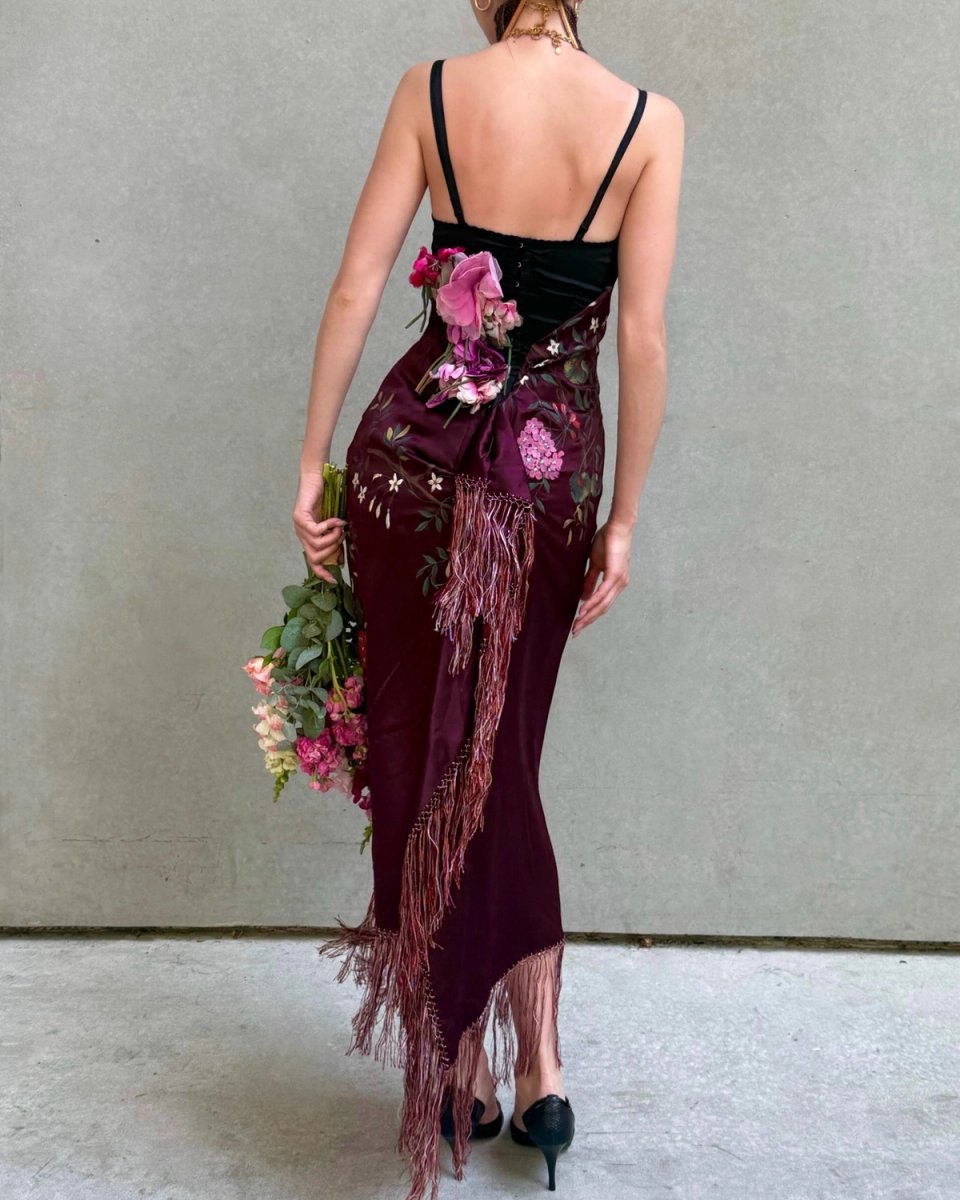
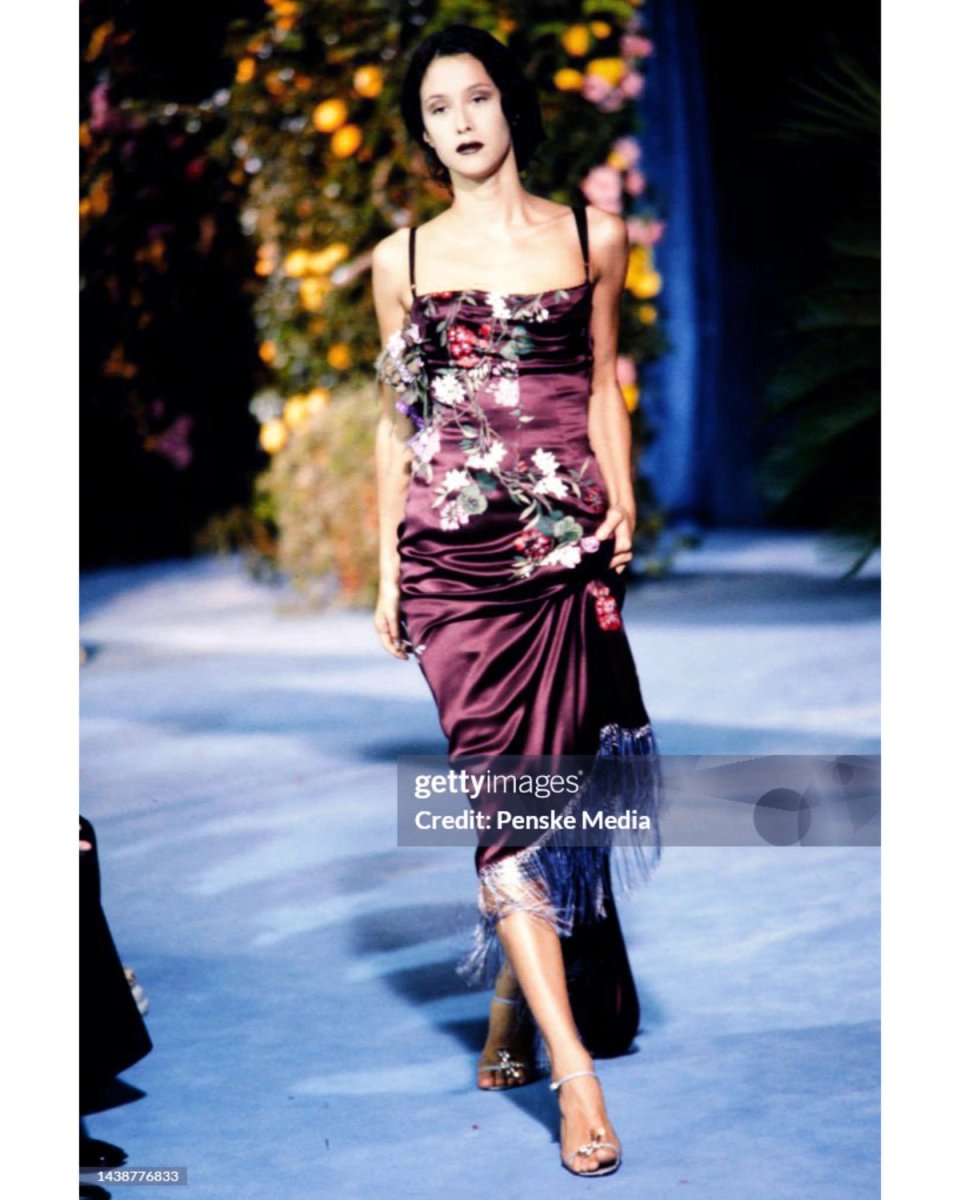
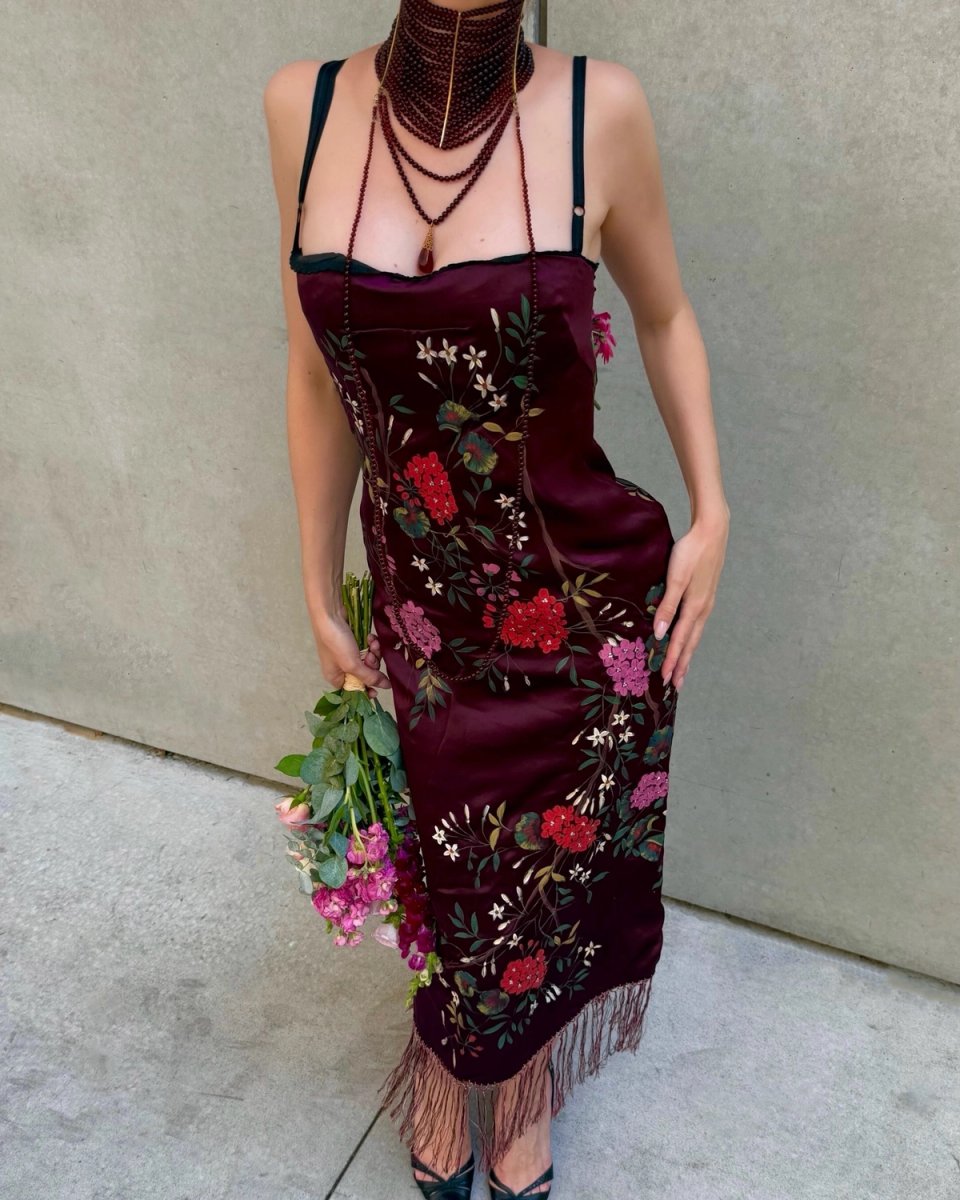
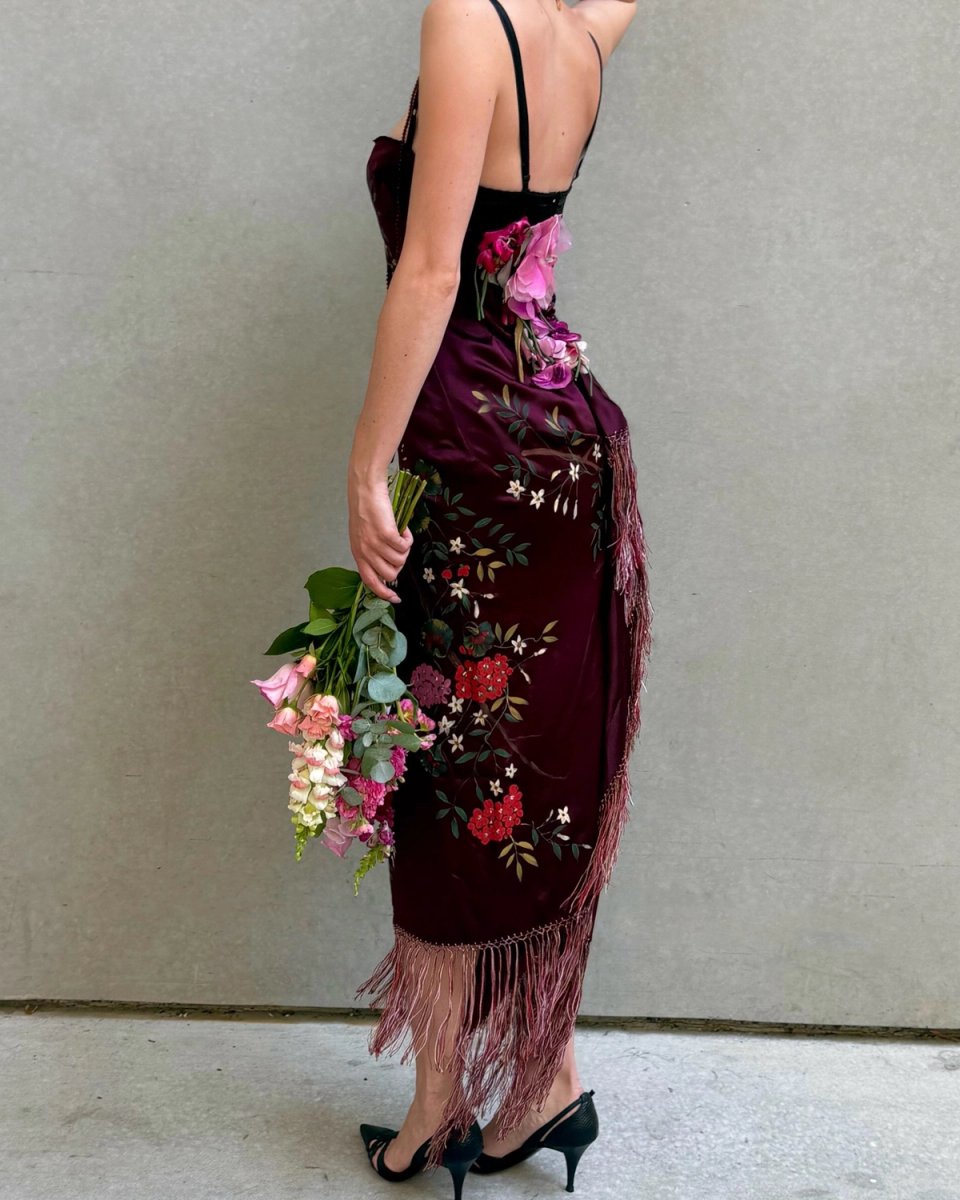
The collection didn't rely on oversized branding or novelty to command attention. Instead, it demonstrated confidence through craftsmanship. Satin evening dresses were elevated with elaborate floral embroidery, delicate fringe, intricate lace, and luxurious fabrics that rewarded close inspection. Rather than competing for attention, every embellishment served a purpose. The embroidery wasn't decoration added as an afterthought—it became part of the garment's architecture, flowing naturally across the silhouette while enhancing the movement of the fabric itself.
One of the finest examples from the runway is this Dolce and Gabbana FW 1998 Runway Burgundy Floral Print Corset Long Dress. Cut from rich burgundy satin, its elegant silhouette is enhanced by intricate botanical embroidery that appears almost hand-painted across the fabric. Cascading fringe frames each embroidered flower, creating movement that transforms as the wearer walks. It is a dress designed to be experienced in motion, catching the light differently from every angle and revealing new details with every glance.
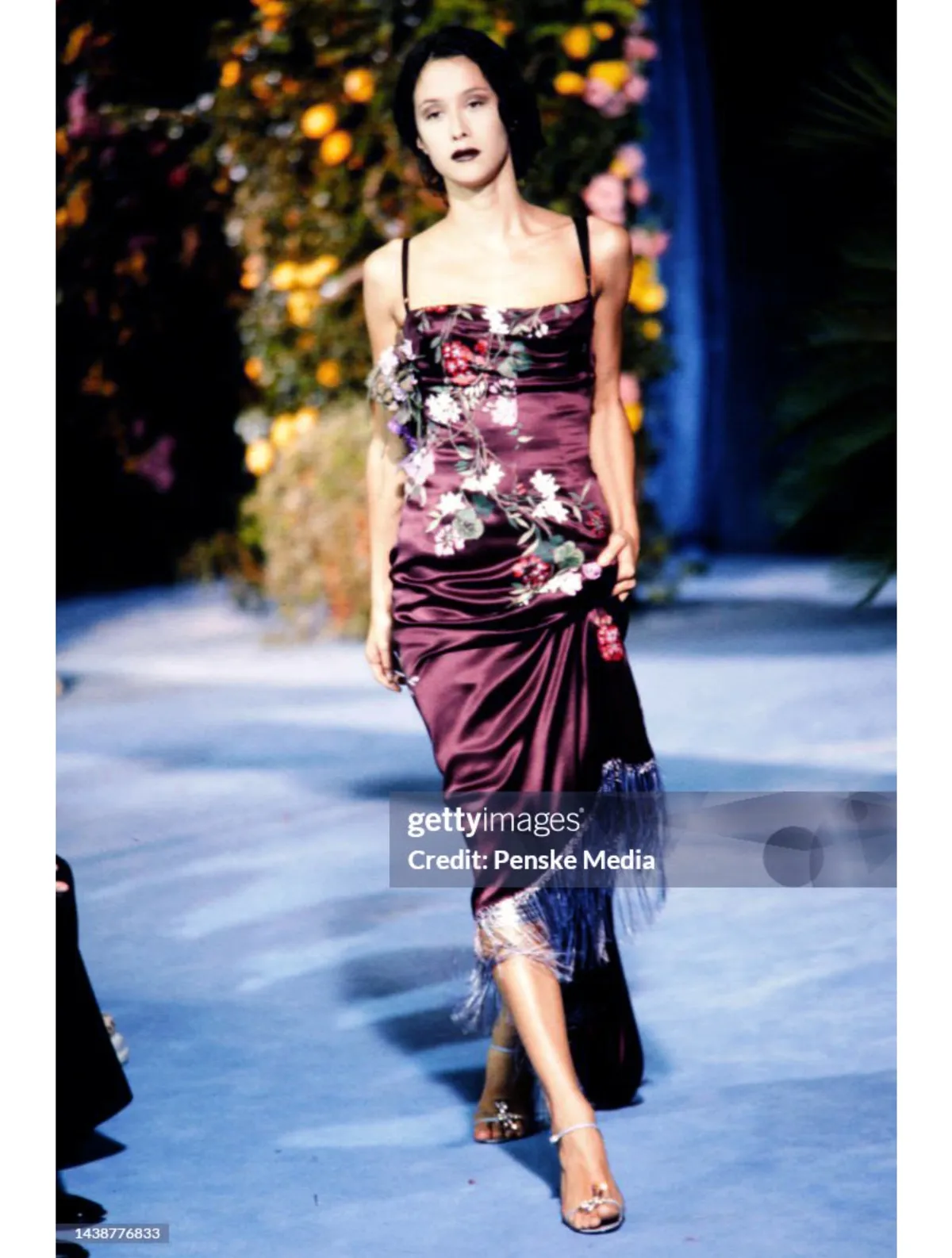
What makes this runway piece remarkable isn't simply its beauty but its restraint. There are no oversized logos, no signature hardware, and no instantly recognizable branding competing for attention. Unless you know the collection, you might never identify the designer at first glance—and that's precisely what makes it extraordinary. The dress earns its place through exceptional construction, luxurious materials, and meticulous craftsmanship rather than visual branding.
Looking back nearly thirty years later, it's striking how contemporary the collection still feels. Designers continue to revisit slip dresses, corsetry, floral embroidery, and romantic eveningwear, yet many modern interpretations prioritize speed, scalability, and commercial appeal over the level of hand-finished detail that defined collections like Fall/Winter 1998. Its enduring appeal lies in the fact that it wasn't designed to follow a trend. It was designed to outlast them.
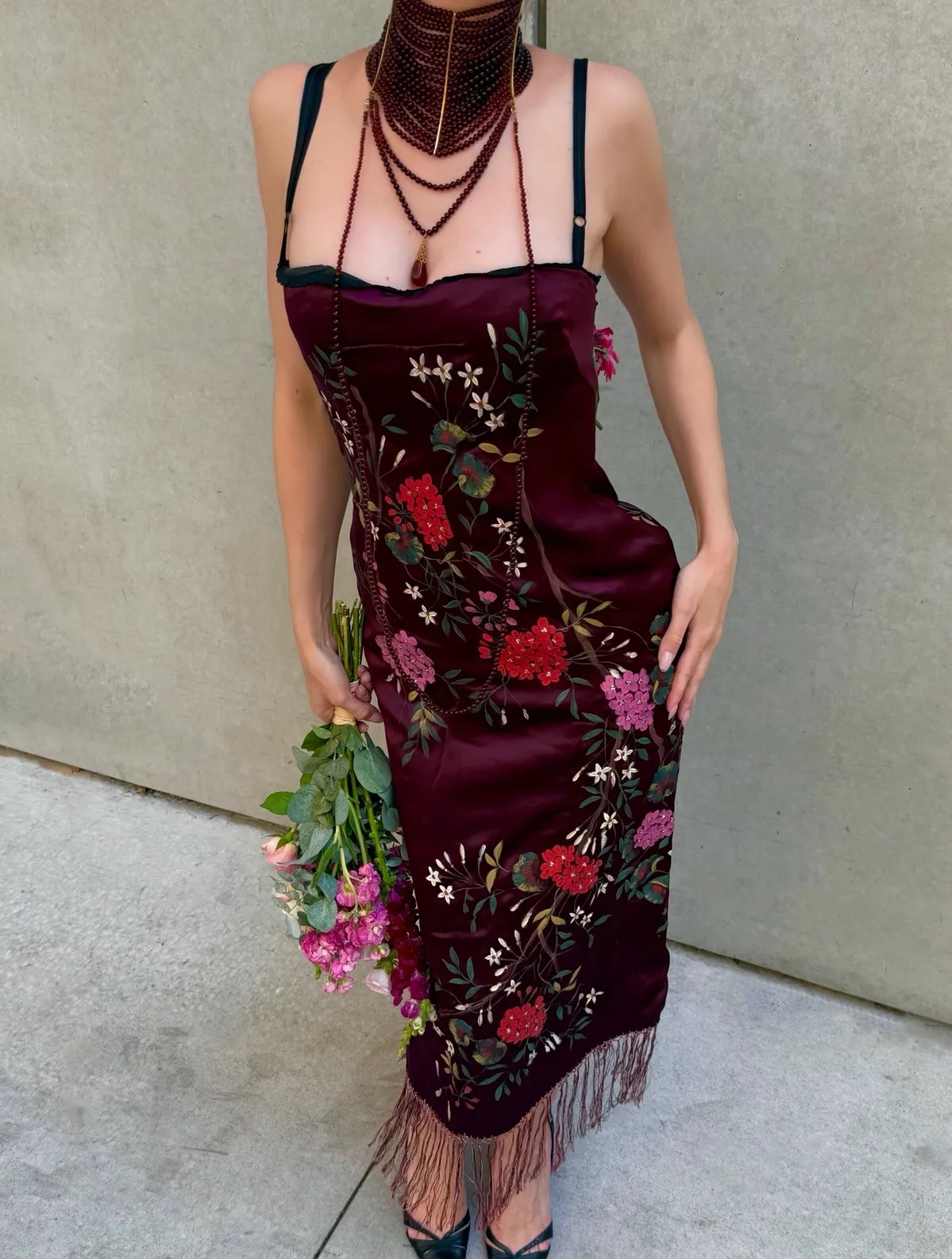
For collectors, this collection represents more than a beautiful chapter in fashion history. It captures a moment when luxury houses were still competing primarily through design innovation, craftsmanship, and atelier-level execution before logos and global branding became central to the luxury business model. That shift helps explain why original runway pieces from collections like FW98 have become increasingly difficult to source—and increasingly valuable whenever they appear on the market.
This isn't to suggest that exceptional craftsmanship no longer exists. It absolutely does. But as luxury has become more global and marketing-driven, the balance has shifted. Visibility often sells faster than technique. Recognition often outweighs construction. Prices continue to climb, while garments that showcase the same level of intricate handwork have become increasingly uncommon within ready-to-wear collections.
That shift is one reason archival fashion has become so desirable. Collectors aren't simply buying nostalgia. They're investing in garments from a period when many of the world's leading fashion houses devoted extraordinary time, skilled artisans, and uncompromising attention to detail to every collection. The value lies not only in rarity but in craftsmanship that has become increasingly difficult—and increasingly expensive—to replicate today.
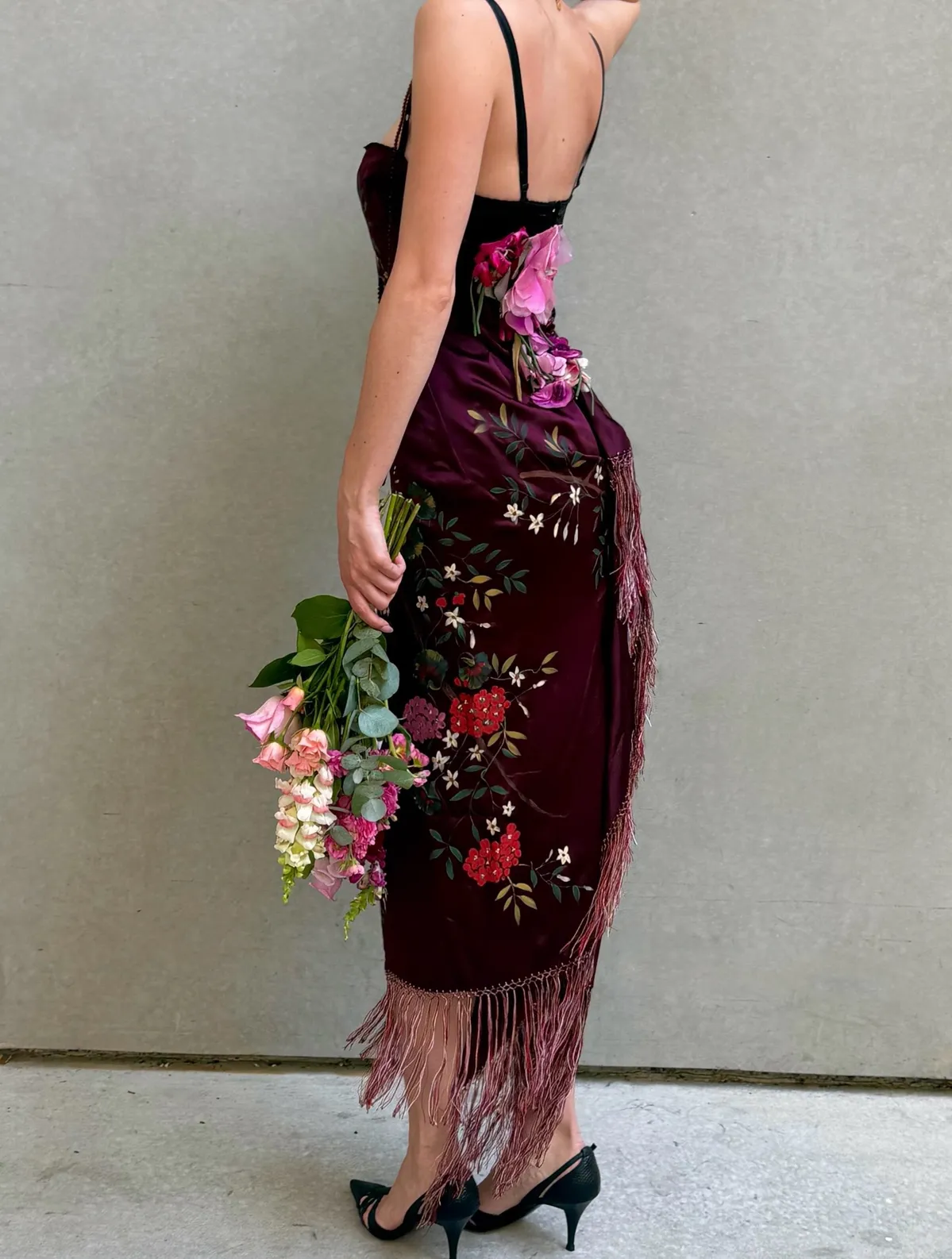
Dolce & Gabbana's Fall/Winter 1998 collection stands as a reminder of what luxury once prioritized. It celebrated embroidery that couldn't be appreciated from across the room. It embraced fabrics selected for how they moved rather than how they photographed. It rewarded close inspection instead of instant recognition. In many ways, that philosophy feels even more relevant today than it did in 1998.
At Into Archive, we believe these are the pieces worth preserving. Every garment we source tells the story of a defining moment in fashion history—when creativity, construction, and craftsmanship were the true markers of luxury.
If you're interested in this exceptional runway piece, you can rent the Dolce and Gabbana FW 1998 Runway Burgundy Floral Print Corset Long Dress directly through our collection. To discover more rare pieces from the house, browse our curated Dolce & Gabbana archive, where we source runway and collector-quality garments spanning the brand's most iconic eras. If you're searching beyond Dolce, explore our complete designer dress collection, featuring museum-worthy pieces from fashion's most influential designers.
For stylists, collectors, brands, and creative teams looking to experience these garments in person, we also offer private appointments at our New York showroom. Our showroom provides access to hundreds of archival pieces available for editorials, campaigns, celebrity fittings, productions, and private collecting, with our team available to help source the perfect look.
Perhaps the real question isn't why vintage has become so popular.
Perhaps it's why so many of fashion's most extraordinary clothes were made over twenty-five years ago.