An evening with Ezra J. William with Joopiter and Into Archive

An evening with Ezra J. William with Joopiter and Into Archive

An evening with Ezra J. William with Joopiter and Into Archive

An evening with Ezra J. William with Joopiter and Into Archive

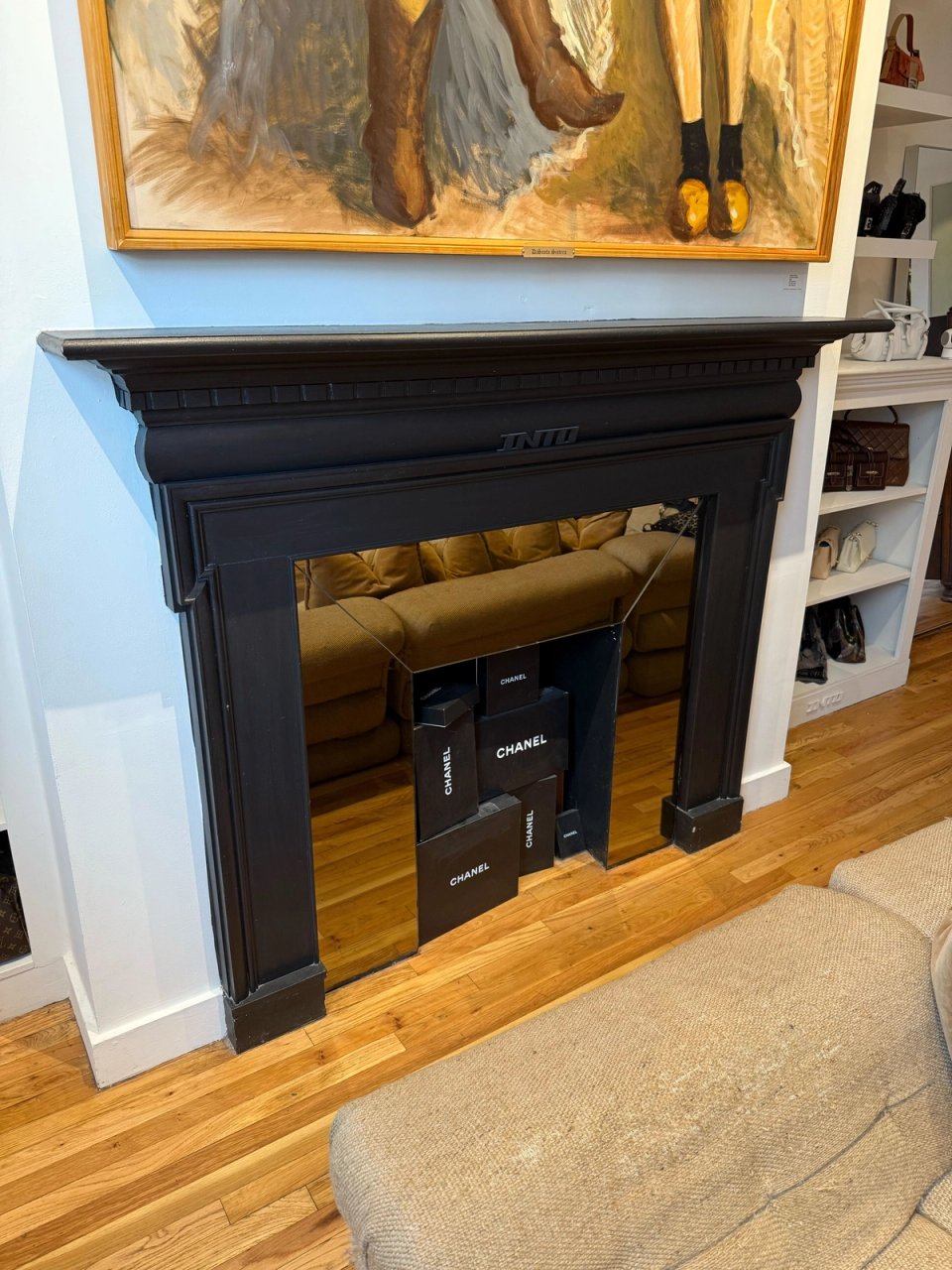
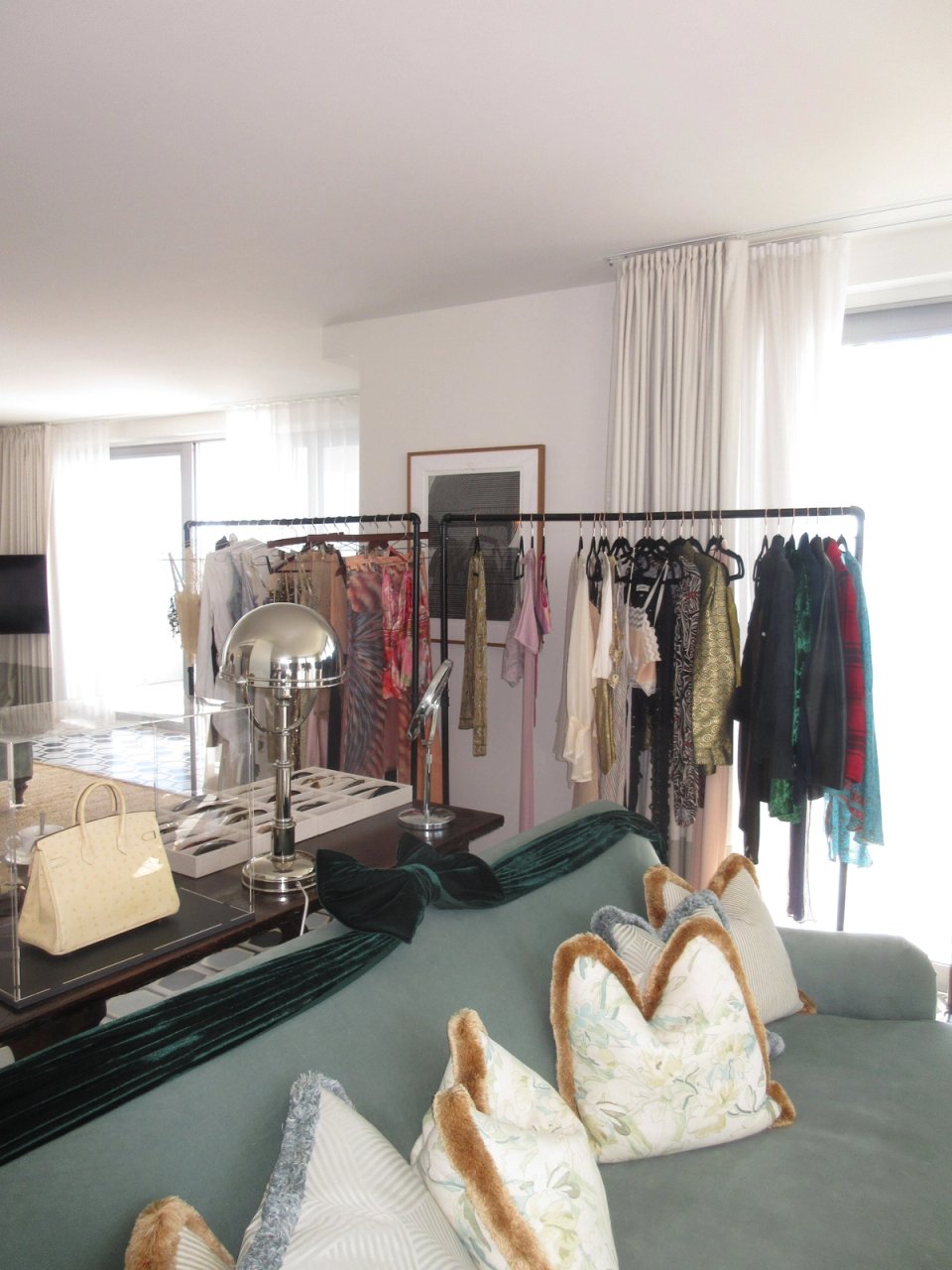
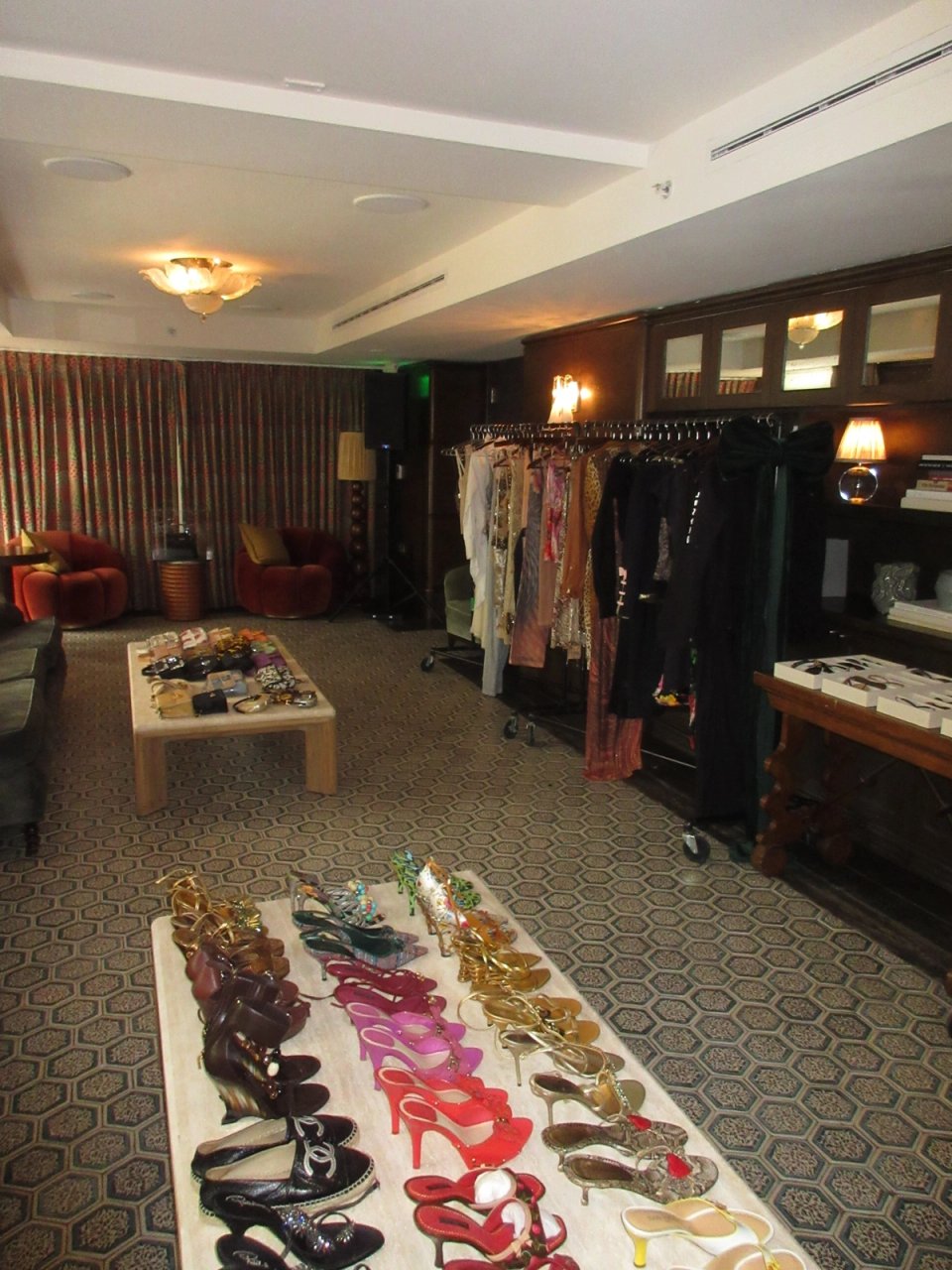
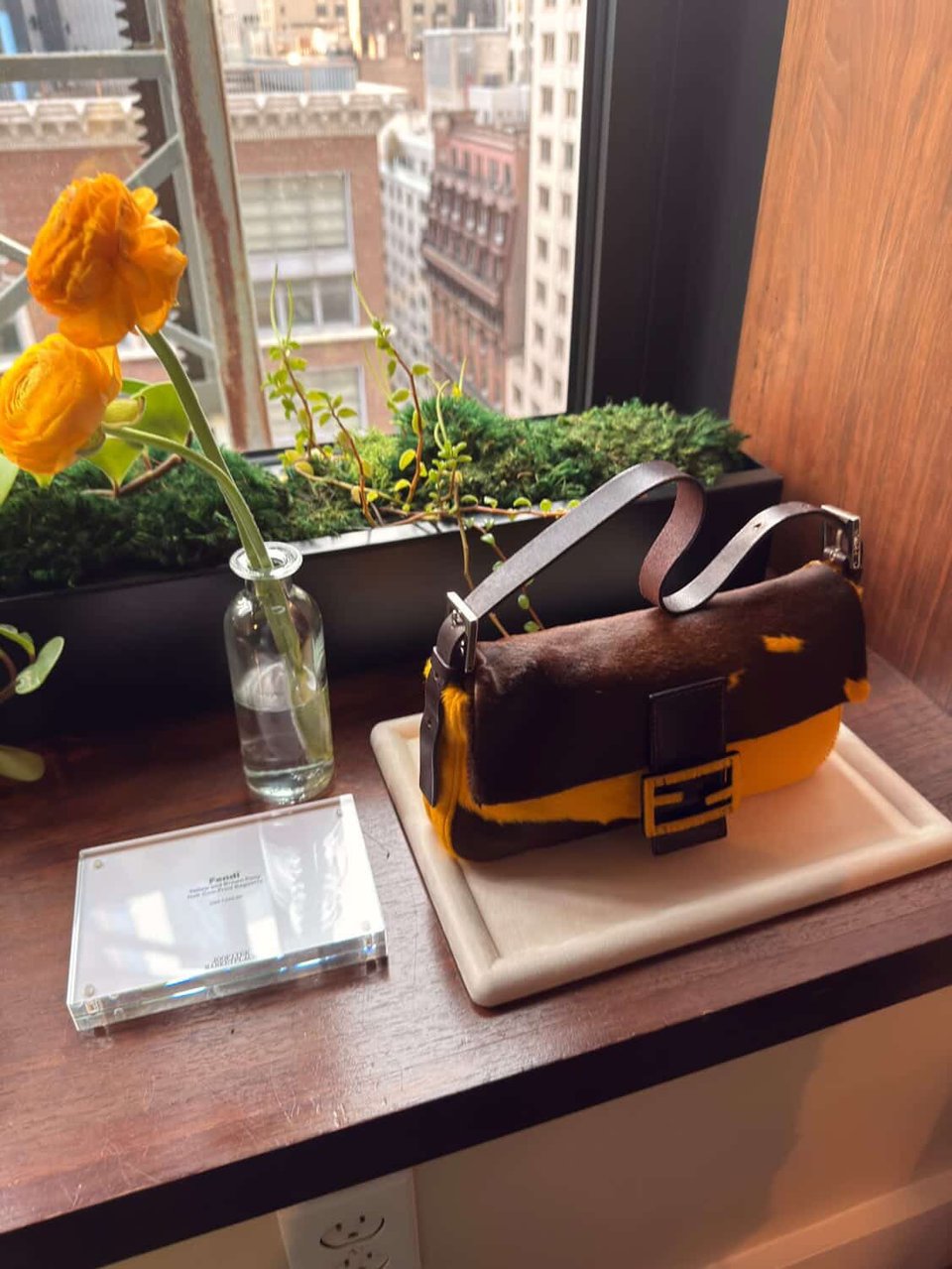
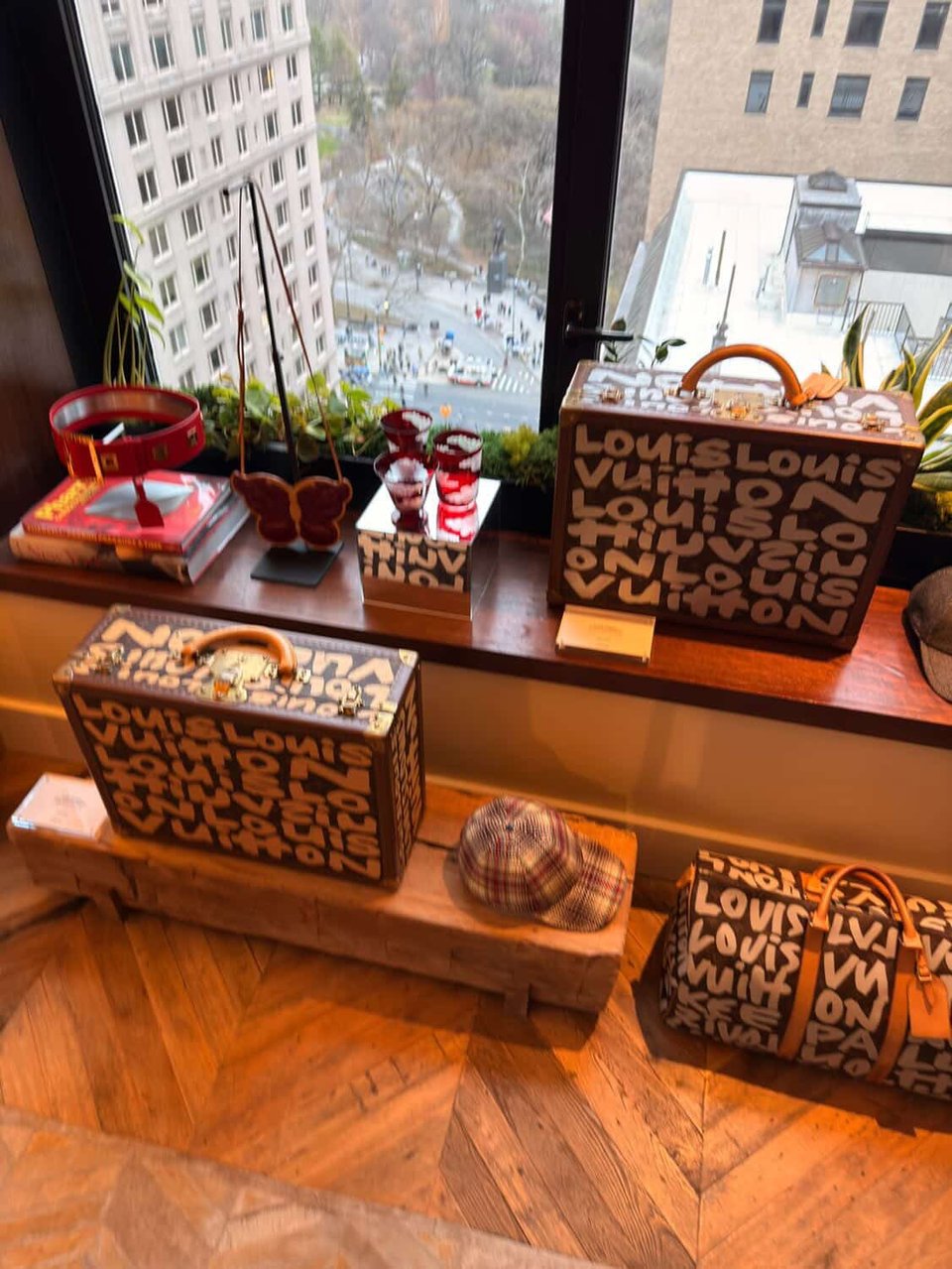
There are evenings that feel less like events and more like a convergence of worlds—where fashion, collecting, and culture meet with intention. This past week, Into Archive joined Ezra J. William and JOOPITER for a private presentation at 1 Hotel Central Park, bringing together a curated selection of vintage luxury that speaks to both legacy and evolution.

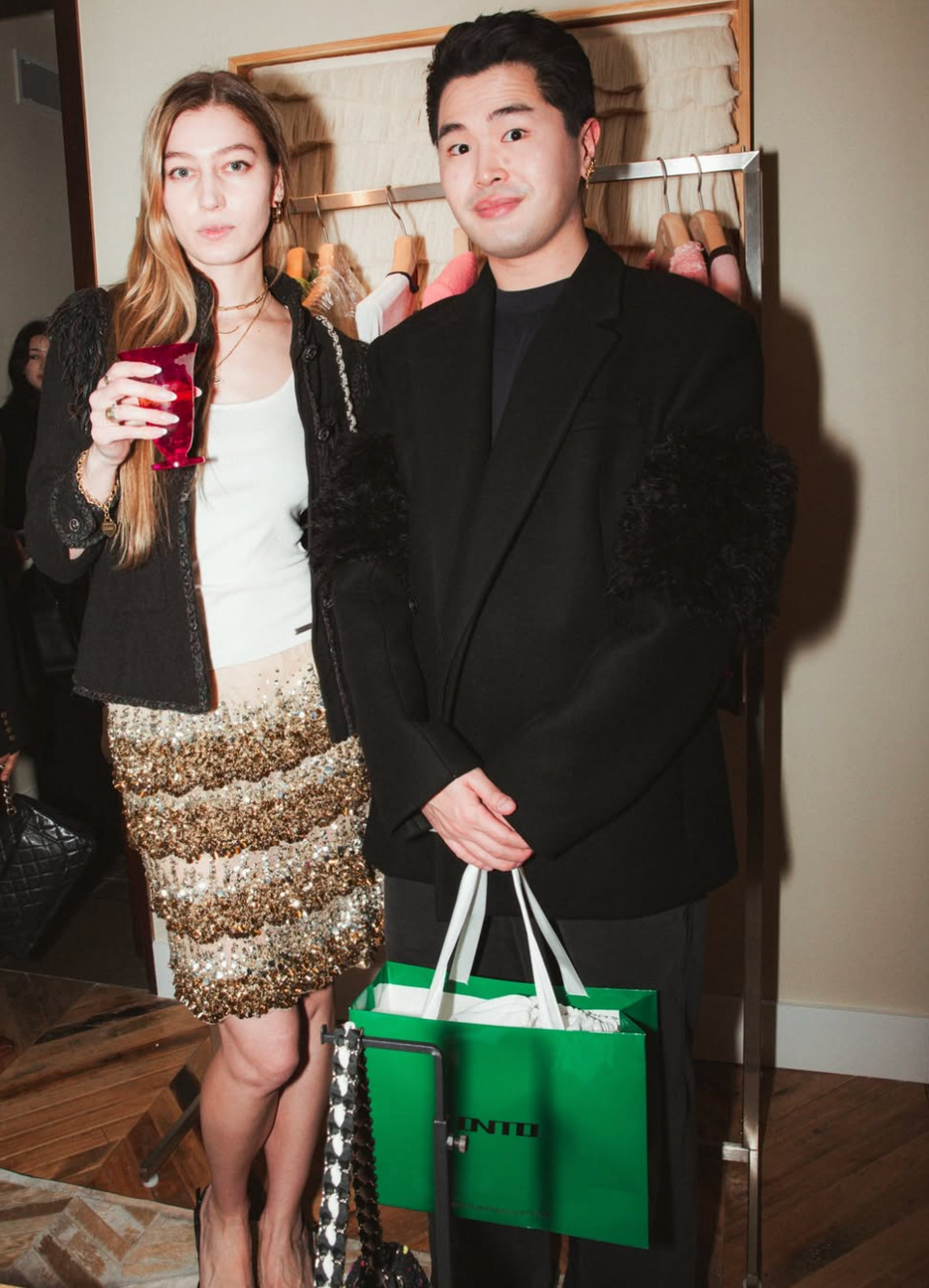
Set within the understated, nature-driven interiors of the hotel, the evening unfolded with a quiet sense of precision. Guests moved through the space encountering ready-to-wear, accessories, and jewelry sourced from the houses that defined entire eras of fashion—pieces chosen not only for their rarity, but for their continued relevance. The curation, developed in collaboration with William, reflected a deeply personal lens on collecting: one that values narrative as much as object.

Into Archive’s contribution sat seamlessly within this framework. Known for sourcing some of the rarest Chanel and runway-era pieces in circulation, the selection reinforced a point the brand has long championed—vintage is not a reflection of the past, but a driver of what comes next. In a setting like this, garments are no longer viewed as inventory, but as cultural artifacts in motion.

Complementing the fashion was glassware by Jonathan Hansen, adding another layer of tactility and design dialogue to the space. The interplay between objects—fashion, material, and form—created a setting that felt closer to a collector’s salon than a traditional retail experience.

What defined the evening was its intimacy. Conversations replaced transactions; discovery replaced display. Guests engaged directly with the pieces, trying on, discussing provenance, and interpreting them through their own perspective. It’s this shift—from passive viewing to active participation—that continues to shape how vintage is experienced today.

For Into Archive, moments like this extend beyond presentation. They reinforce a broader positioning: that the future of luxury lies not just in newness, but in access to the exceptional. Whether through a private showroom appointment or a curated gathering like this, the goal remains the same—placing rare pieces into the hands of those who understand their value, both materially and culturally.

As the lines between collector, client, and curator continue to blur, evenings like this offer a glimpse into what fashion can become: more personal, more intentional, and infinitely more enduring.

Your Coachella outfit is going to a landfill and it shows

Your Coachella outfit is going to a landfill and it shows

Your Coachella outfit is going to a landfill and it shows

Your Coachella outfit is going to a landfill and it shows

There is a specific kind of heartbreak that happens every April when the desert dust settles and the cleanup crews move in to find a literal graveyard of "festival collections." We’ve been conditioned to think that Coachella requires a brand-new, three-day rotation of polyester sets and plastic sequins that are destined to fall apart before the headliner even hits the stage, but let’s be honest with ourselves for a second: if your outfit is designed to be disposable, your style is too. The "influencer starter pack" has become a tired costume—a sea of identical crochet and mass-produced fringe that lacks any sense of soul or permanence—and this year, we’re opting out of that cycle entirely. We are leaning into a vibe that is a little more permanent, a little more rugged, and significantly more intentional.

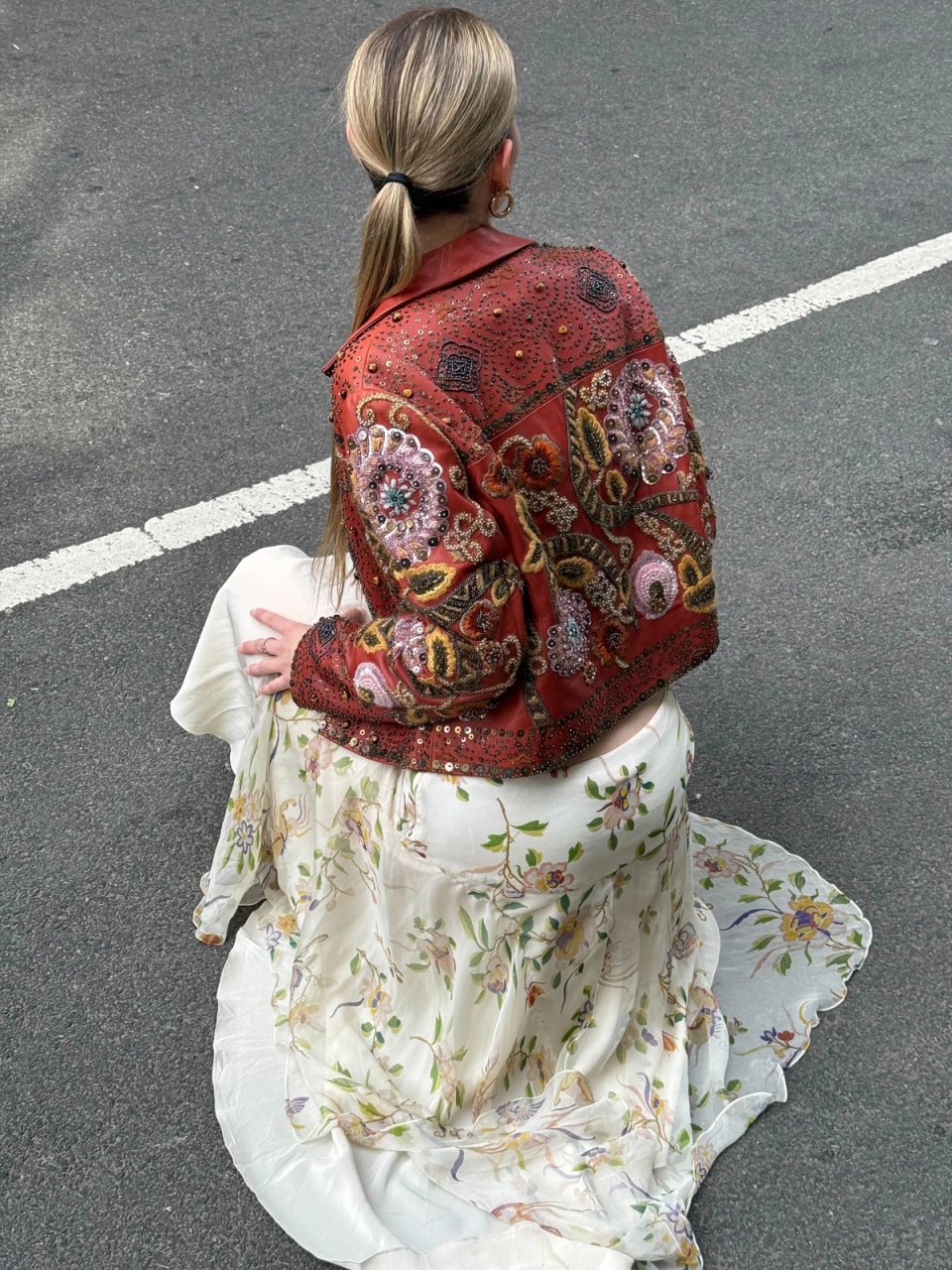
The real hot take for 2026 is that true luxury belongs in the dirt, and there is something deeply chic about taking archival masterpieces—pieces that were crafted with actual history—and letting them breathe in the wild. This Valentino leather jacket is the perfect example of what it means to choose craftsmanship over convenience. It isn’t just a layer; it’s a heavy-weight armor of intricate beading and artisanal embroidery that feels like it was stolen from the wardrobe of a 1970s rock legend during the height of the Laurel Canyon era. While everyone else is shivering in cheap lace when the desert temperature drops, this Valentino piece provides a silhouette that says you didn't just show up for the photos; you showed up because you belong there. It’s the ultimate "Moto-Boho" anchor, ignoring trends in favor of a raw, tactile excellence that only high-end vintage can provide.

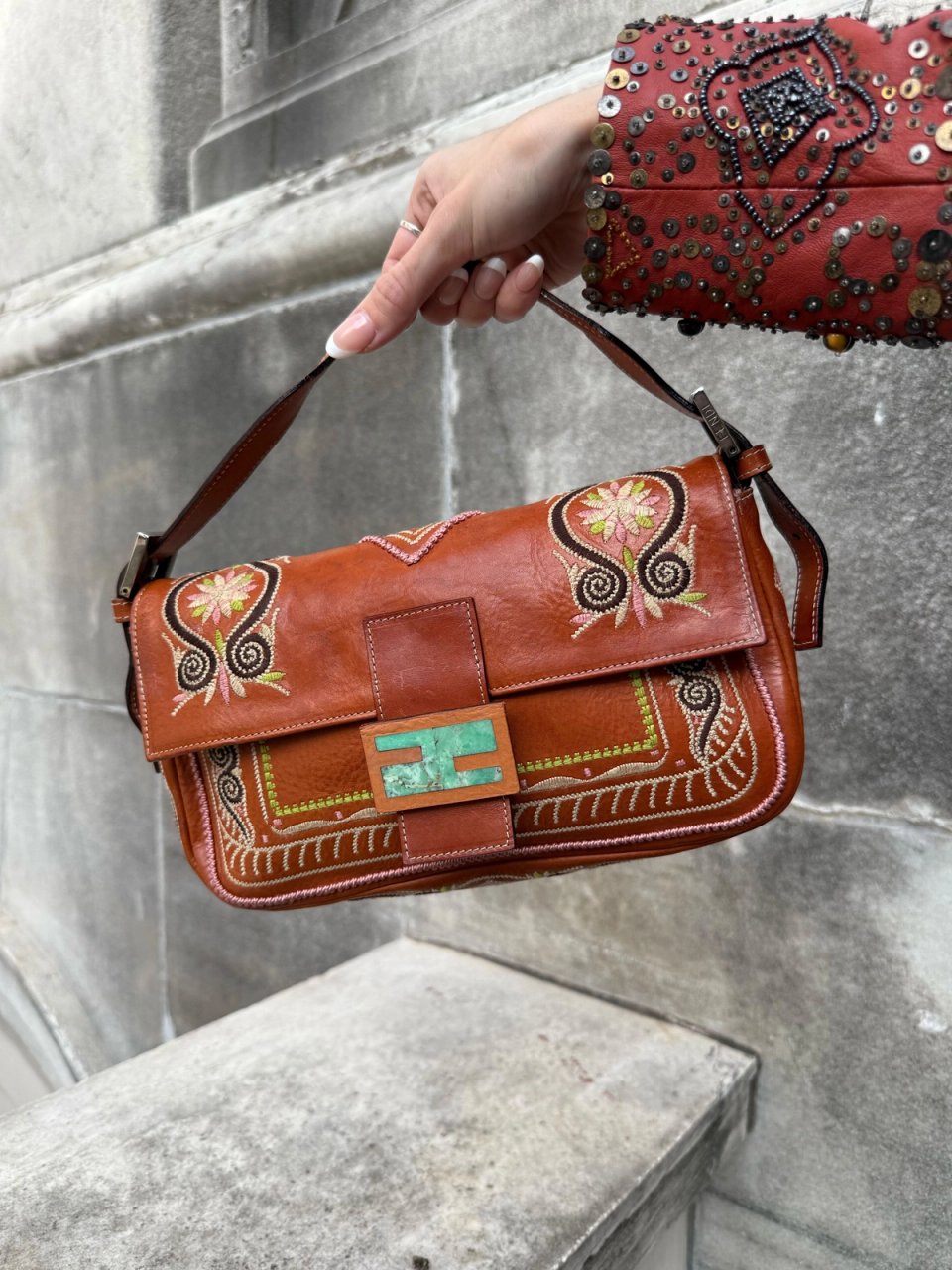
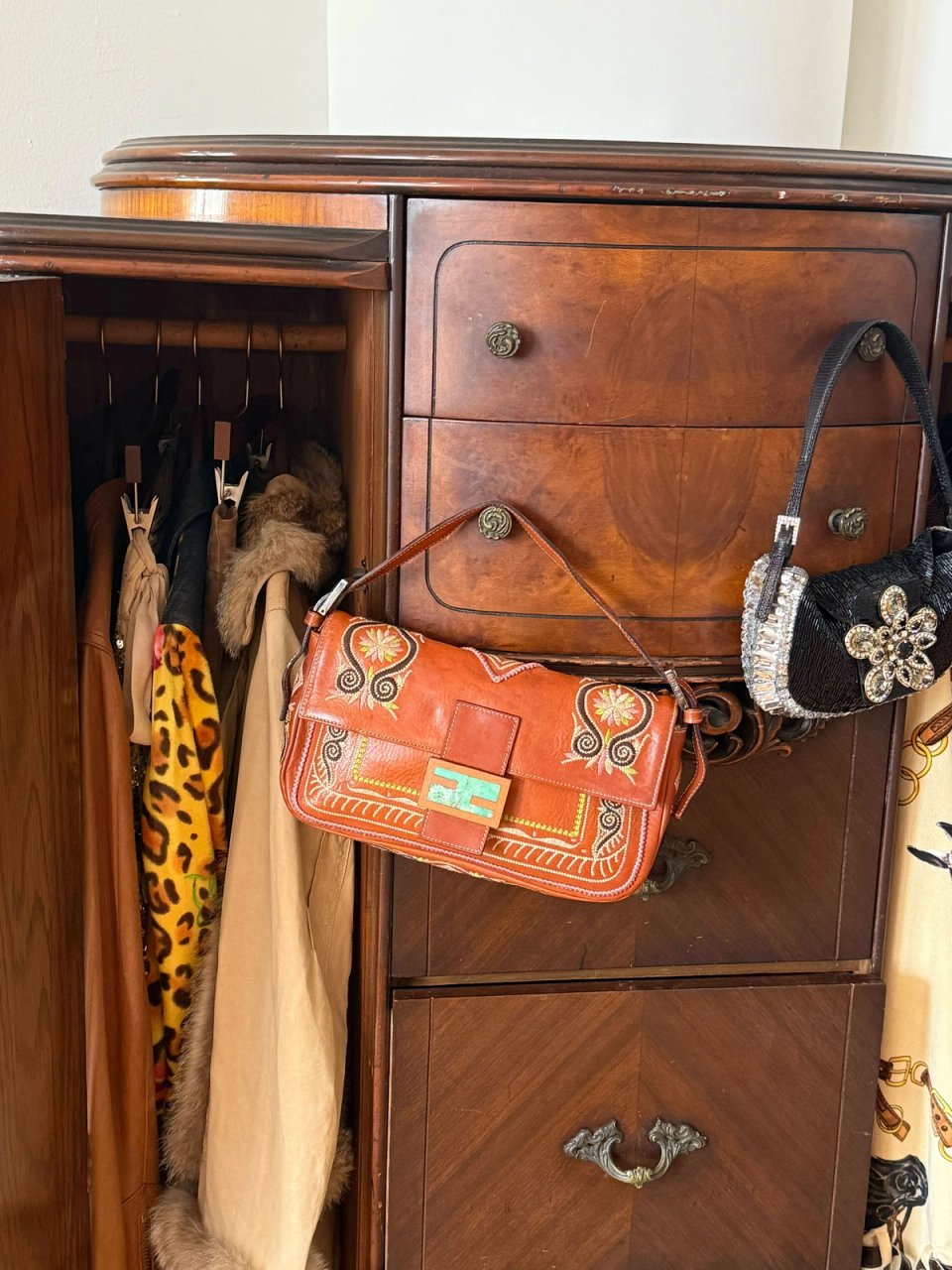
Then, of course, there is the Fendi Baguette. Taking a Baguette to the desert sounds like a risk until you see this specific iteration. Designed by Silvia Venturini Fendi, this bag is a masterclass in textures, featuring buttery tan leather that feels lived-in and authentic. But the real star is the raw turquoise stone FF buckle—a rare, "if you know, you know" detail that bridges the gap between high-fashion Italian heritage and the earthy, Southwestern roots of the California landscape. Carrying a bag like this is a reminder that fashion should be an investment, not a weekend fling. It’s a piece that will look even better with a fine coating of Indio sand, gaining character with every mile walked between the stages, rather than losing its luster like a cheap replica.

At the end of the day, the goal shouldn't be to look like a Pinterest board brought to life; it should be to look like someone who has a wardrobe worth keeping. When you stop buying for the "grid" and start buying for the archive, you stop being a trend victim and start being an icon. Let the others have their landfills and their lightning-fast shipping. We’ll be in the front row, wearing a down payment on our backs and looking better than the lineup itself, because true style doesn't have an expiration date, and it certainly doesn't end up in a trash can on Monday morning.

The $10,000 Gucci Military Jacket That Just Became the Holy Grail of the Indie Sleaze Revival

The $10,000 Gucci Military Jacket That Just Became the Holy Grail of the Indie Sleaze Revival

The $10,000 Gucci Military Jacket That Just Became the Holy Grail of the Indie Sleaze Revival

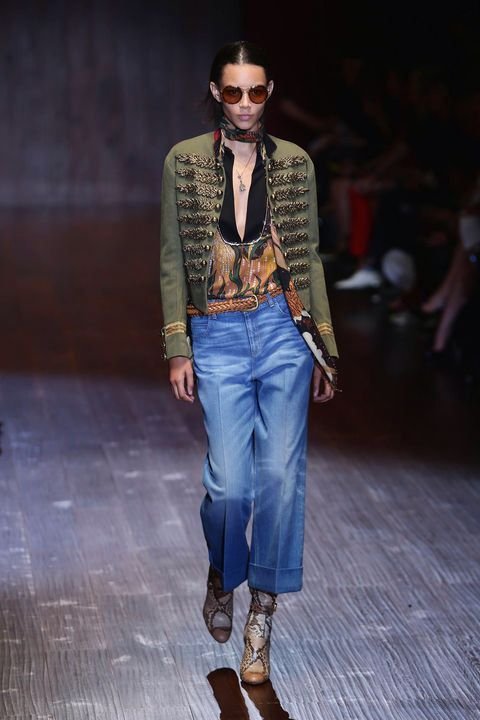
If you’ve been tracking the "Archive Fashion" tags on TikTok or browsing the high-end secondary markets lately, you’ve likely seen a sudden, magnetic flash of moss-green wool and heavy gold bullion. This isn't just any vintage find. It is the Gucci Spring/Summer 2015 "Prince Charming" Military Jacket, and in 2026, it has officially reached a level of "Holy Grail" status that most modern garments can only dream of.

While "Quiet Luxury" and minimalist neutrals dominated the early 2020s, the fashion pendulum has officially swung back with a vengeance. We are currently in the thick of a massive Indie Sleaze revival, where the messy-glamour of the 2010s—think Alexa Chung, Hedi Slimane-era Saint Laurent, and peak Coachella-core—is being reimagined with a high-fashion edge. At the absolute center of this movement sits this specific Gucci masterpiece.

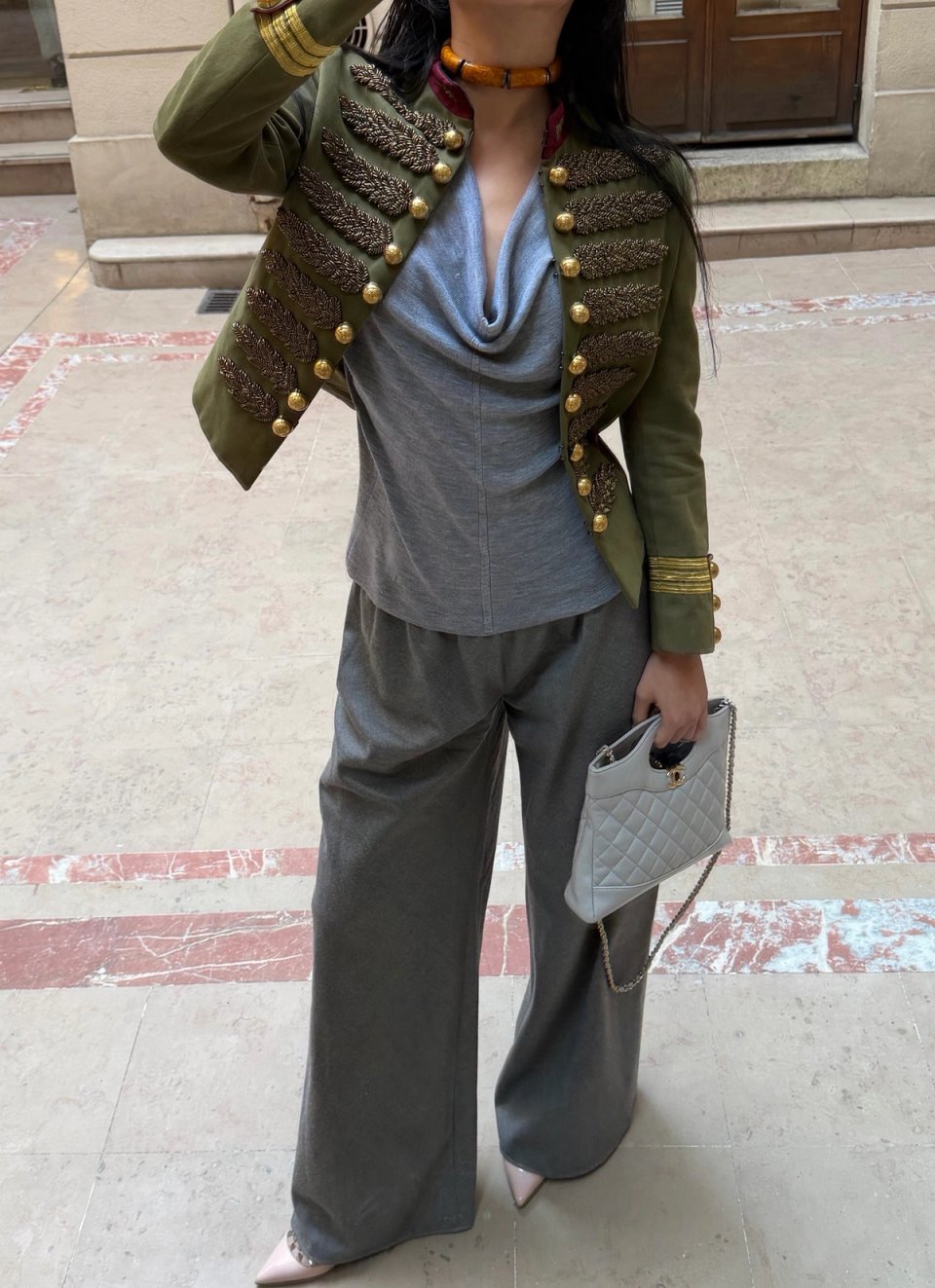
Designed during a fascinating "limbo" period at the house, just as Frida Giannini’s polished Italian glamour was beginning to melt into Alessandro Michele’s eccentric maximalism, this jacket is a masterclass in historical costuming. The "Prince Charming" isn’t a costume, though. It’s a $10,000 investment piece defined by its hand-applied gold thread that gives it a weight and texture that modern fast-fashion "band jackets" simply cannot replicate. With its standing mandarin collar and sharp, structured shoulders, it references 19th-century Hussar uniforms while maintaining a slim, feminine cut that feels incredibly current.

Even the hidden details scream archive treasure. From the crest-embossed dome buttons to the signature floral silk lining, every inch of this garment is designed for the person who appreciates fashion as art. The reason it’s trending so hard right now is simple: fashion in 2026 is obsessed with texture and character. After years of "clean girl" aesthetics, the Indie Sleaze revival demands pieces that look like they have a story to tell.

The Prince Charming jacket is the ultimate "flex" because it’s recognizable to those in the know but remains incredibly rare. On platforms like Vestiaire Collective and 1stDibs, pristine versions of this SS15 blazer are frequently listed for five figures, driven by a new generation of collectors who want the structured rebellion of a military uniform mixed with the rock-and-roll decadence of the mid-2010s.

If you’re wondering how to actually wear a $10,000 uniform today, the beauty of this piece is its sheer versatility. You could take the 2015 Runway Route and pair it with flared denim and a skinny silk scarf for that classic "boho-rocker" look that defined an era. However, for a 2026 update, many stylists are leaning into sharp contrast. Imagine the heavy, ornate military wool thrown over a sheer slip dress or paired with wide-leg grey trousers and pointed-toe heels. It’s all about balancing the "soldier" with the "socialite" in a way that feels effortless.

As we move further into an era where "new" feels temporary and "archive" feels permanent, pieces like the Gucci Prince Charming remind us why we fell in love with fashion in the first place. It’s loud, it’s expensive, and it’s unapologetically cool. If you’re lucky enough to find one, hold onto it—this isn't just a jacket, it’s a piece of the Indie Sleaze soul.

Why Your Modern Gucci Bag Is Actually a Downgrade

Why Your Modern Gucci Bag Is Actually a Downgrade

Why Your Modern Gucci Bag Is Actually a Downgrade

Why Your Modern Gucci Bag Is Actually a Downgrade

Let’s be honest for a second. You can walk into any marble-floored boutique right now, drop three grand on a brand-new bag, and walk out feeling like you’ve "arrived." But in the world of high-stakes fashion collecting, that store-bought bag is just a participation trophy. If you want the real crown jewel, you have to look back to 2004—the year Tom Ford gave his final, shimmering middle finger to the fashion establishment.

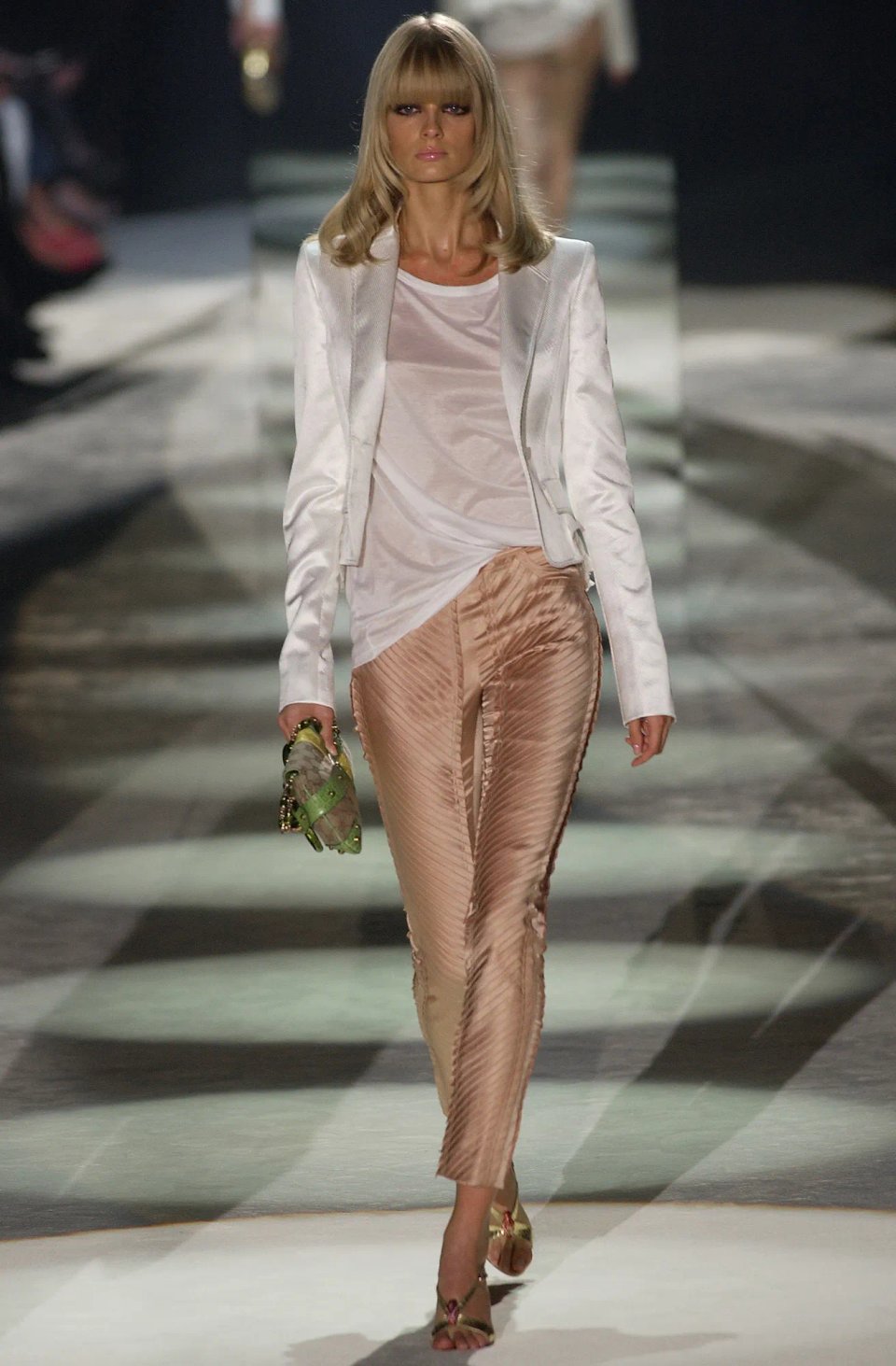
We’re talking about the Limited Edition Gucci SS2004 Swarovski Crystal Dragon Bag. This isn't just a bag; it’s a fever dream made of light and lizard skin. While modern luxury brands are playing it safe with "quiet luxury" and beige minimalism, this bag is screaming at the top of its lungs.

The Legend of the Swarovski Dragon

This isn't your standard leather Horsebit. This is the ultra-rare, runway-exclusive version featuring two Swarovski-encrusted Dragon heads facing off on the hardware. In 2004, Tom Ford leaned heavily into Chinoiserie and high-octane glamour for his swan song at the house. He took the classic Horsebit—a symbol of the equestrian elite—and corrupted it into something primal and dangerous. These dragons aren't just decorations; they are symbols of power, temptation, and the legendary drama surrounding Ford’s departure from Gucci.

Why the Craftsmanship Hits Different

If you look closely at this 2004 masterpiece, you’ll see a level of detail that would make a modern accountant weep. The body is entirely hand-beaded with a dense, liquid-like layer of genuine Swarovski crystals and silver sequins. It doesn't just "sparkle"—it glows with a metallic intensity that modern "luxury" leather just can't replicate.

The side tabs are crafted from exotic lizard skin, and the strap is a custom-tinted bamboo-link chain that bridges the gap between Gucci's heritage and Ford's futuristic sex appeal. Modern bags feel mass-produced by an algorithm; the Crystal Dragon feels like it was forged in a midnight ritual.

The Ultimate Investment Flex

Here is the controversial truth: your new bag lost 20% of its value the moment you walked out of the store. Meanwhile, the SS2004 Swarovski Dragon has become the ultimate "Unicorn" for celebrity stylists and top-tier collectors. Since Gucci re-released a simplified version of this pochette shape in 2023, the price for an original, limited-edition crystal version has skyrocketed on the secondary market. Owning this bag tells the world you didn't just follow a trend—you understand the history, the drama, and the sheer power of the "Porno-Chic" era.

Go Big or Go Home

If you want to blend in, buy what’s in the window today. But if you want to own a piece of the most legendary era in fashion history, you hunt for the dragon. It’s loud, it’s expensive, and it’s unapologetically Gucci. In a world of boring bags, be the one carrying the crystals.

From Vlogs to Vanguards: Is Emma Chamberlain’s Valentino Era the End of the ‘Relatable’ YouTuber?
From Vlogs to Vanguards: Is Emma Chamberlain’s Valentino Era the End of the ‘Relatable’ YouTuber?
From Vlogs to Vanguards: Is Emma Chamberlain’s Valentino Era the End of the ‘Relatable’ YouTuber?

From Vlogs to Vanguards: Is Emma Chamberlain’s Valentino Era the End of the ‘Relatable’ YouTuber?

The Great Ascension

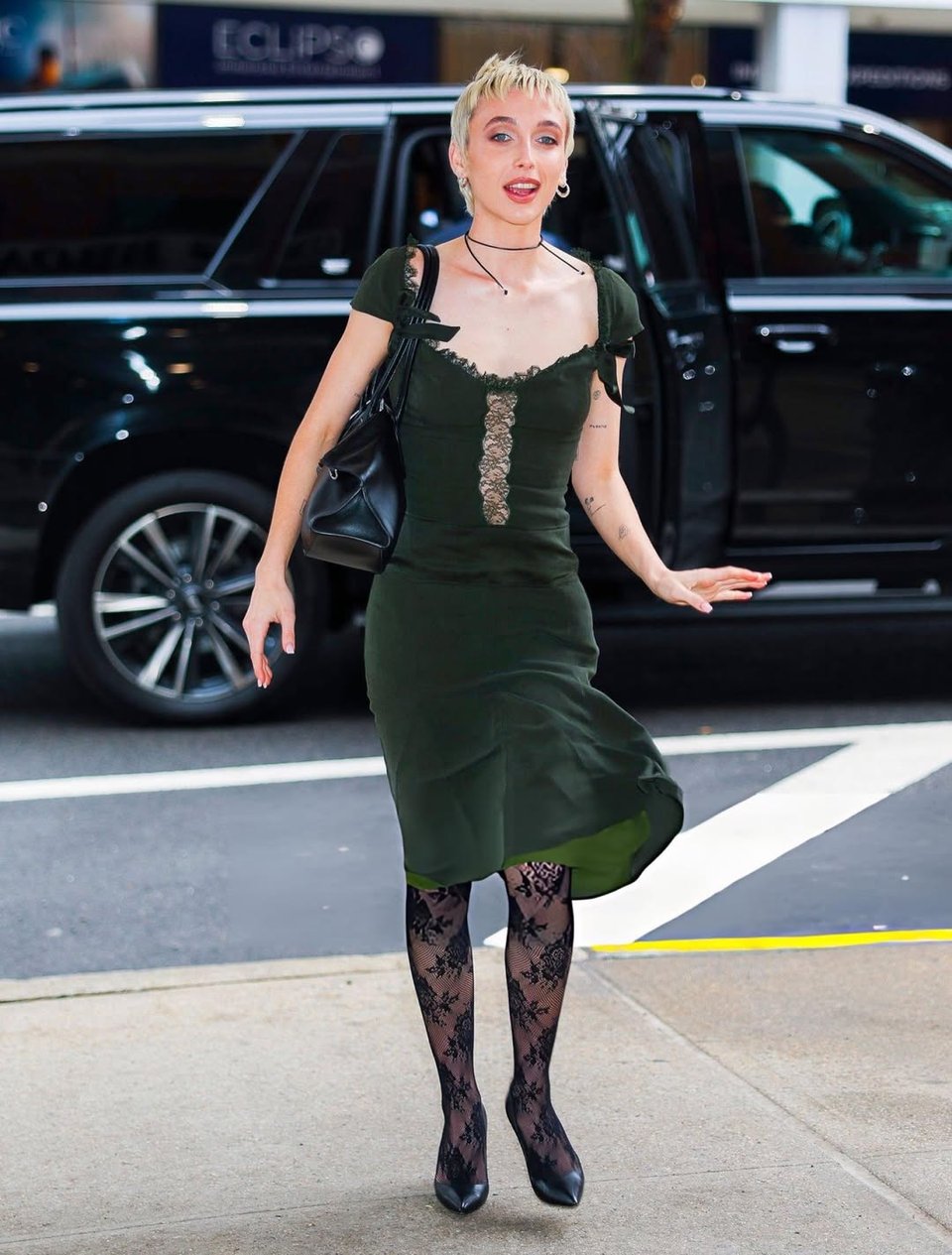
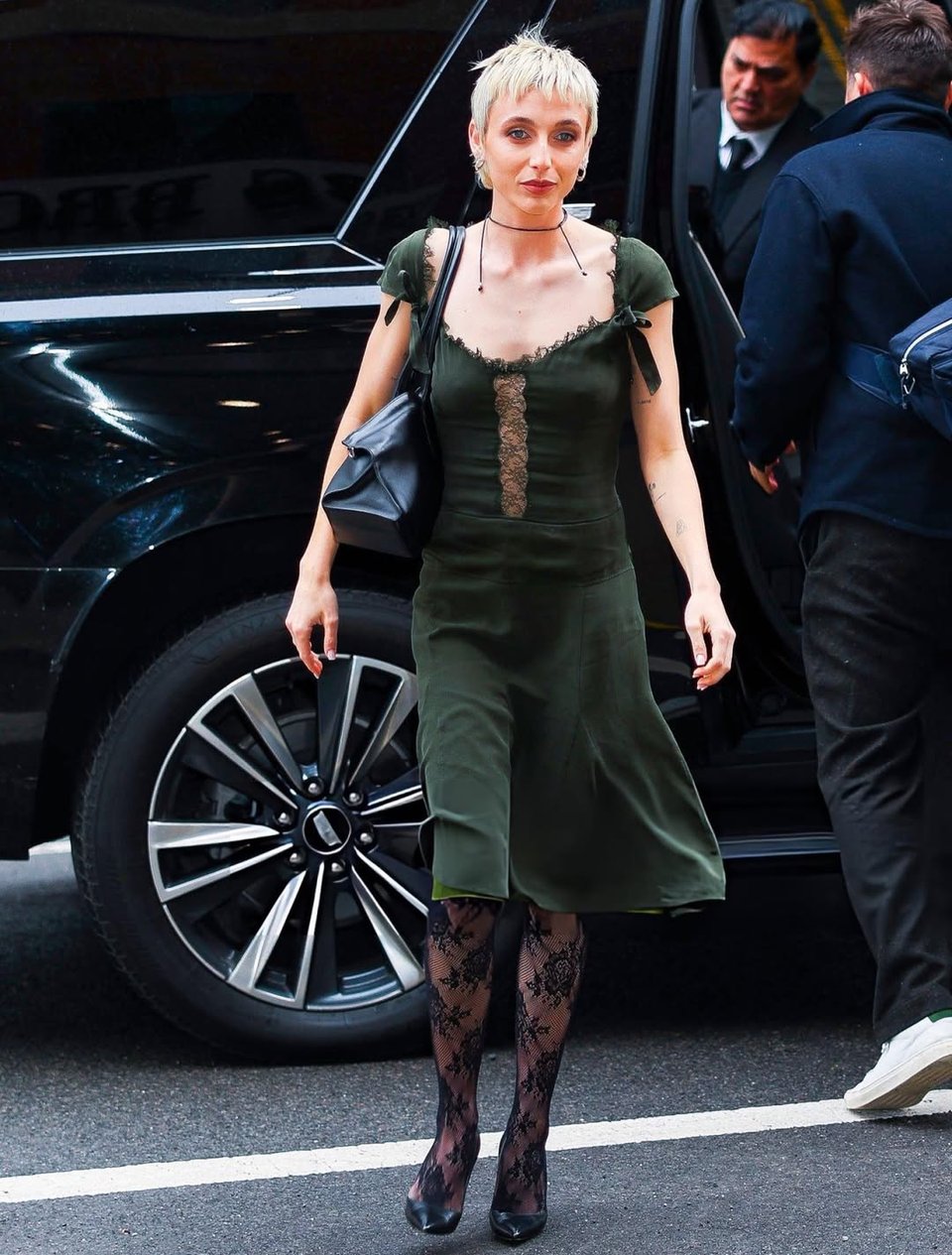
A few years ago, Emma Chamberlain was the girl in the car with an iced coffee and a messy bun. Today, she is standing on a Parisian sidewalk in archival forest green Valentino, wearing a look so polarizing it has the internet divided between "Ugly-Chic" and "High Art."

But the real story isn't the dress. It’s the rebrand.

We are witnessing the final stage of Emma’s evolution: the death of the "relatable" YouTuber and the birth of the Modern Fashion Muse. By leaning into the "ugly-chic" aesthetic of our vintage Valentino piece, Emma is signaling that she no longer cares about being your best friend. She wants to be your mood board.

Why the "Relatable" Era is Over

In 2026, "authenticity" has become a commodity. Every influencer is trying to be "real." Emma, ever the trendsetter, has realized that the only way to stay ahead is to become aspirational.

  • The Shift: Gone are the Lululemon headbands; they’ve been replaced by archival lace and mid-aughts Italian couture.
  • The Palette: Choosing mossy, "sickly" greens over classic "Valentino Red" is a deliberate move toward a more intellectual, gatekept version of style.
  • The Message: This look says, "I’ve graduated."

The Valentino Resurgence: The New 'It' Currency

Our clients aren't just buying Valentino because it’s "back in style." They’re buying it because Emma has shown them how to make it gritty.

The "Chamberlain Effect" has turned archival Valentino into the ultimate status symbol for the digital age. It’s no longer about looking "pretty"—it’s about looking curated. This green dress, with its delicate lace and subversive layering, is the perfect metaphor for her career: complex, slightly dark, and decades ahead of the curve.

"Emma has achieved the impossible: she’s the first creator to successfully bridge the gap between the YouTube comment section and the front row of the Arab World Institute."

The Verdict: Iconic or Alienating?

Some fans miss the "old Emma," but the fashion world is obsessed with the new one. This rebrand isn't a mistake; it’s a masterclass. By choosing pieces that are difficult to wear—like this green Valentino—she forces the world to take her seriously as an authority, not just a personality.

The take is simple: If you're still trying to be "relatable" in 2026, you're already behind. The future belongs to the icons who aren't afraid to be a little bit "ugly" in the name of high fashion.
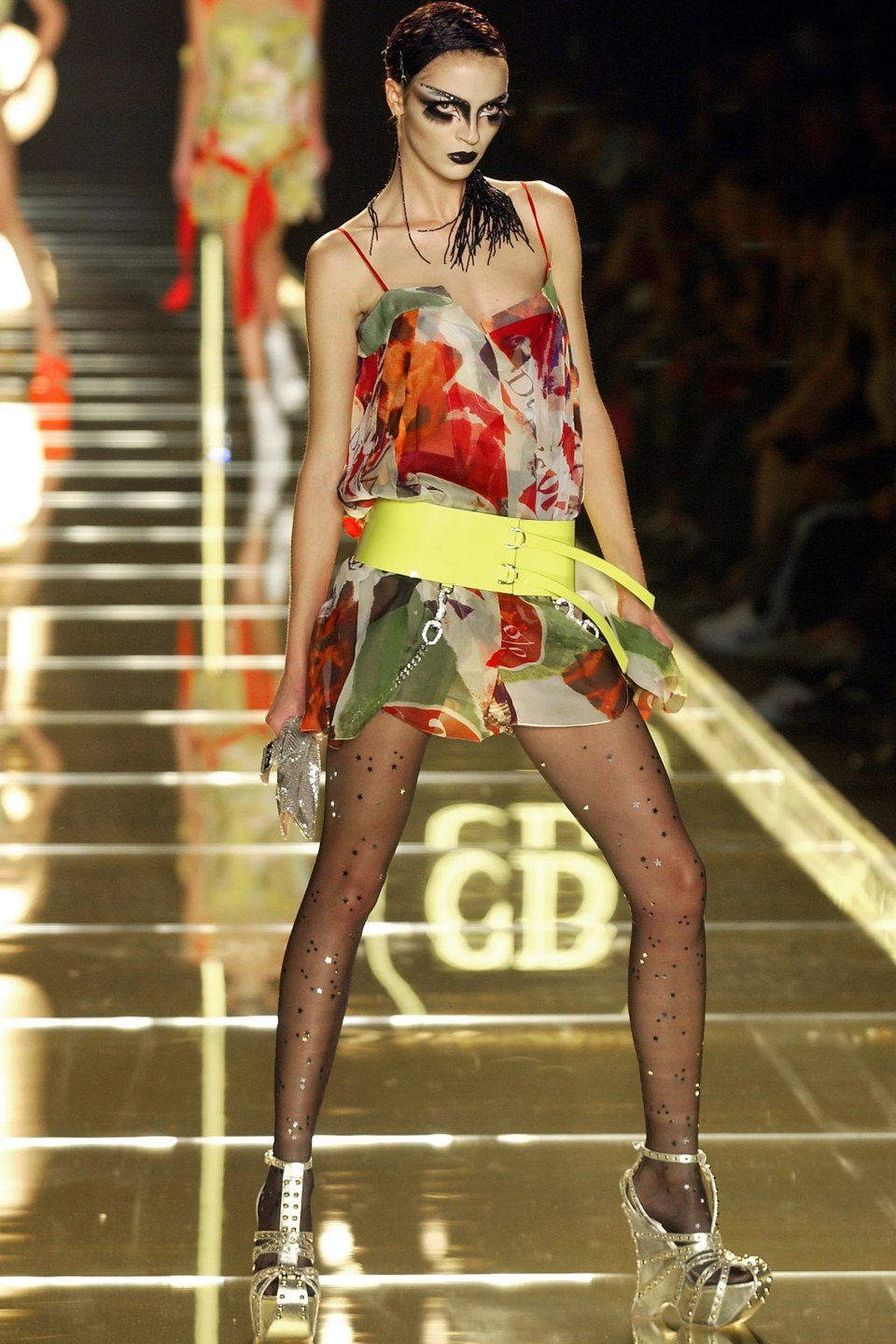
I’ve Collected Galliano for a Decade—Why Does His Zara Collab Feel Like a Loss?

I’ve Collected Galliano for a Decade—Why Does His Zara Collab Feel Like a Loss?

I’ve Collected Galliano for a Decade—Why Does His Zara Collab Feel Like a Loss?

I’ve Collected Galliano for a Decade—Why Does His Zara Collab Feel Like a Loss?

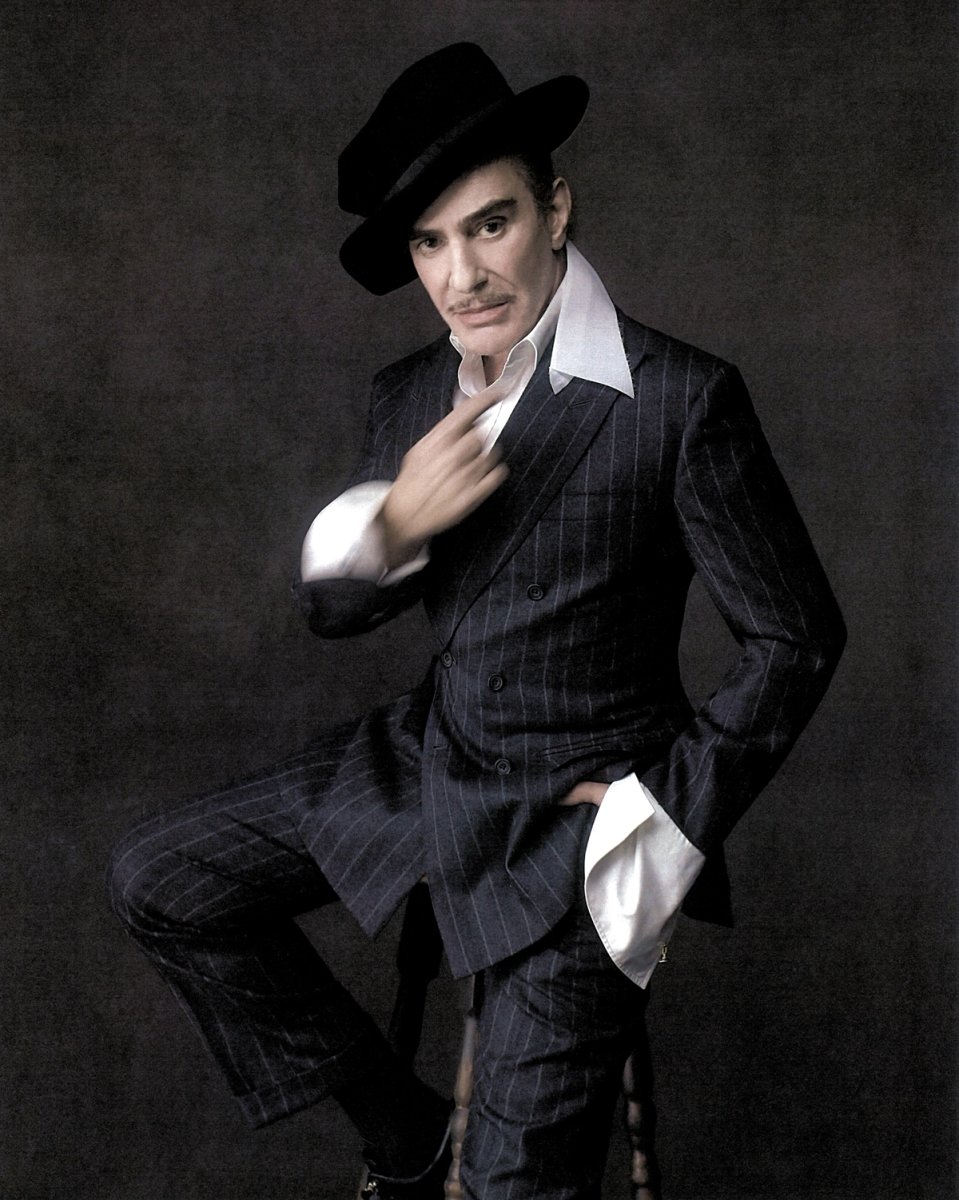
A 1999 newspaper print blouse. A tailored jacket from the "Homage to Christian Dior" collection. A deconstructed shirt from his tenure at Maison Margiela. These aren't just clothes; they are chapters of a story. They are artifacts of a brilliant, erratic, and utterly singular mind that redefined what fashion could be. For ten years, I’ve hunted, curated, and prized these pieces. They represented a rebellion against the ordinary—a commitment to the poetic, the theatrical, and the technically impeccable.

And now, John Galliano is at Zara.

When the news broke this March of his two-year "creative residency," my first reaction wasn't excitement. It was a strange, dull ache. As a collector, the allure of Galliano was always the "gatekeep"—the fact that you had to know the history to appreciate the stitch. Seeing his name on a blue-and-white cardboard mailer feels like the end of the sacredness that made collecting his work so meaningful.

The Allure of the Hunt vs. the Ease of the App

For a decade, Galliano was the holy grail. Owning a piece of his work was a statement. The difficulty of finding these pieces—scouring vintage shops, silent auctions, and the depths of the internet—was the point. Scarcity heightened the value.

But Zara is the high priest of the mainstream. It’s the democratization of fashion—a concept that is inherently antithetical to the very essence of what Galliano stood for. He was the haute couture champion of excess. Seeing his name on a hangtag in a store that moves thousands of units a week feels, quite frankly, like a glitch in the simulation.

The "Re-Authoring" Gimmick

The residency is being framed as "re-authoring" the Zara archives—taking garments from past seasons and deconstructing them. It’s a genius marketing spin on sustainability, but for a collector, it’s a bit of a meta-joke. The man who defined originality is now reworking mass-produced leftovers. Is this a brilliant commentary on the circularity of fashion, or just a fancy way to move deadstock?

As I watch him trade the moonlit Seine (his legendary 2024 Margiela swan song) for an Inditex warehouse, I can't help but wonder: Can the "soul" of a Galliano piece—the "emotional cutting" and narrative depth—truly be translated into the language of a global retail giant?

The Million-Dollar Question (Literally)

And then, of course, there’s the curiosity. While the exact figure of his contract is locked in a vault in A Coruña, industry whispers suggest a payout that would make even an LVMH executive blink. Zara has proven they have the capital to buy prestige (Pilati, Meisel, and now Galliano). Fashion people like money, and Zara has mountains of it.

I’m genuinely curious to see the "math" of it all. How do you apply a "couture process" to a polyester-blend blazer? How much of that signature Galliano bias-cut can survive a mass-production line? It’s like watching a Michelin-star chef design a menu for a fast-food chain; you’re skeptical of the ingredients, but you’re dying to see if they can actually make a burger taste like a memory.

The Collector’s Dilemma: I hate that the mystery is being dismantled, but my curiosity is peaking. I want to see the silhouettes, the toiles, and the sheer audacity of a man who once built empires out of dreams now building one out of Zara’s surplus.

This move feels like the ultimate triumph of the quantifiable over the poetic. It’s a sign that even the most individualistic talents can be absorbed by the giant engine of global commerce. I don't know if I'll ever look at my archival pieces the same way again, but I’ll certainly be watching the Zara windows this September—strictly for research purposes, of course.

Sunisa Lee Wears La Perla from Into Archive

Sunisa Lee Wears La Perla from Into Archive

Sunisa Lee Wears La Perla from Into Archive

Sunisa Lee Wears La Perla from Into Archive

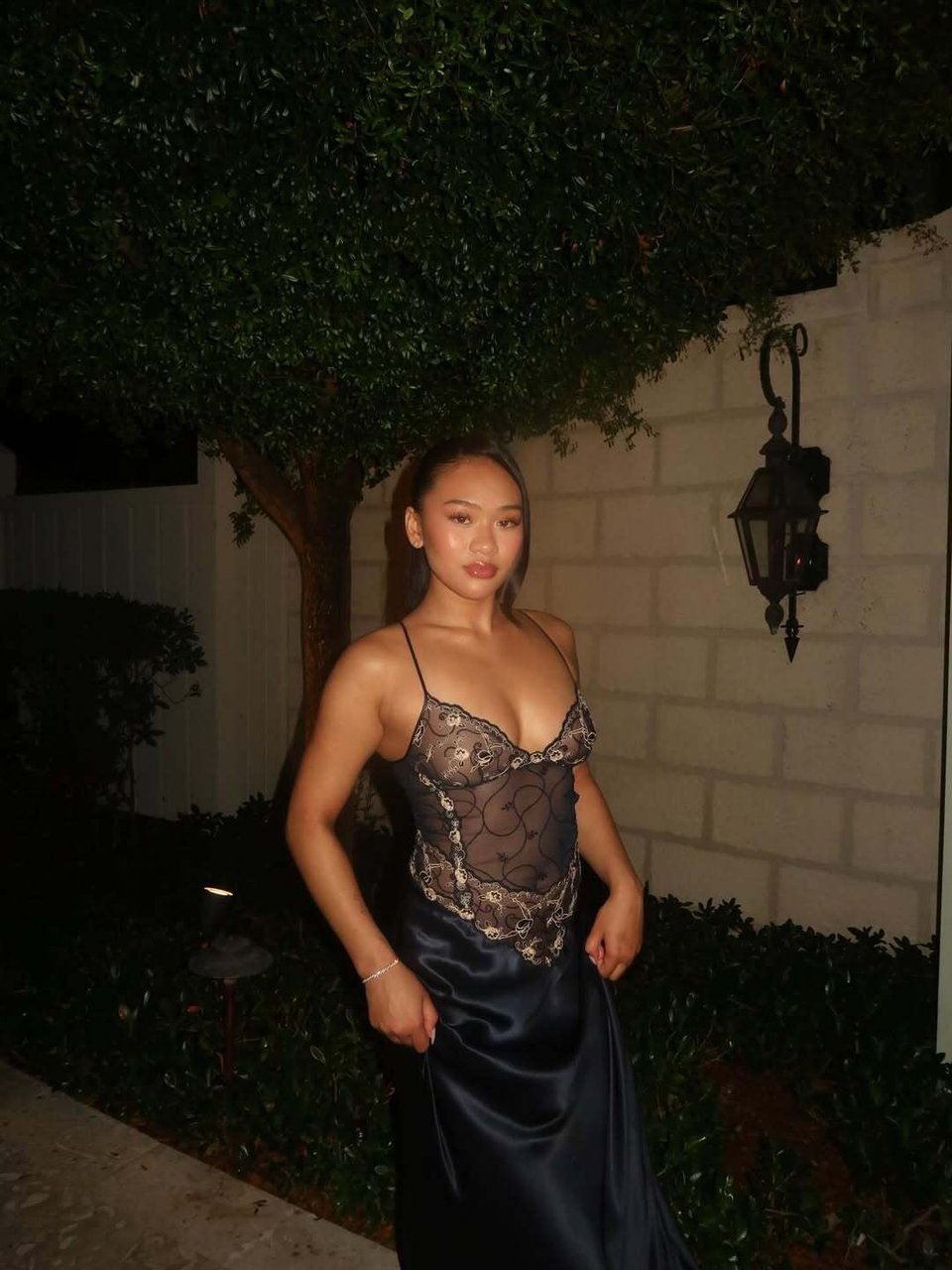
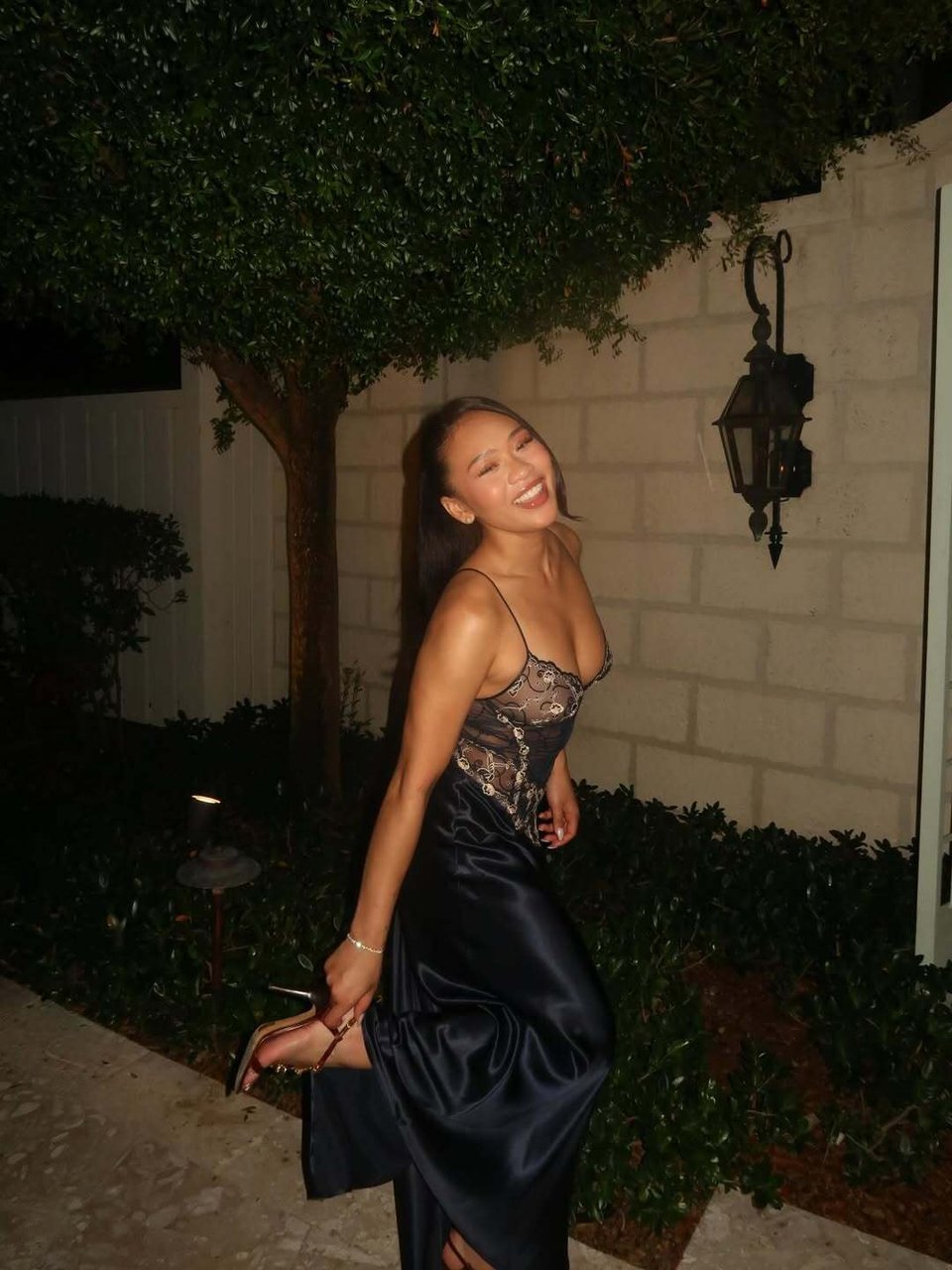
Olympic gold medalist Suni Lee was recently seen wearing a vintage La Perla look sourced through Into Archive, marking another exciting moment where archival fashion meets contemporary cultural relevance. At Into Archive, we are always interested in the way rare designer pieces continue to live beyond their original era, and seeing Suni Lee in vintage La Perla is a strong example of how historic luxury fashion can feel current, elevated, and powerfully worn today.

As a New York luxury vintage destination focused on rare archival designer fashion, Into Archive specializes in sourcing pieces that hold both visual impact and long-term fashion significance. When a public figure like Suni Lee wears a piece from our collection, it reflects something we have long believed: that archival fashion is not static. It is meant to be seen, styled, reinterpreted, and placed back into modern conversation.

Suni Lee in Vintage La Perla

Suni Lee is recognized globally for her precision, discipline, and presence. As an Olympic gold medalist, she represents a kind of modern excellence that feels especially compelling when paired with a house like La Perla, a brand known for craftsmanship, sensuality, and refined construction. The look she wore through Into Archive captures that balance well. It is delicate yet strong, romantic yet sharp, intimate yet visually commanding.

This is part of what makes vintage La Perla so relevant right now. The brand’s most memorable pieces often blur the line between lingerie, eveningwear, and fashion object. In today’s styling landscape, that language feels more current than ever. Sheer panels, intricate lacework, body-conscious silhouettes, and elevated fabrications have all returned as major reference points in modern fashion, making archival La Perla a natural fit for contemporary dressing.

For us, seeing Suni Lee wear vintage La Perla is not only exciting because of who she is, but because of what the moment says about where fashion is moving. The strongest pieces from the past are continuing to shape the visual language of the present.

Why Vintage La Perla Still Matters

La Perla has long held a distinct place within luxury fashion. Founded in Italy and celebrated for its heritage of fine lingerie and intimate apparel, the house built its reputation on technical skill, feminine construction, and material excellence. Over time, many La Perla pieces moved beyond their original category and became collectible fashion in their own right.

Today, vintage La Perla is increasingly appreciated not just for its beauty, but for its styling versatility and rarity. Collectors, stylists, celebrities, and fashion-conscious clients are drawn to these pieces because they offer something that many new garments do not: a sense of intimacy, detail, and design specificity. Whether worn as part of an evening look, layered into street styling, or featured in editorials and special appearances, archival La Perla has become a valuable part of the wider luxury vintage conversation.

That is especially true in a market where consumers are becoming more selective and more educated. Shoppers are looking for pieces with identity. They want garments that feel distinctive, that photograph well, that carry history, and that stand apart from mass-produced fashion. Vintage La Perla answers all of those demands.

The Rise of Archival Fashion in Celebrity and Editorial Styling

The continued rise of archival fashion has changed the way people engage with luxury clothing. What was once seen primarily as collectible or niche is now central to red carpet dressing, editorial styling, celebrity appearances, and personal wardrobes. More than ever, high-profile figures are reaching for vintage designer pieces because they offer depth, individuality, and cultural weight.

Into Archive has always been rooted in that perspective. We see archival fashion as an active space, not a passive one. A garment is not only valuable because it is old or rare. It becomes truly important when it can still create impact now. When someone like Suni Lee wears a vintage La Perla piece, it demonstrates exactly why these garments matter: they still communicate. They still move people. They still define an image.

There is also a growing appreciation for the craftsmanship found in older designer garments. In many cases, vintage luxury pieces were made with a level of detail, fabrication, and construction that is increasingly difficult to replicate. That is one reason why celebrities and stylists continue to source archival fashion for major appearances. The pieces bring both aesthetic value and a sense of authorship. They feel specific, intentional, and unforgettable.

Into Archive and the Future of Luxury Vintage

At Into Archive, our focus has always been on building a tightly considered selection of archival designer fashion that feels both collectible and wearable. We source pieces that speak to fashion history, but also to the present moment. That includes iconic runway references, hard-to-find designer garments, and rare vintage pieces that align with the way style is evolving now.

Our rental and sales model allows these garments to continue circulating in meaningful ways. Rather than existing only as static collector’s items, they are given the opportunity to be worn again by women shaping the visual culture of today. That ongoing movement is important to us. It allows fashion history to remain visible and alive.

Seeing Suni Lee in one of our La Perla rentals is a meaningful example of that mission in motion. It shows how a vintage piece can carry elegance, relevance, and modern energy all at once. It also reinforces the growing role of archival fashion in celebrity styling, luxury rentals, and contemporary wardrobes.

Vintage La Perla at Into Archive

As interest in vintage La Perla continues to grow, Into Archive remains committed to sourcing exceptional examples that reflect the beauty and specificity of the house. We are drawn to pieces with strong construction, striking detailing, and clear visual identity — garments that feel sensual, refined, and unmistakably memorable.

For clients interested in luxury vintage clothing, designer rentals, or rare archival fashion in New York, Into Archive offers a curated approach shaped by deep knowledge of the market and a strong point of view on style. Our selection is built for collectors, stylists, editors, and clients who want pieces that feel rare, directional, and culturally relevant.

Suni Lee wearing vintage La Perla through Into Archive is a reminder of why archival fashion continues to matter. The right piece does more than reference the past. It sharpens the present.

If you are exploring vintage La Perla, archival designer fashion, or luxury vintage rentals, Into Archive continues to champion pieces that deserve to be worn, seen, and remembered.

Why Did Karl Lagerfeld Give the Entire Front Row Umbrellas in 2006?

Why Did Karl Lagerfeld Give the Entire Front Row Umbrellas in 2006?

Why Did Karl Lagerfeld Give the Entire Front Row Umbrellas in 2006?

Why Did Karl Lagerfeld Give the Entire Front Row Umbrellas in 2006?

Why Did Karl Lagerfeld Give the Entire Front Row Umbrellas in 2006?

If you were lucky enough to be a "Mademoiselle" on the Chanel guest list in October 2005, your invitation didn't arrive in an envelope. It arrived as a package containing a miniature, sorbet-colored umbrella.

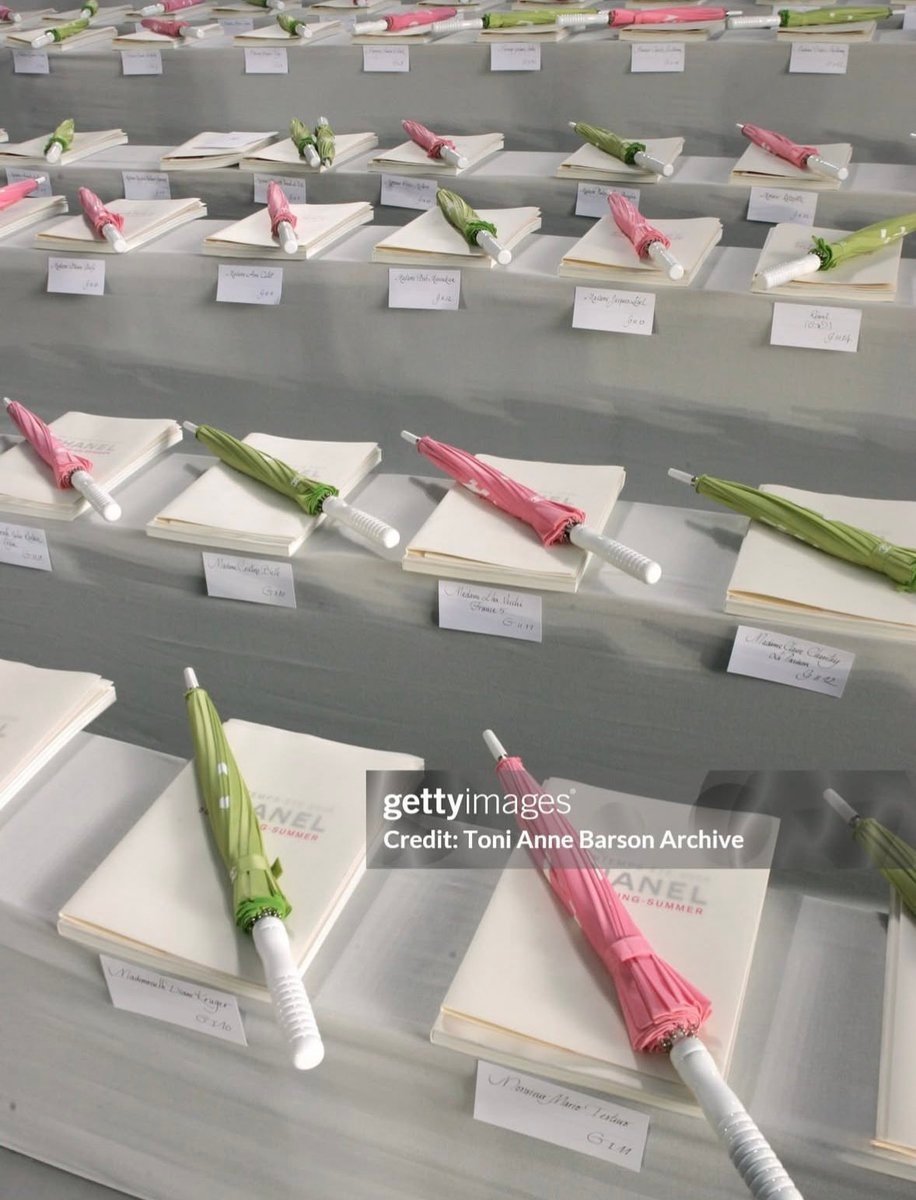
When the fashion pack descended upon the Grand Palais for the Spring-Summer 2006 Ready-to-Wear show, they found thousands more of these neon accessories—in punchy lime green and carnation pink—meticulously laid out across the benches. From a distance, the front row looked less like a fashion show and more like a high-fashion garden party prepared for a sudden downpour.

But why an umbrella? And why those specific, electric colors?

The Grand Palais Comeback

To understand the umbrella, you have to understand the venue. After a massive, multi-year renovation, Chanel was finally returning to its "spiritual home," the Grand Palais.

The 2006 show was a celebration of the building's legendary glass roof. Lagerfeld wanted the collection to feel "airy" and "transparent." By gifting umbrellas, he was playing a witty double-entendre:

  1. The Practical Joke: A nod to the unpredictable Parisian sky visible through the massive glass ceiling.
  2. The Aesthetic Shield: In a show themed around light and transparency, the umbrella was the ultimate accessory for a woman who wanted to be seen—but only on her terms.

The "Diane Kruger" Guest List

The archival photos from the Toni Anne Barson Archive show the incredible precision of the era. Each umbrella sat atop a thick white press kit, paired with a hand-lettered card. One of those cards belonged to Mademoiselle Diane Kruger, the German actress and longtime house muse.

Seeing her name next to the neon-green canopy (pictured) reminds us of a specific era of "Chanel Cool." This wasn't the stuffy, conservative Chanel of the past; this was the era of the "New Wave," where classic tweed was reinvented for a younger, more irreverent front row.

Anatomy of a 2006 Artifact

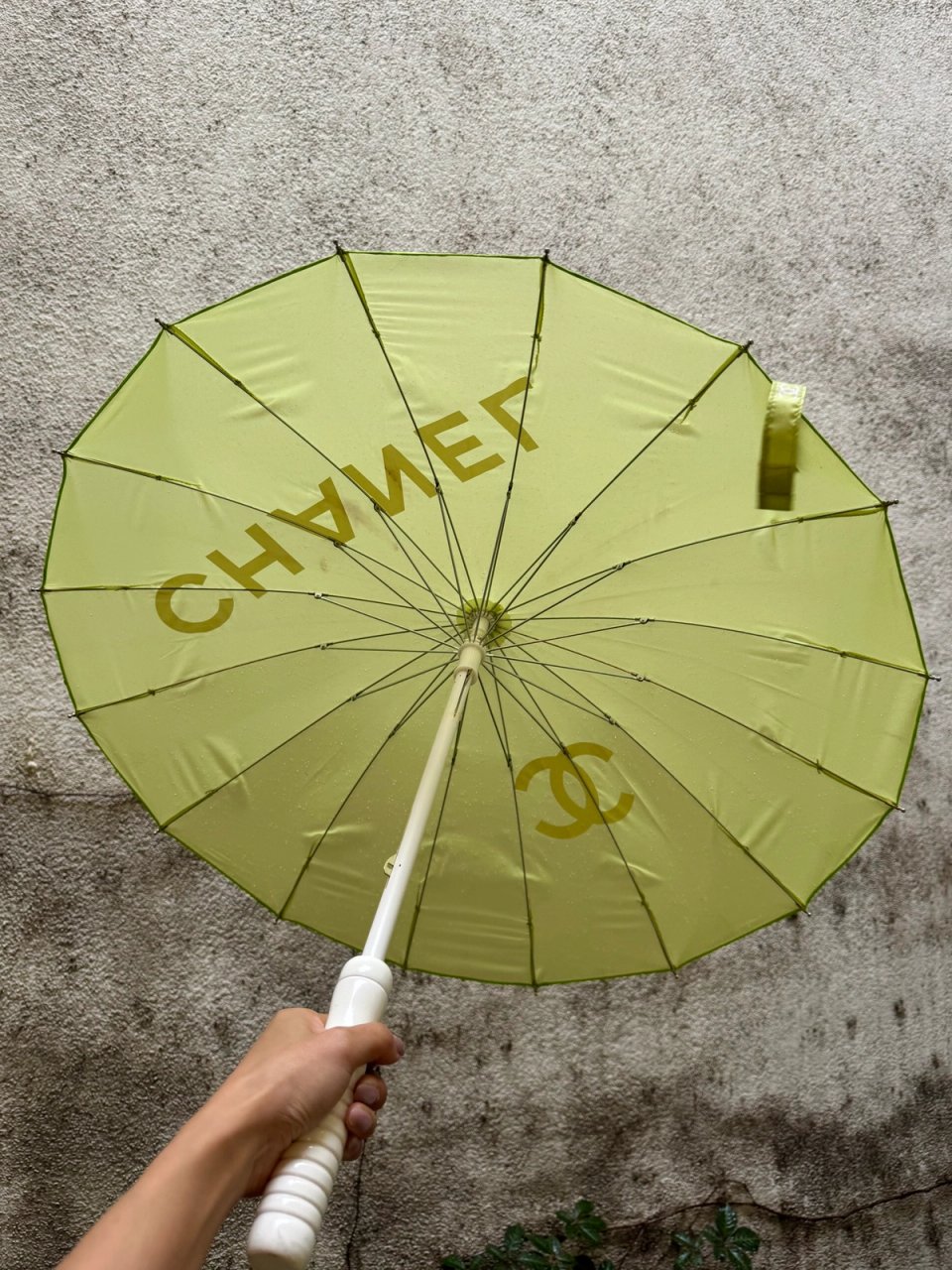
The umbrella itself is a masterclass in mid-2000s branding. Unlike the 90s versions, the 2006 iterations leaned into a specific "Technicolor Pop" palette:

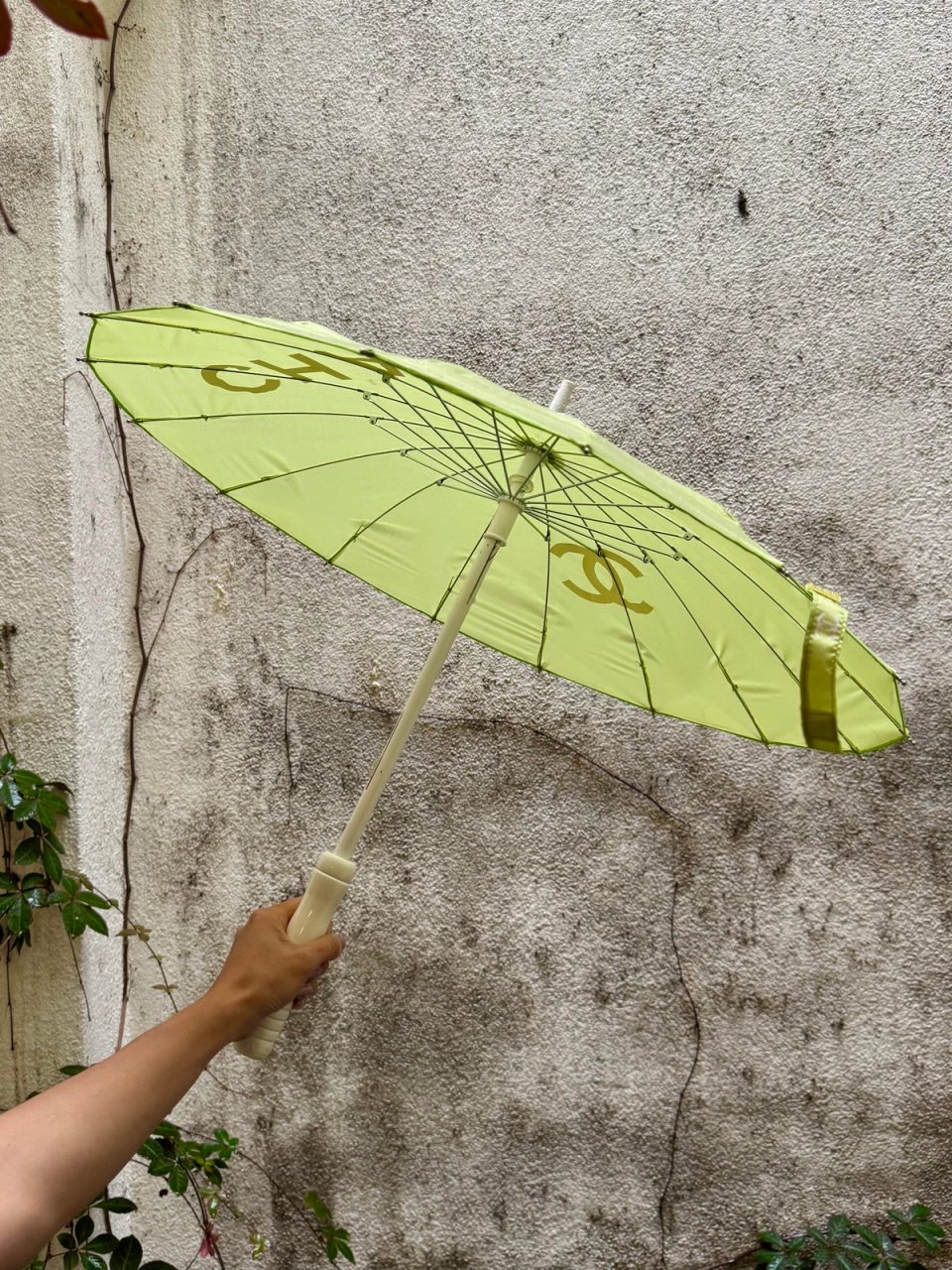
  • The Contrast: A white ribbed plastic handle and shaft provided a clean, sporty contrast to the saturated lime fabric.
  • The Logo Placement: The "CHANEL" block lettering and the CC logo were positioned to ensure that when the umbrella was held up, the brand was legible from every angle—making it the original "Instagrammable" moment before Instagram existed.

The Legacy: From Invite to Icon

Today, the SS06 umbrella is more than just show ephemera; it is a piece of fashion architecture. Because they were functional, many didn't survive the decades. The neon fabric was prone to fading, and the white handles were easily scuffed.

Finding a pristine, "bright white" handle lime-green version today is a rare win for any collector. It represents a moment when Karl Lagerfeld didn't just design clothes; he designed the very atmosphere of Paris.

So, why did Karl give the front row umbrellas? Because at Chanel, even the weather is a branding opportunity.

The Evolution of the Chanel Dustbag: A Collector’s Guide from the 1980s to Today

The Evolution of the Chanel Dustbag: A Collector’s Guide from the 1980s to Today

The Evolution of the Chanel Dustbag: A Collector’s Guide from the 1980s to Today

The Evolution of the Chanel Dustbag: A Collector’s Guide from the 1980s to Today

The Fabric of Luxury: A Comprehensive History of Chanel Dustbags (1980–2026)

When we discuss the house of Chanel, the conversation usually centers on the buttery lambskin of a Classic Flap or the intricate weave of a seasonal tweed. Yet, there is a silent guardian that has accompanied every authentic piece for decades: the dustbag. To the untrained eye, it is a simple cloth pouch. To the dedicated collector and the seasoned authenticator, the dustbag is a time capsule that reveals the era, the intention, and the craftsmanship of the House of Chanel.

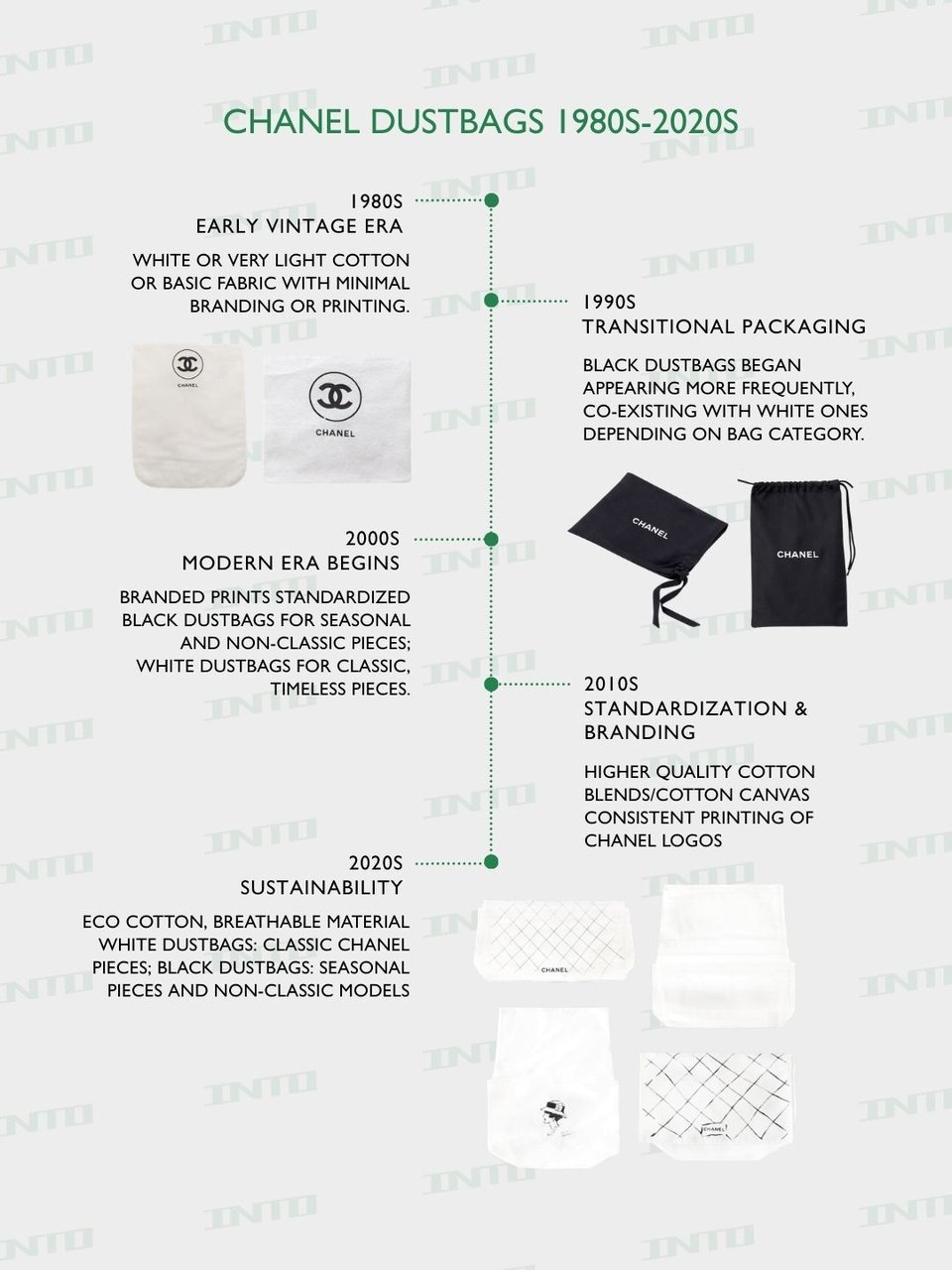
The 1980s: The Era of Functional Simplicity

In the early vintage era of the 1980s, Chanel’s packaging reflected a world before the "luxury experience" became a digitized, global phenomenon. During this decade, dustbags were primarily functional rather than branded accessories. They were crafted from white or very light cream cotton, often with a texture that felt more like a basic bedsheet than a high-end textile.

The branding during this time was remarkably modest. You might find a small, sewn-in tag or a light, almost translucent screen print of the Chanel name. There was no "standard" look because the bag was the star, and the pouch was merely a tool to prevent color transfer and scuffing in a woman's closet. If you find a bag from 1985 today, its original dustbag likely feels thin and unpretentious, lacking the heavy weight we associate with modern luxury.

The 1990s: A Decade of Transition

As Karl Lagerfeld began to truly reshape the brand’s identity in the 1990s, the packaging followed suit. This was the birth of "Transitional Packaging." While white cotton remained common, we began to see the introduction of black dustbags. This shift often depended on the category of the item—shoes and small leather goods might come in one color, while larger handbags came in another.

The logos started to gain a bit more prominence, though they remained relatively small compared to the "Logomania" that would follow. The material stayed rooted in simple cotton, but the weave became slightly tighter and more durable. This decade is often the most confusing for collectors because of the lack of strict uniformity; it was an era of experimentation as the brand figured out its modern visual language.

The 2000s: The Modern Era and the Microfiber Revolution

By the turn of the millennium, the "Modern Era" of Chanel packaging had officially begun. This is when the Chanel logo and the iconic Serif font became the standardized giants we recognize today. The 2000s saw a massive shift in textile technology. Chanel moved away from basic cotton and began using microfiber blends.

These microfiber bags felt "slicker" and more high-tech. They were designed to be incredibly soft to prevent even the slightest micro-scratches on delicate patent leather or high-shine lambskin. This was also the era where black became the dominant color for the majority of the line. The dustbag was no longer just a pouch; it was a branded statement that said "I am an authentic Chanel product" from across the room.

The 2010s: Standardization and the Great Divide

The 2010s brought a very specific hierarchy to the Chanel unboxing experience. This decade is defined by the "Standardization & Branding" phase. Collectors began to notice a clear divide: the White Dustbag vs. the Black Dustbag.

White dustbags, often featuring a flap closure and a drawing of Coco Chanel herself (sometimes called the "Karl Lagerfeld sketch" bags), were reserved for the "Icons"—the Classic Flap, the 2.55 Reissue, and other timeless pieces. Black dustbags, usually with a simple drawstring, were used for the more avant-garde seasonal pieces, Boy Bags, and Gabrielle bags. The material during this time shifted toward a very heavy, high-quality cotton canvas. These bags were thick, sturdy, and felt expensive to the touch, mirroring the price increases seen across the boutique floors.

The 2020s: The Pivot to Sustainability

As we moved into the 2020s, the global conversation shifted toward environmental responsibility, and Chanel responded. Starting around 2022, the brand began phasing out the microfiber blends of the 2000s in favor of more eco-friendly, breathable cotton.

The current 2020s era is defined by "Sustainability." These modern dustbags are designed to let the leather "breathe," which is crucial for preventing mold or dryness in humid climates. While the classic white-for-icons and black-for-seasonal rule still largely applies, the textures have become more organic. Today’s dustbags feel less like synthetic tech-wear and more like high-end organic linen. They are a nod to the brand's heritage while looking forward to a future where luxury doesn't have to mean a heavy carbon footprint.

The Anatomy of an Authentic Dustbag

For the serious collector, the dustbag is a primary tool for authentication. A genuine Chanel dustbag will always have clean, straight stitching. The font should be crisp, never "fuzzy" or bleeding at the edges of the ink. Most importantly, the material should feel substantial. Counterfeiters often spend their budget on the bag itself and cut corners on the packaging, resulting in dustbags that feel "scratchy," overly shiny, or paper-thin.

When you hold a Chanel dustbag from any of these eras, you aren't just holding a piece of fabric. You are holding forty years of fashion history—a testament to how the House of Chanel protects its legacy, one stitch at a time.

Alexandre Vauthier’s SS22 Couture: The Ultimate Masterclass in Modern Revenge Dressing

Alexandre Vauthier’s SS22 Couture: The Ultimate Masterclass in Modern Revenge Dressing

Alexandre Vauthier’s SS22 Couture: The Ultimate Masterclass in Modern Revenge Dressing

Alexandre Vauthier’s SS22 Couture: The Ultimate Masterclass in Modern Revenge Dressing

Redefining the Power Silhouette: The Alexandre Vauthier SS22 Legacy

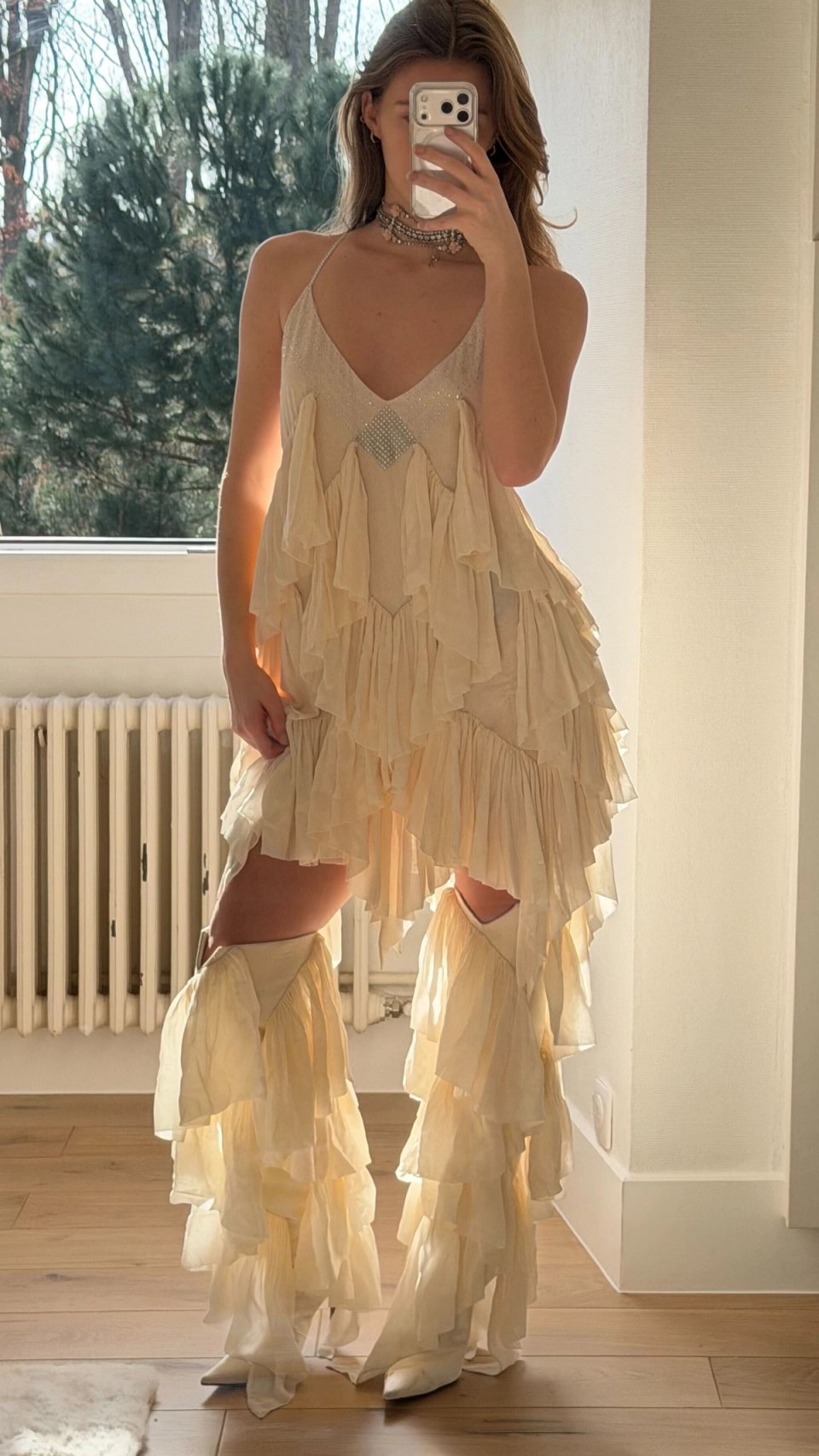
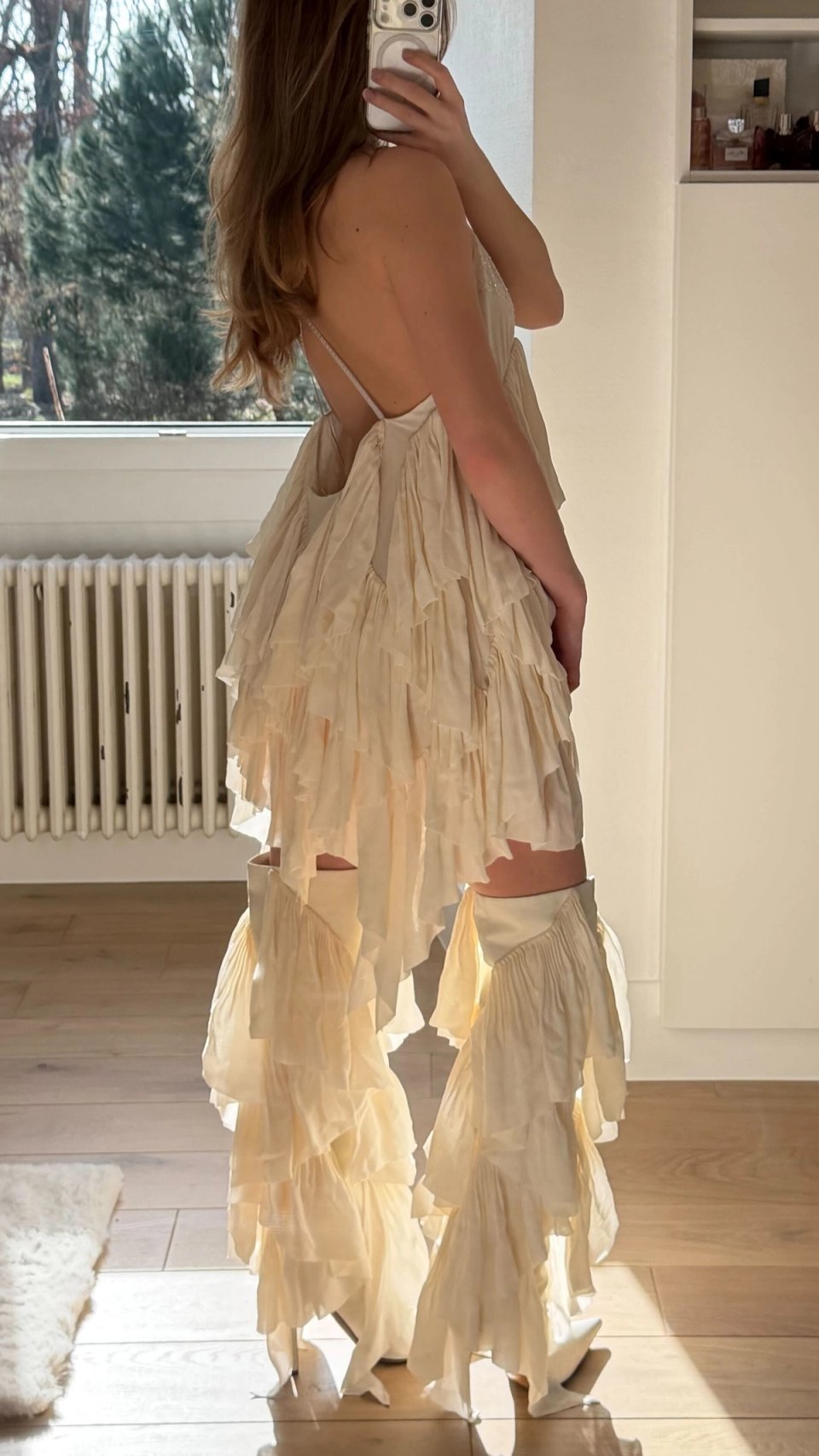
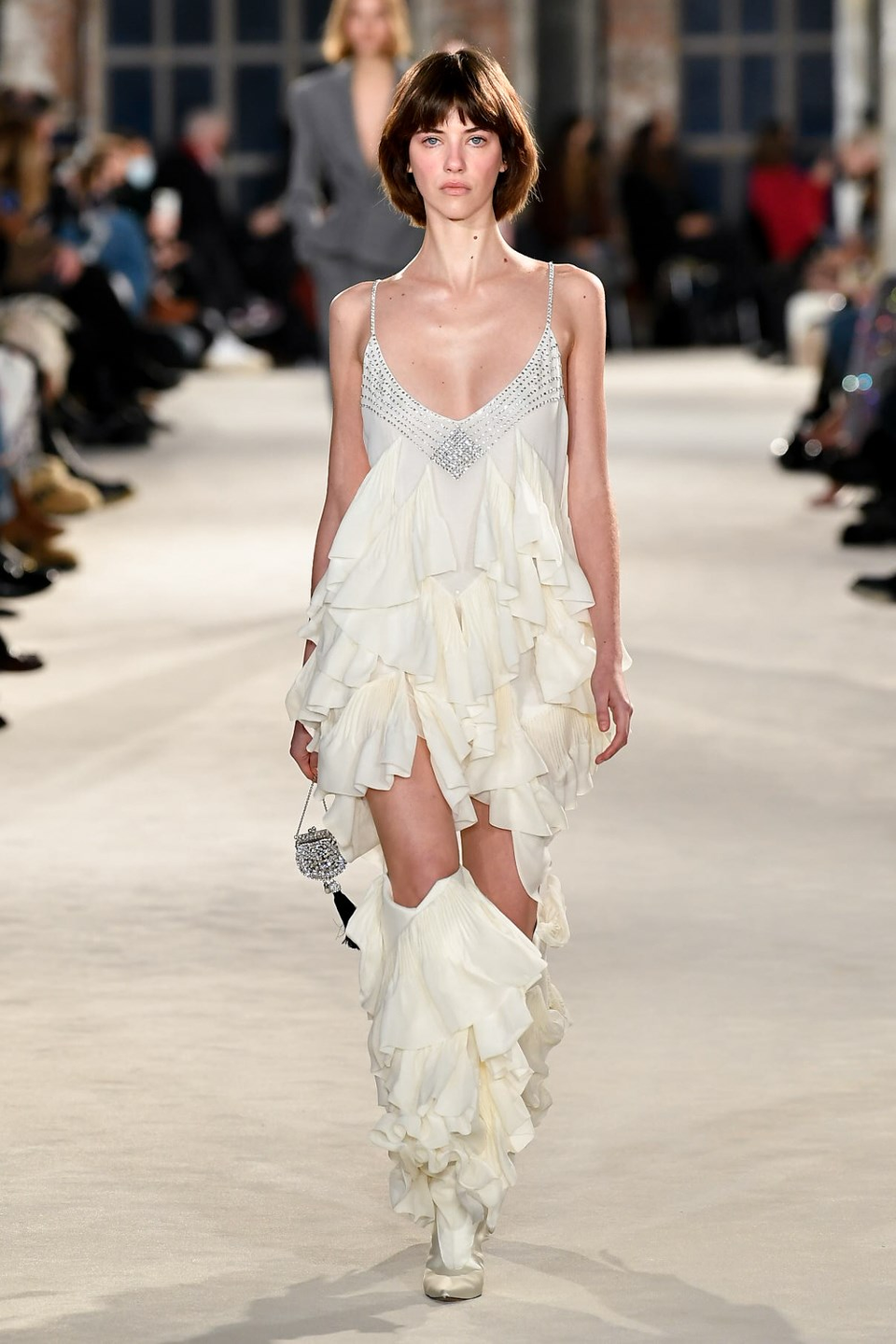
There is "going out," and then there is Alexandre Vauthier Haute Couture. If the concept of Revenge Dressing had a final boss, it would undoubtedly be the ivory silk chiffon ensemble from the Spring/Summer 2022 collection. This isn't a garment that simply occupies space; it’s an architectural takeover. It doesn’t just walk into a room; it demands the air supply.

More is More: The Maximalist Shift in Haute Couture

Vauthier has long been celebrated as the architect of the "Power Woman," typically defined by razor-sharp tailoring and shoulder pads that could cut glass. however, in this specific collection, he pivoted toward a frothy, hyper-feminine explosion of ruffles that signaled a shift in the high-fashion landscape.

This look is a masterclass in maximalist textures, featuring:

  • The Micro-Mini Foundation: A precision-cut slip dress dripping in shimmering crystal strass.
  • The "Cloud" Boots: Tiered, voluminous ruffled footwear that redefined the "it-shoe" of the season.
  • Textural Contrast: The marriage of weightless silk chiffon with the heavy, cold sparkle of hand-applied crystals.

It represents the "more is more" energy that has come to define the post-minimalist era, moving away from "Quiet Luxury" and into a space of unapologetic visibility.

Why It Works: The "Coquette" Contrast and the New Femininity

What makes this the definitive Revenge Dress of the 2020s? It’s the calculated juxtaposition. The ivory palette leans into a soft, almost bridal innocence—a nod to the "Coquette" and "Balletcore" aesthetics trending across social platforms. Yet, the execution is pure adrenaline.

By combining a thigh-skimming hemline and a plunging V-neck with tiers of ethereal fabric, Vauthier creates a visual paradox. It is both whimsical and predatory. It’s the wardrobe of a woman who knows exactly who she is and isn't afraid to use 40 meters of silk to prove it.

The Technical Artistry of the SS22 Collection

To understand the value of this piece, one must look at the savoir-faire involved in its creation. In the world of French Haute Couture, every ruffle is a deliberate choice.

From Runway to Archive: The Lasting Impact

For fashion historians and collectors pulling this from the archives today, it serves as a reminder that fashion is at its best when it's emotional. This look survived the "micro-trend" cycle because it offers something digital-fast-fashion cannot: structural integrity.

Whether it's the way the hand-pleated silk catches the wind or how the ruffled boots create a gravity-defying leg line, this piece isn't just clothing—it’s a performance. In the universe of Alexandre Vauthier, revenge isn't just a dish best served cold; it’s best served in hand-stitched chiffon and a cloud of crystals.

Styling the Vauthier Aesthetic Today

While the full runway look is a statement of intent, the influence of the SS22 collection continues to trickle down into modern evening wear. To channel this energy, look for:

  1. High-Volume Footwear: Swapping sleek stilettos for textured, ruffled, or feathered boots.
  2. Monochromatic Texturing: Using a single color (like ivory or bone) but mixing different fabrics like silk, lace, and sequins.
  3. The "Leg" Focus: Balancing a voluminous top or shoe with a daringly short hemline to maintain a sharp silhouette.

A Recipe for Chaos: Quen Blackwell’s Iconic Kitchen Look with Charli XCX
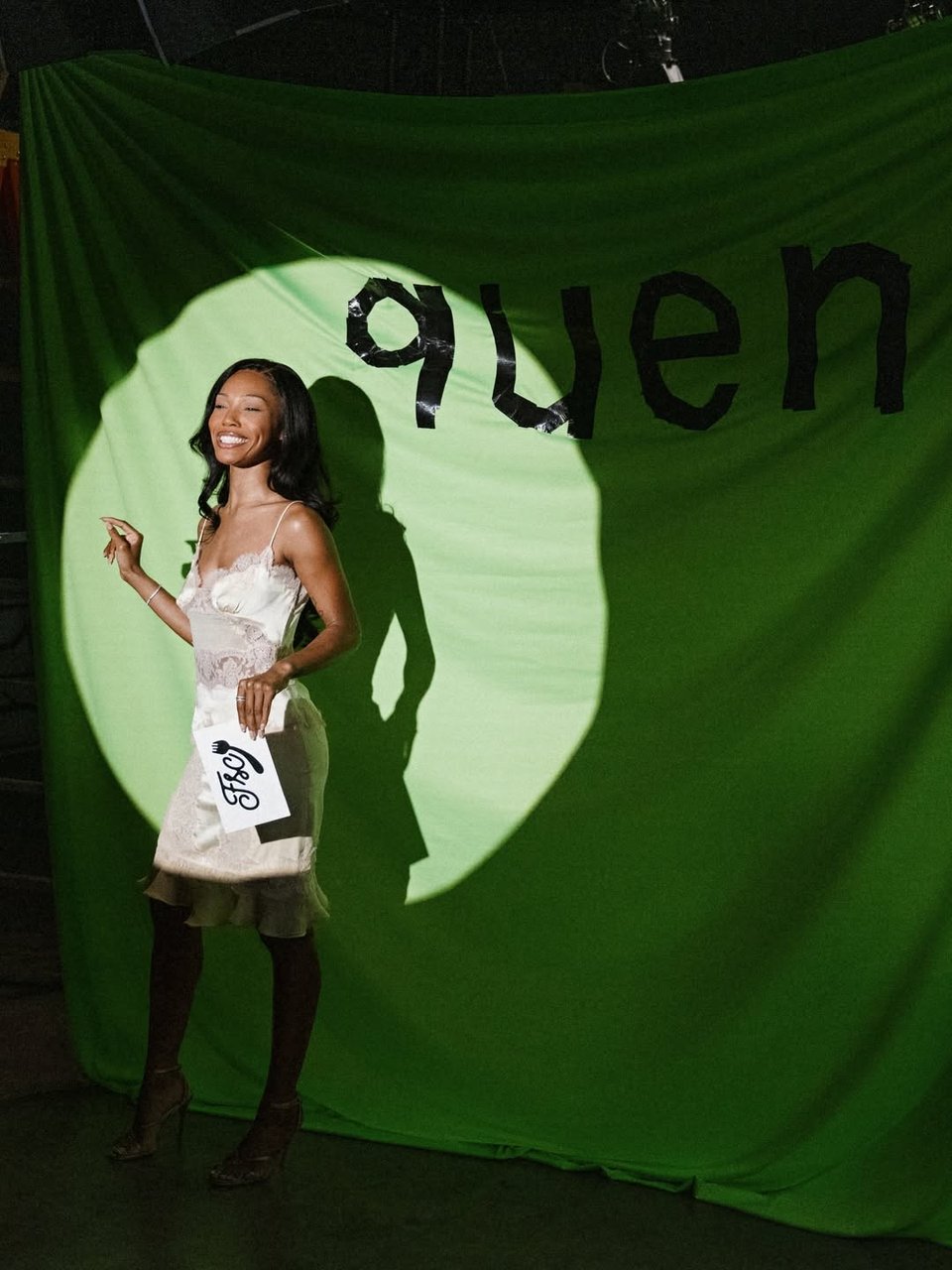
A Recipe for Chaos: Quen Blackwell’s Iconic Kitchen Look with Charli XCX
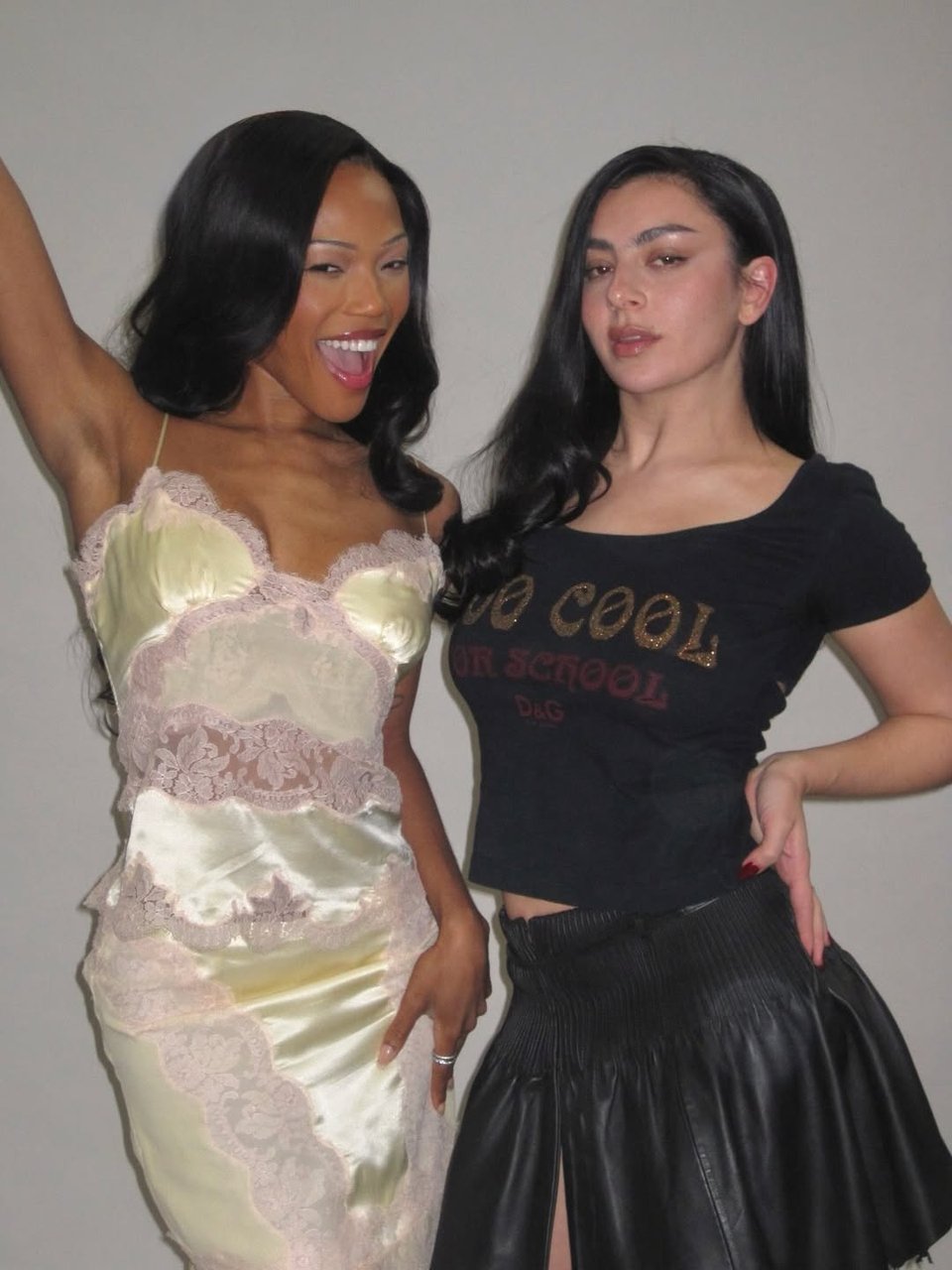
A Recipe for Chaos: Quen Blackwell’s Iconic Kitchen Look with Charli XCX

A Recipe for Chaos: Quen Blackwell’s Iconic Kitchen Look with Charli XCX

In the world of internet comedy, few things are as consistently unhinged and entertaining as Quen Blackwell’s Feeding Starving Celebrities. But when the guest is the "Brat" herself, Charli XCX, you know the production value—and the wardrobe—has to be top-tier.

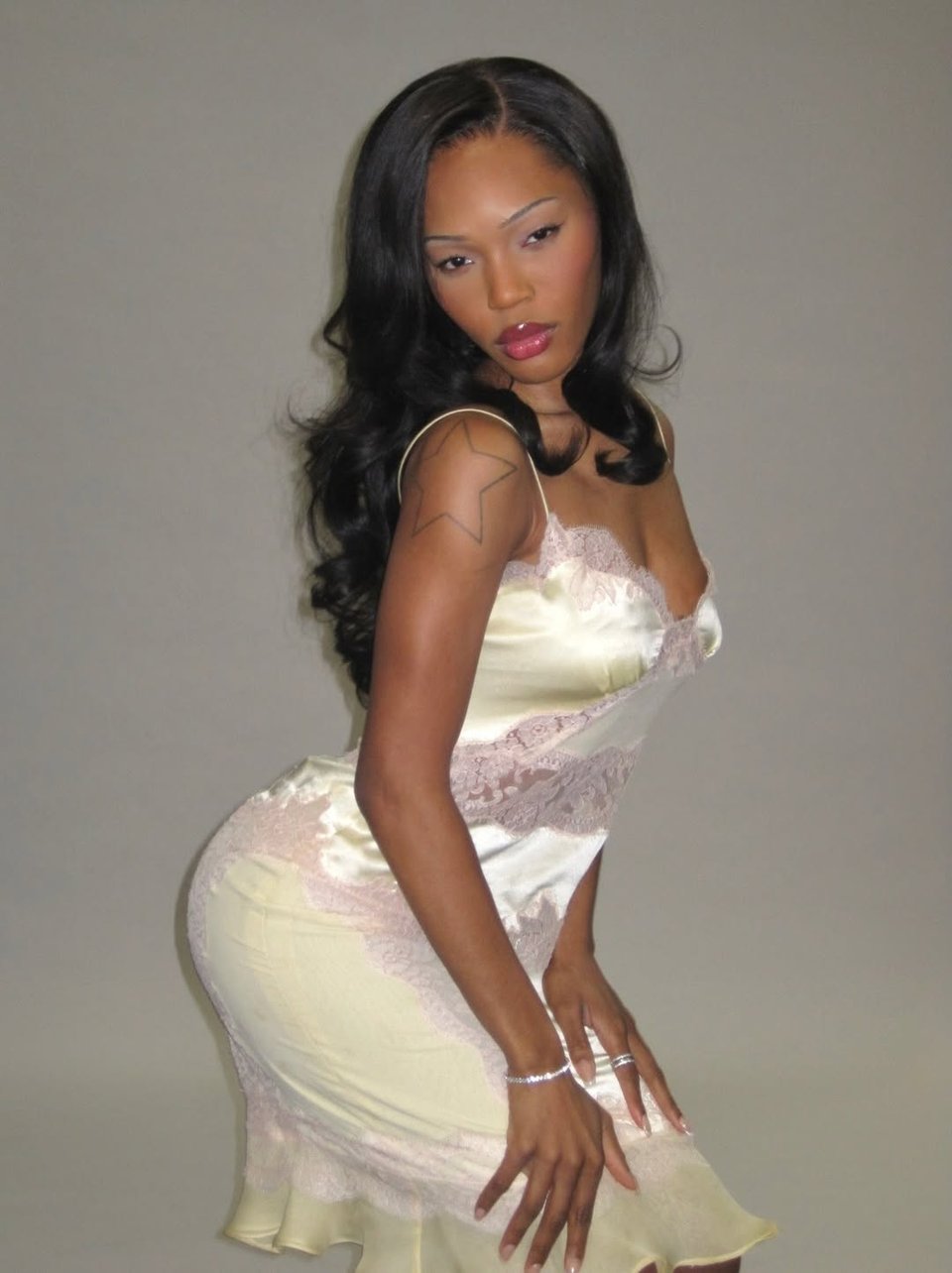
Quen didn't just serve a meal; she served a full-scale editorial moment in our Dolce & Gabbana light yellow lace set.

High Fashion in the High-Heat Kitchen

The contrast was everything. On one hand, you have the chaotic energy of two internet icons navigating a kitchen; on the other, you have the absolute sophistication of Italian lace. The pale yellow hue (aptly dubbed "butter yellow" by the fashion set this season) looked radiant against the studio backdrop, proving that Quen is just as much a style icon as she is a comedic genius.

The Details

The set features intricate floral lace detailing that balances a vintage romantic feel with a sharp, modern silhouette. While the "Feeding Starving Celebrities" series is known for its DIY feel, Quen’s choice to wear archival-quality Dolce & Gabbana elevated the episode into a high-fashion crossover event.

Why We’re Obsessed

Seeing Charli XCX and Quen Blackwell together is a pop culture fever dream. Seeing them do it while Quen is draped in delicate yellow lace? That’s just legendary. It’s the perfect example of how Quen continues to bridge the gap between viral YouTube creator and high-fashion muse.

Whether she’s tossing ingredients or trading jokes with pop stars, Quen Blackwell knows that the right outfit makes the bit.
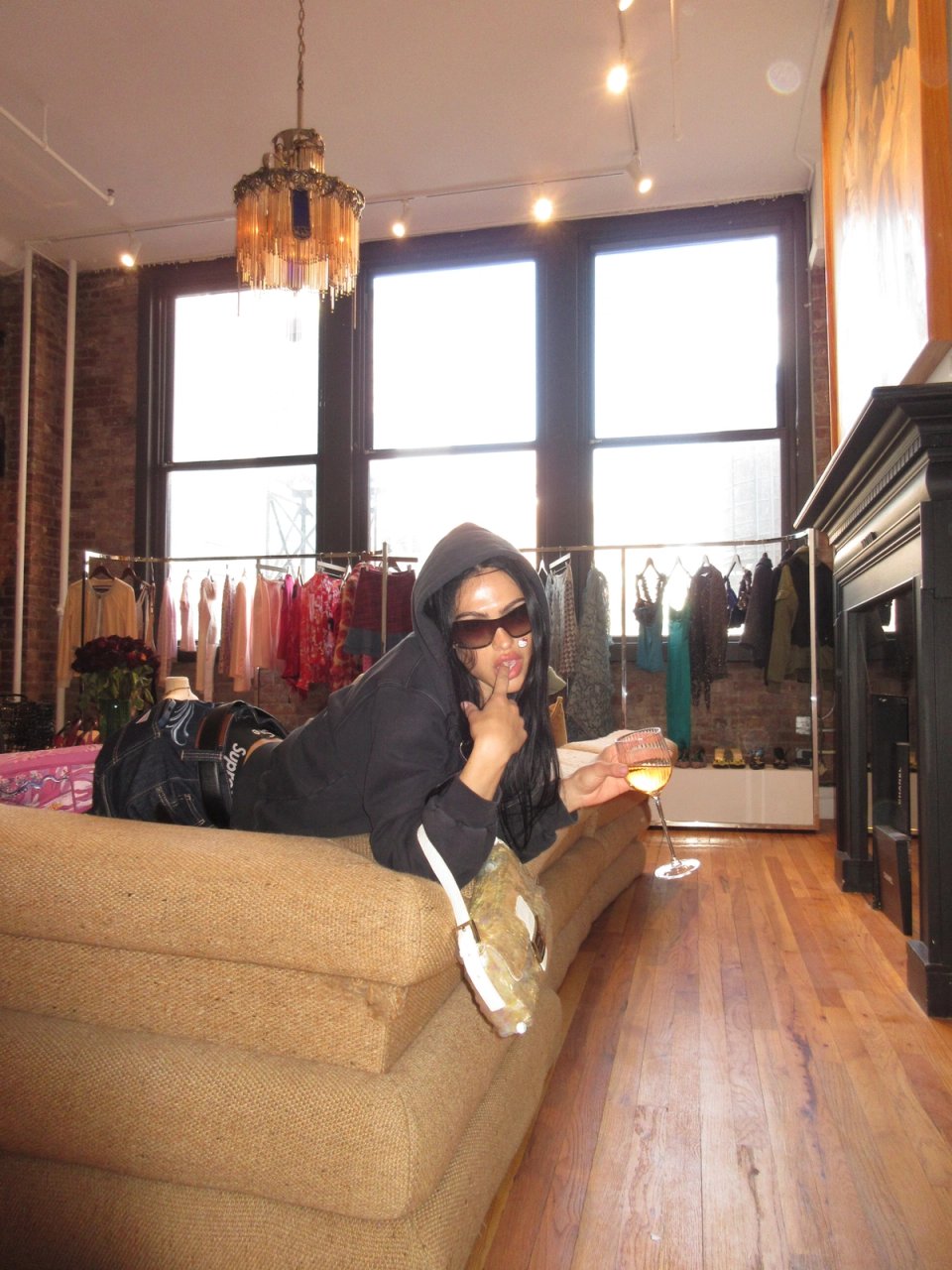
Off-Duty with the It-Girl: Amelia Gray Drops by the Showroom

Off-Duty with the It-Girl: Amelia Gray Drops by the Showroom

Off-Duty with the It-Girl: Amelia Gray Drops by the Showroom

Off-Duty with the It-Girl: Amelia Gray Drops by the Showroom

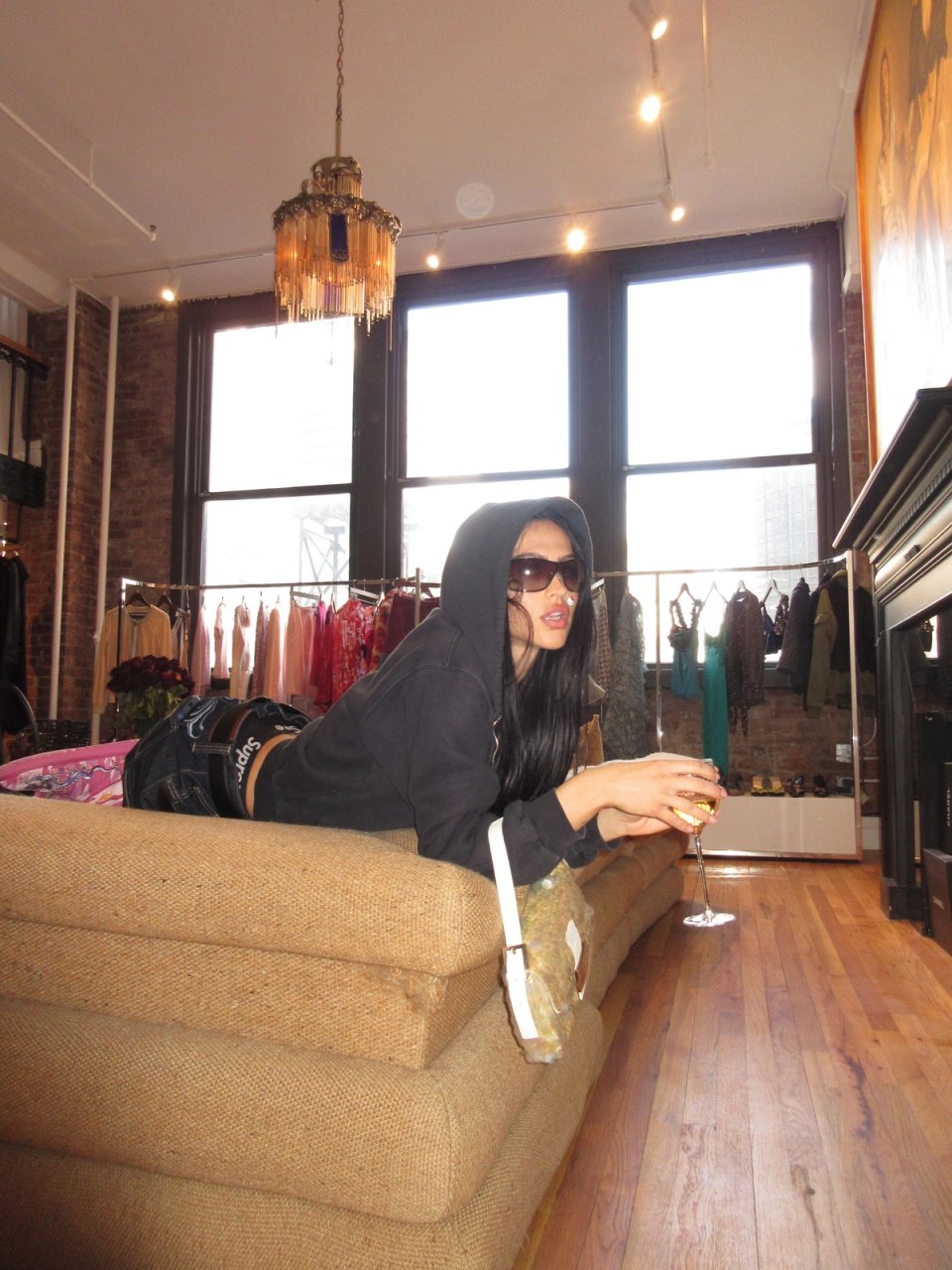
There is "model-off-duty," and then there is Amelia Gray.

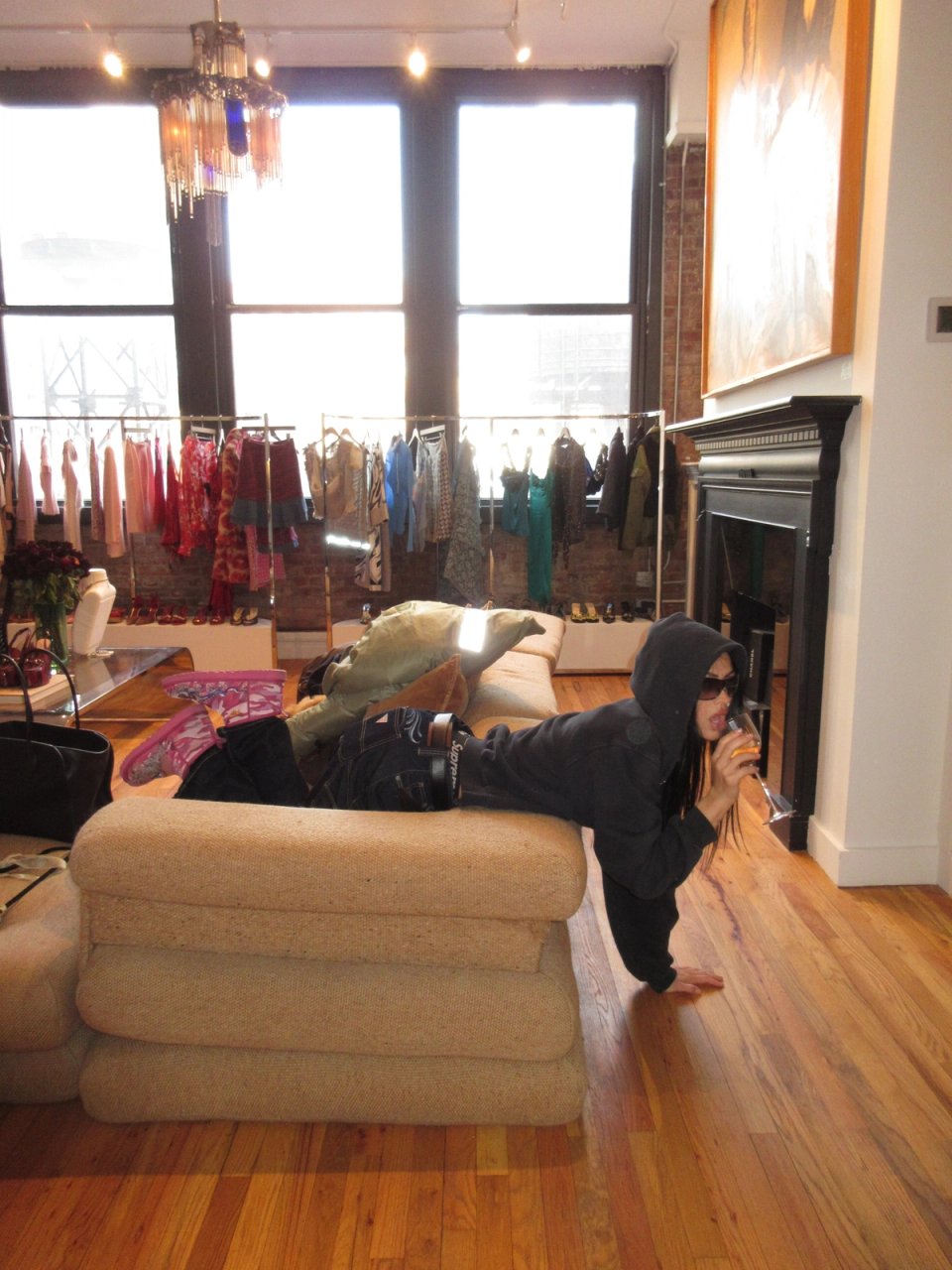
The girl who has quite literally taken over the global runways—from her "succubus chic" brows to her commanding walk—stopped by our NYC showroom this week to do what she does best: make high fashion look entirely effortless.

Between sips of white wine and a casual sprawl across our linen modular, Amelia reminded us why she’s the ultimate muse of the moment. Dressed in her signature uniform—a cropped black hoodie, low-slung denim revealing a peek of Supreme elastic, and those omnipresent oversized shades—she spent the afternoon browsing through our upcoming archives.

The Vibe: High-energy, low-filter. The Look: Laid-back luxury with a Y2K edge.

From analyzing the silhouette of our new spring skirts to lounging against the backdrop of the iconic Soho water towers, Amelia’s visit wasn't just a fitting—it was a mood board come to life. Whether she’s at the Met Gala or just hanging out in our studio, one thing is certain: the world is Amelia’s runway, and we’re just happy to be a stop along the way.

Miami’s Most Wanted: That Time We Turned Soho House Into a Vintage Vault.

Miami’s Most Wanted: That Time We Turned Soho House Into a Vintage Vault.

Miami’s Most Wanted: That Time We Turned Soho House Into a Vintage Vault.

Miami’s Most Wanted: That Time We Turned Soho House Into a Vintage Vault.

A Miami Moment: Inside the Into Archive x Soho House Miami Pop-Up Experience

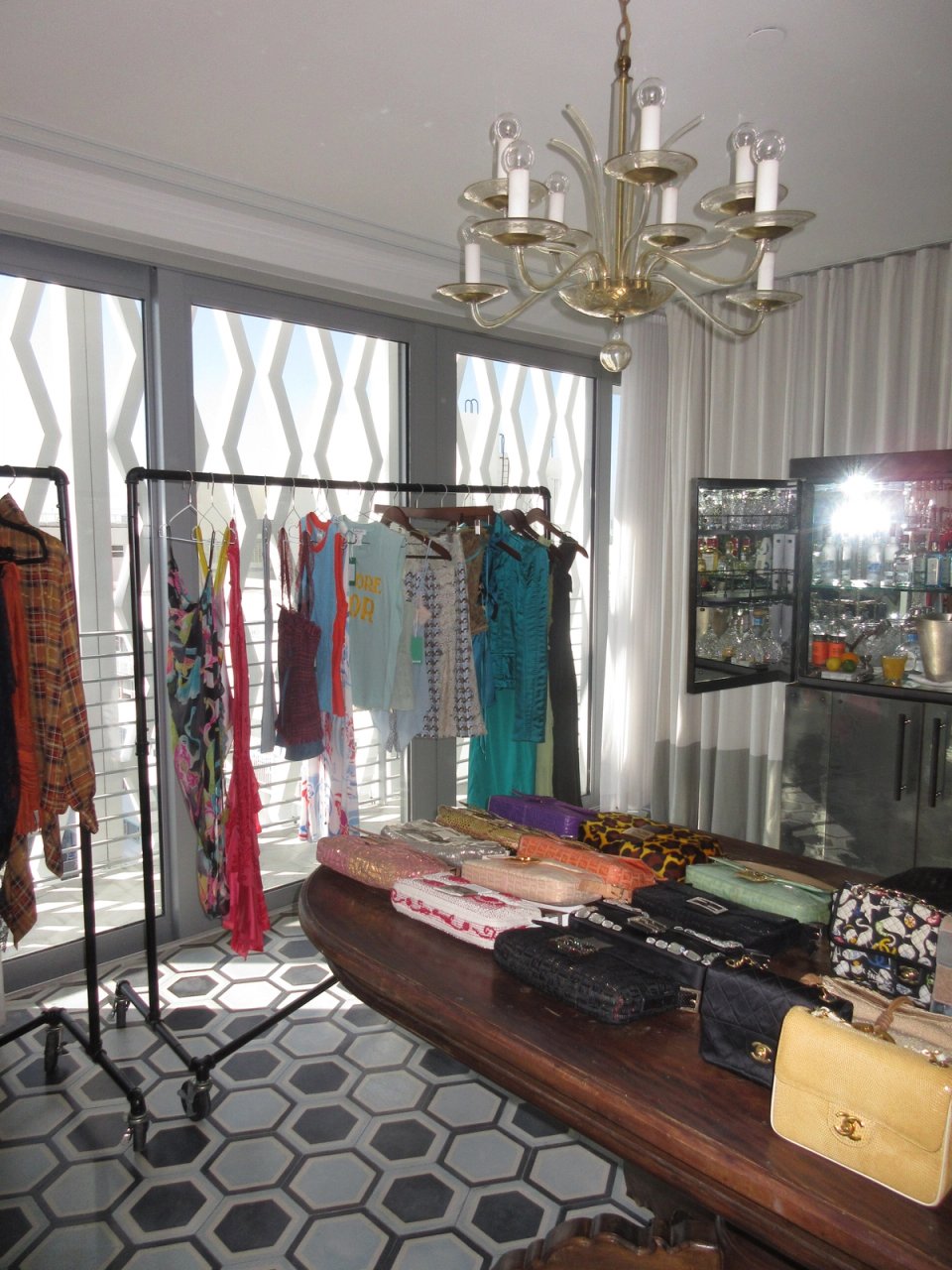
At the end of December, Into Archive brought its world offline for a special pop-up moment in Miami — a celebration of vintage, community, and shared sensibilities.

Hosted in collaboration with Soho House Miami and fellow vintage dealer TC Collective, the pop-up marked a rare opportunity to experience Into Archive in an intimate, in-person setting. Set against Miami’s warm winter energy, the event felt less like a traditional retail activation and more like a curated gathering of like-minded collectors, stylists, and fashion enthusiasts.

A Shared Vision for Vintage

The collaboration came together organically, rooted in a mutual appreciation for archival fashion and thoughtful curation. Alongside TC Collective, the pop-up showcased a tightly edited selection of vintage designer pieces — each chosen for its craftsmanship, character, and cultural relevance.

Rather than overwhelming the space, the edit encouraged slow discovery. Guests were invited to engage with each piece up close, ask questions, and learn the stories behind the garments — reinforcing the idea that vintage is as much about narrative as it is about aesthetics.

Fashion, Community, and Conversation

What truly defined the experience was the atmosphere. Throughout the pop-up, conversations flowed easily — between longtime collectors, first-time buyers, stylists sourcing for upcoming projects, and guests simply curious about archival fashion.

The setting at Soho House Miami offered a natural backdrop for this kind of exchange: relaxed yet intentional, social without being rushed. It allowed Into Archive to connect directly with its community in a way that goes beyond the screen, strengthening relationships and opening new dialogues around vintage sourcing, styling, and sustainability.

Why IRL Still Matters

In an increasingly digital landscape, the Miami pop-up served as a reminder of the power of physical experiences. Seeing, touching, and trying on archival pieces — and doing so alongside others who share the same passion — creates a connection that can’t be replicated online.

For Into Archive, the pop-up wasn’t just about showcasing inventory. It was about building presence, listening to the community, and creating a moment that felt both personal and memorable.

As the year came to a close, the Miami experience set the tone for what’s next: more intentional collaborations, more real-world touchpoints, and continued commitment to bringing archival fashion to life — one space, one conversation, one piece at a time.

Jet-Set Glitz: The 2008 Cruise Collection and the Rebirth of the Mega-CC

Jet-Set Glitz: The 2008 Cruise Collection and the Rebirth of the Mega-CC

Jet-Set Glitz: The 2008 Cruise Collection and the Rebirth of the Mega-CC

Jet-Set Glitz: The 2008 Cruise Collection and the Rebirth of the Mega-CC

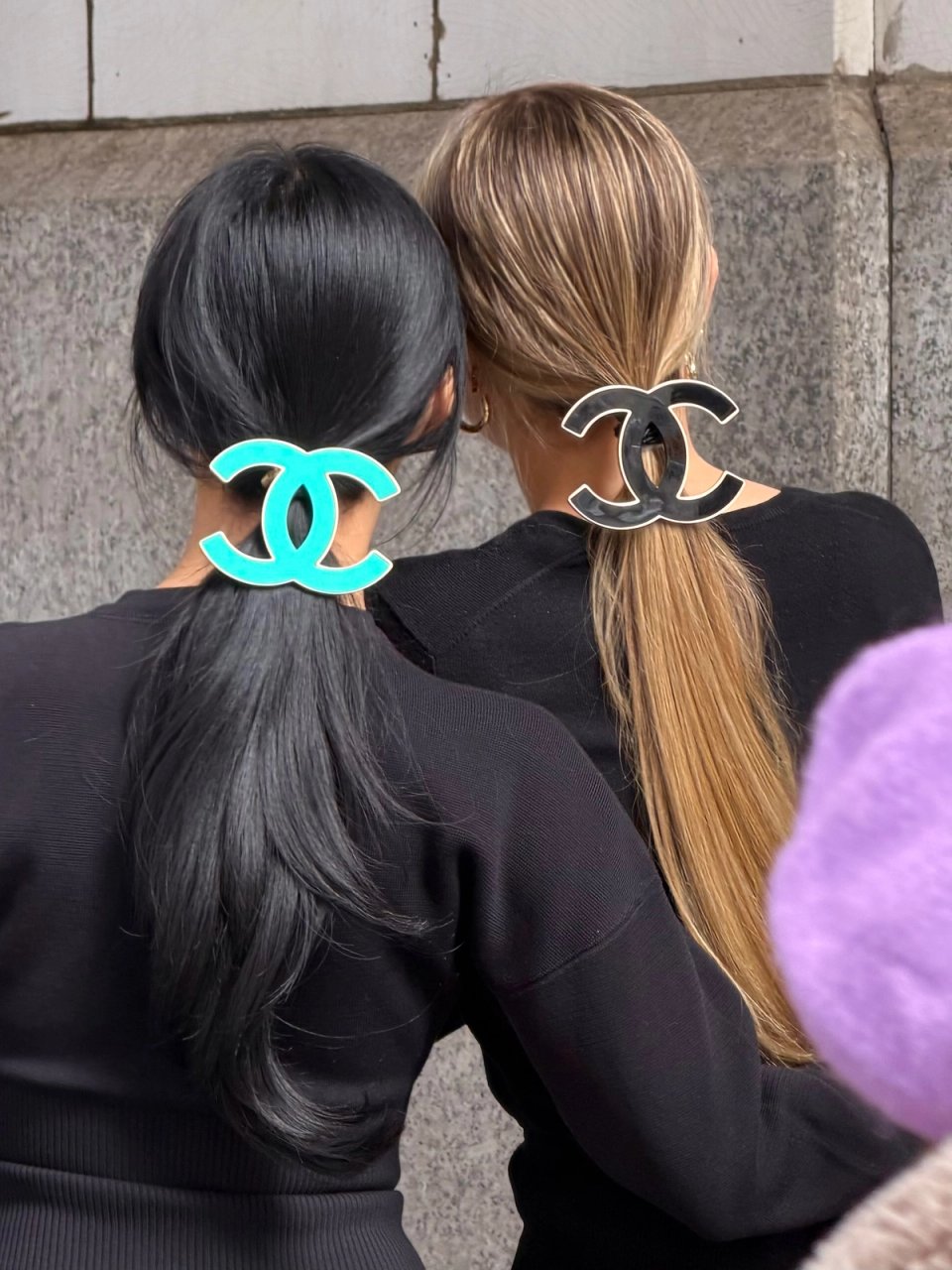
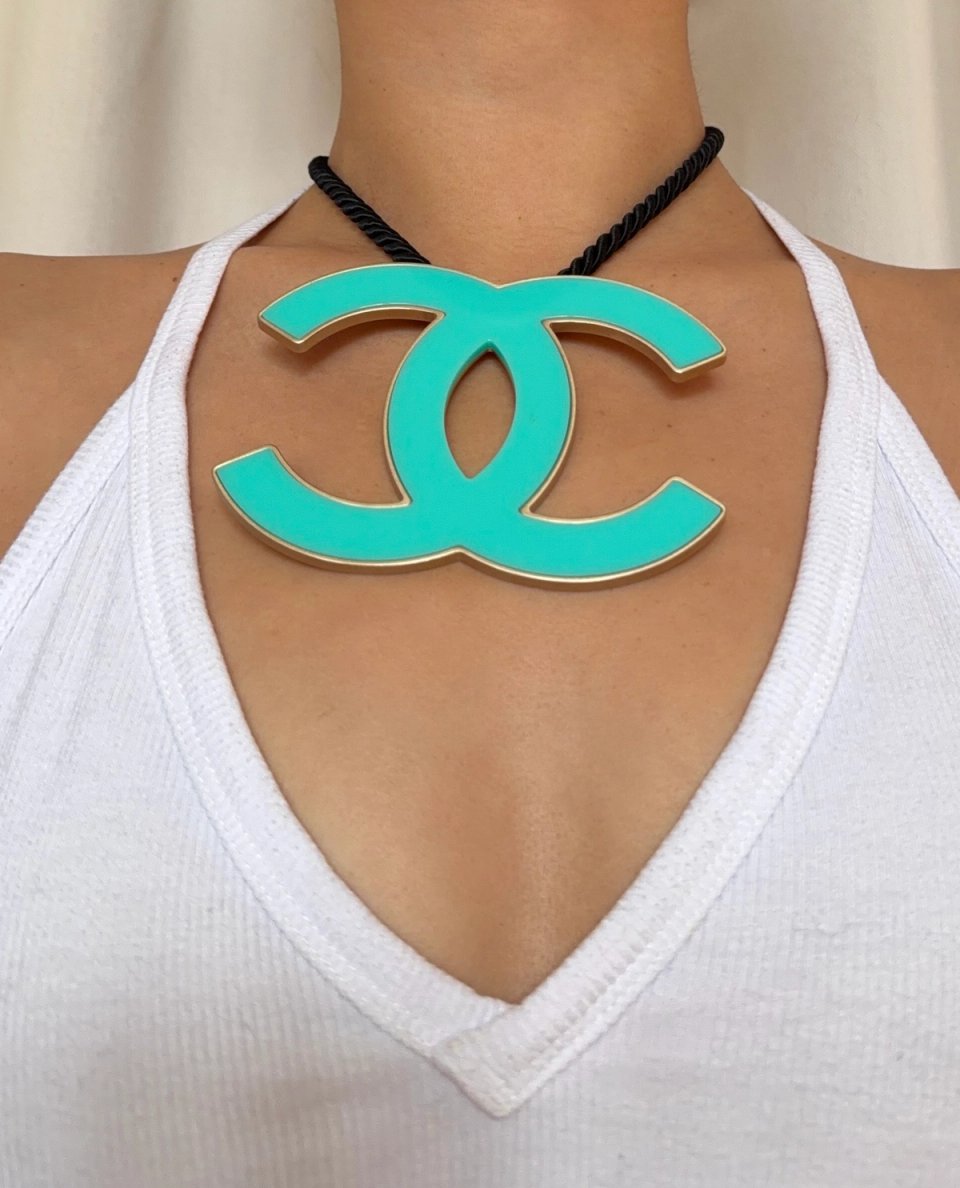
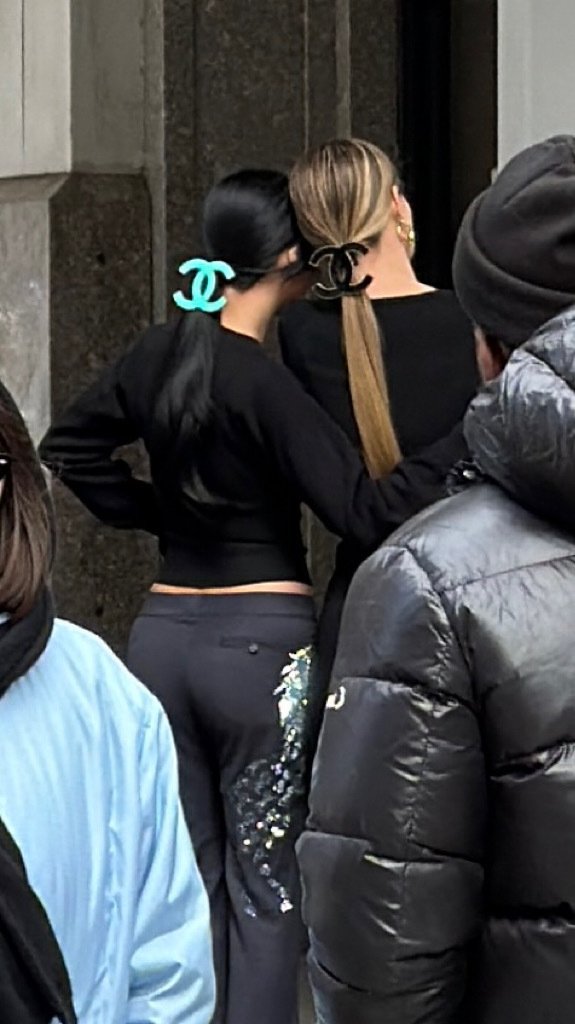
The Chanel Cruise 2008 collection, presented by Karl Lagerfeld in May 2007, was a high-octane spectacle that took the "jet-set" lifestyle literally. Staged at the Santa Monica Airport inside a private hangar, the show saw models disembarking from a Chanel-branded plane, immediately signaling that the accessories to follow would be just as sky-high and ambitious as the setting. While the collection featured everything from flight attendant-inspired suits to whimsical "heel-less" shoes, it was the oversized jewelry that truly stole the spotlight. Lagerfeld used this runway to double down on his love for the "big flex," proving that even in a collection centered on travel and leisure, the iconic CC logo should never be subtle.

The significance of the 2008 Cruise jewelry lies in its perfect blend of mid-century glamour and early-aughts excess. Lagerfeld took the oversized medallion aesthetic he pioneered in the nineties and refined it for a new generation of luxury consumers. These pieces often featured chunky, multi-strand chains and gargantuan CC pendants encrusted with strass crystals or finished in sleek, polished metals. By choosing the airport—and later the Raleigh Hotel in Miami for a follow-up presentation—as his backdrop, Lagerfeld was making a statement about the portability of status. The oversized necklace became the ultimate "airport look" accessory, designed to be seen from across a terminal or a crowded poolside deck, cementing the idea that a Chanel logo is the only passport a fashion icon truly needs.

Beyond the aesthetics, the 2008 Cruise collection marked a pivotal moment in the "Logomania" timeline. While the early 2000s were often dominated by minimalist trends, Lagerfeld’s insistence on massive, dangling branding helped usher in the return of the "statement piece" as a daily essential. The jewelry from this specific season has since become a holy grail for vintage collectors. Because the Cruise (or Resort) collections are produced in more limited quantities than the main Spring or Fall lines, finding a 2008 oversized CC necklace is like finding a piece of wearable history. It captures a specific moment when fashion was transitioning from the refined elegance of the past into the bold, digitally-driven visibility of the future.

Today, wearing a piece from the 2008 Cruise collection is a nod to those who "know." It carries the weight of Lagerfeld’s most theatrical era and the breezy, opulent spirit of a Miami-to-LA lifestyle. These necklaces aren't just jewelry; they are conversation starters that remind us that Chanel is at its best when it refuses to be small. Whether paired with a vintage tweed jacket or used to elevate a modern streetwear ensemble, the oversized 2008 medallions continue to be the gold standard for anyone looking to channel the unapologetic, globe-trotting confidence of the house of Chanel.

Utility, Rarity, and the Rise of Sport-Luxury: Chanel XL Messenger

Utility, Rarity, and the Rise of Sport-Luxury: Chanel XL Messenger

Utility, Rarity, and the Rise of Sport-Luxury: Chanel XL Messenger

Utility, Rarity, and the Rise of Sport-Luxury: Chanel XL Messenger

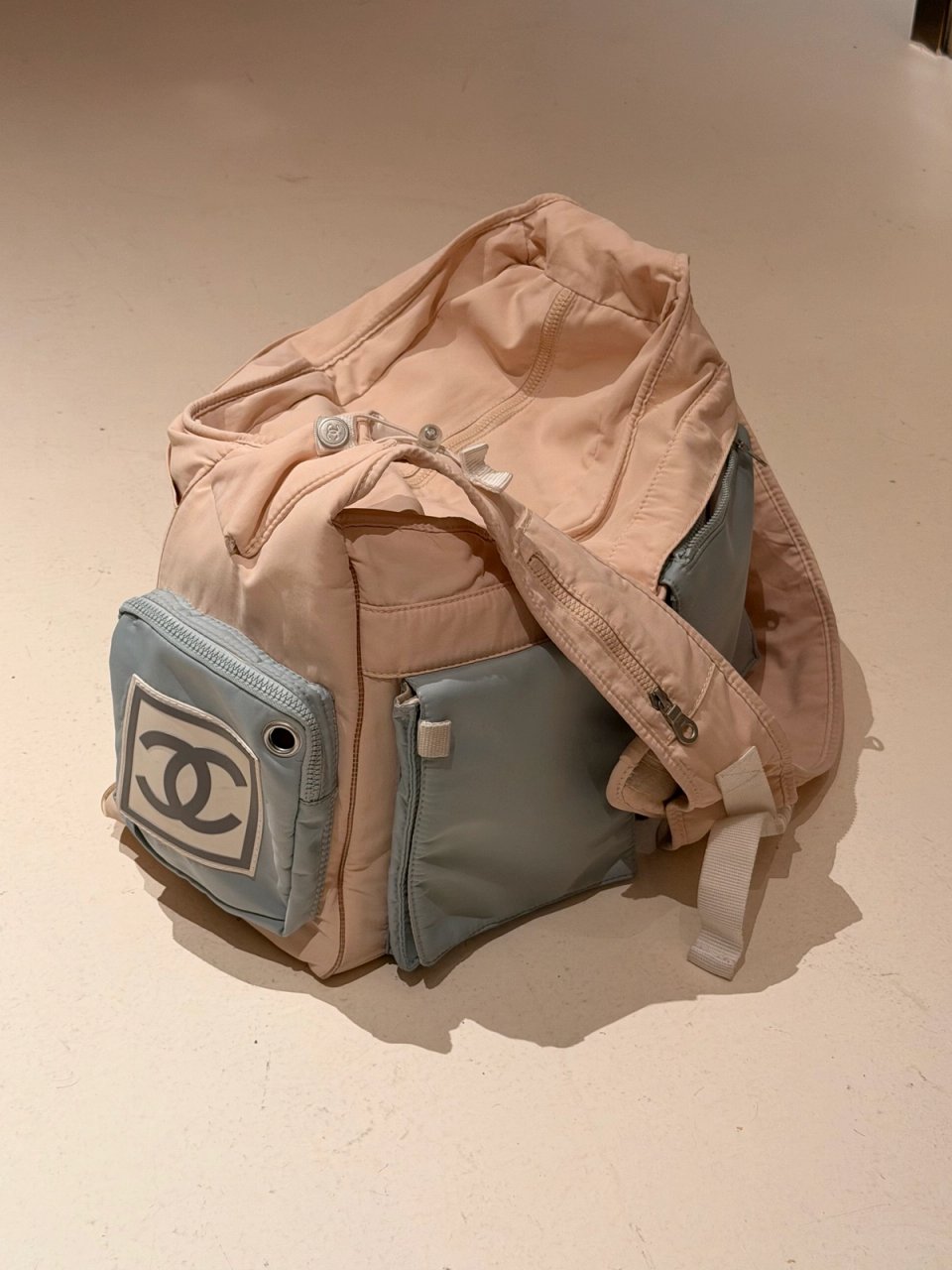
In the early 2000s, long before “gorpcore” and performance-driven fashion became dominant forces on the runway, Chanel quietly explored the intersection of sport and luxury. The Chanel Sports Line—instantly recognizable for its lightweight technical fabrication, oversized CC insignias, and functional pocketing—offered a sharp departure from the maison’s signature tweeds and quilted leathers. This Large XL Messenger is one of the most compelling silhouettes from that era: oversized, utility-forward, and unapologetically practical.

When most people think of Chanel, they picture the 2.55 or classic caviar flaps, but the Sports Line represents a different chapter in the house’s evolution—one rooted in movement, travel, and modernity. Crafted in durable nylon with contrast paneling and bold logo placement, these bags were designed for everyday wear: commuting, airport travel, studio days, and off-duty dressing. The XL size feels especially prescient today, with its generous capacity, exterior cargo pockets, adjustable strap, and soft, lightweight structure aligning seamlessly with contemporary demands for comfort and functionality.

Unlike Chanel’s classic flap bags, the Sports Line was produced in more limited seasonal quantities and was often overlooked at the time of release. That relative underexposure has since elevated its status among collectors who value rarity and design divergence. The Large XL Messenger stands out for its graphic CC patch, technical nylon fabrication, and utility-driven construction—details that resonate strongly in today’s landscape of cargo silhouettes and sport-inspired luxury. As fashion continues to revisit and reinterpret early 2000s design, authentic Chanel sport pieces in strong condition have become increasingly difficult to source, particularly in larger formats.

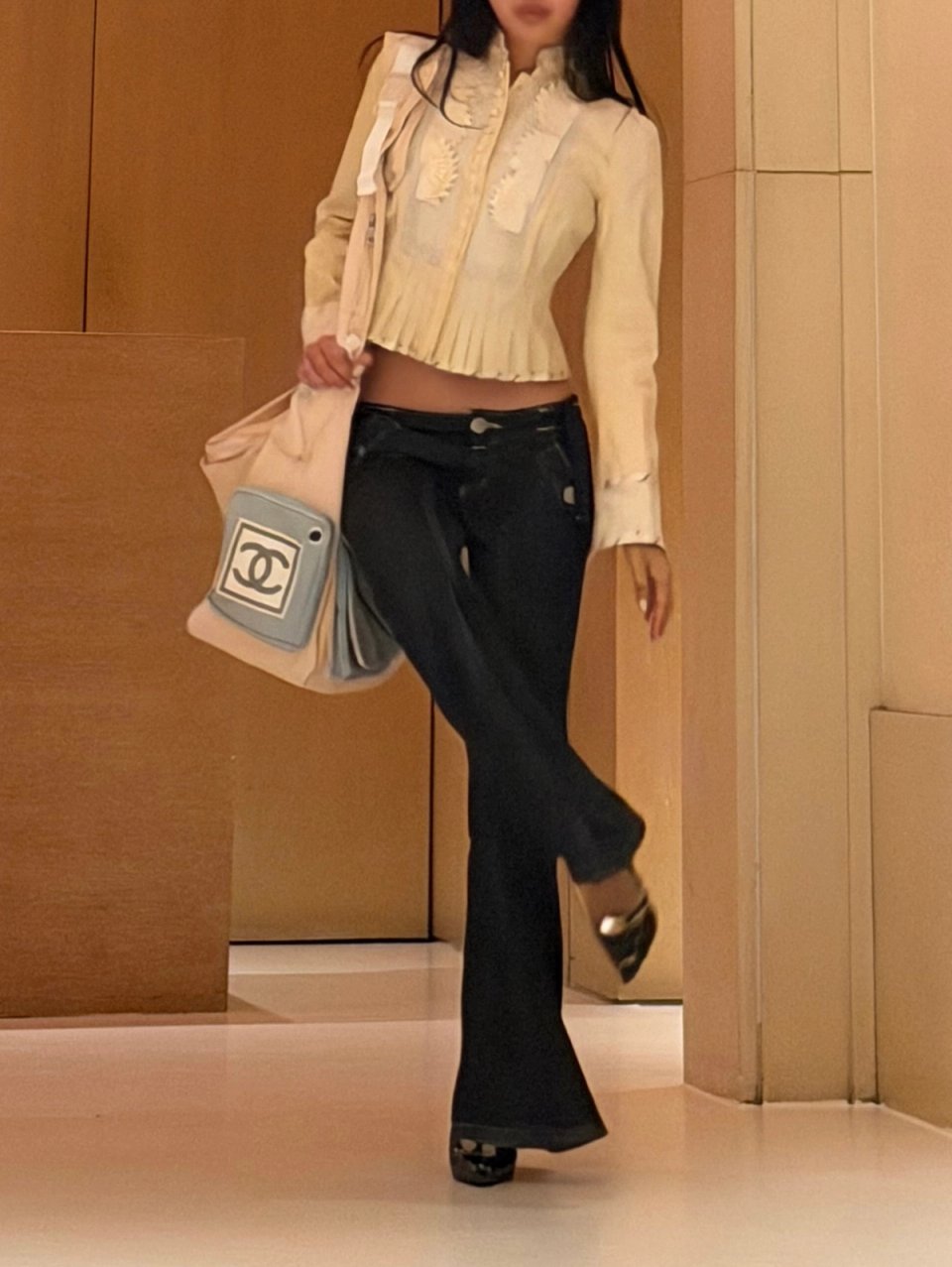
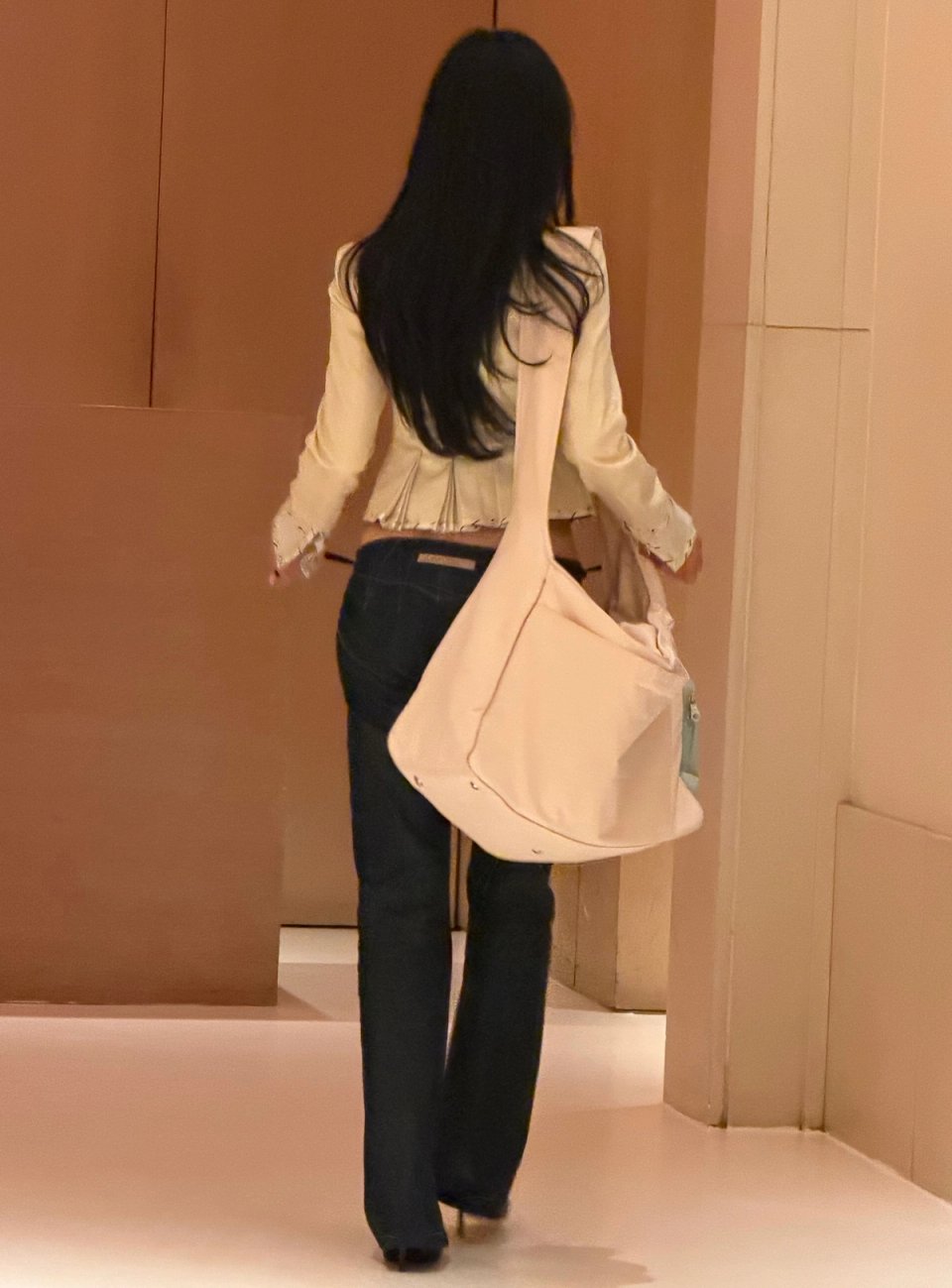
Styling this messenger is effortless. It pairs naturally with tailored trousers and a crisp tank, vintage denim and flats, oversized blazers, or full monochrome athleisure looks. The balance of heritage branding and utilitarian structure gives it versatility—it feels relaxed yet intentional, practical yet iconic. It is Chanel viewed through a contemporary lens, where luxury is not fragile but lived in.

At Into Archive, we are drawn to pieces that capture shifts in fashion history. The Chanel Sports Line represents a moment when luxury began merging with performance aesthetics—years before the broader industry fully embraced the concept. This Large XL Messenger is more than a bag; it is a timestamp from a transitional era. A pre-gorpcore Chanel. A functional luxury statement. An archival sport icon.

The Ultimate Kim-Coded Archive: Is this Nina Ricci Gown the Blueprint for Brutalist Barbie?

The Ultimate Kim-Coded Archive: Is this Nina Ricci Gown the Blueprint for Brutalist Barbie?

The Ultimate Kim-Coded Archive: Is this Nina Ricci Gown the Blueprint for Brutalist Barbie?

The Ultimate Kim-Coded Archive: Is this Nina Ricci Gown the Blueprint for Brutalist Barbie?

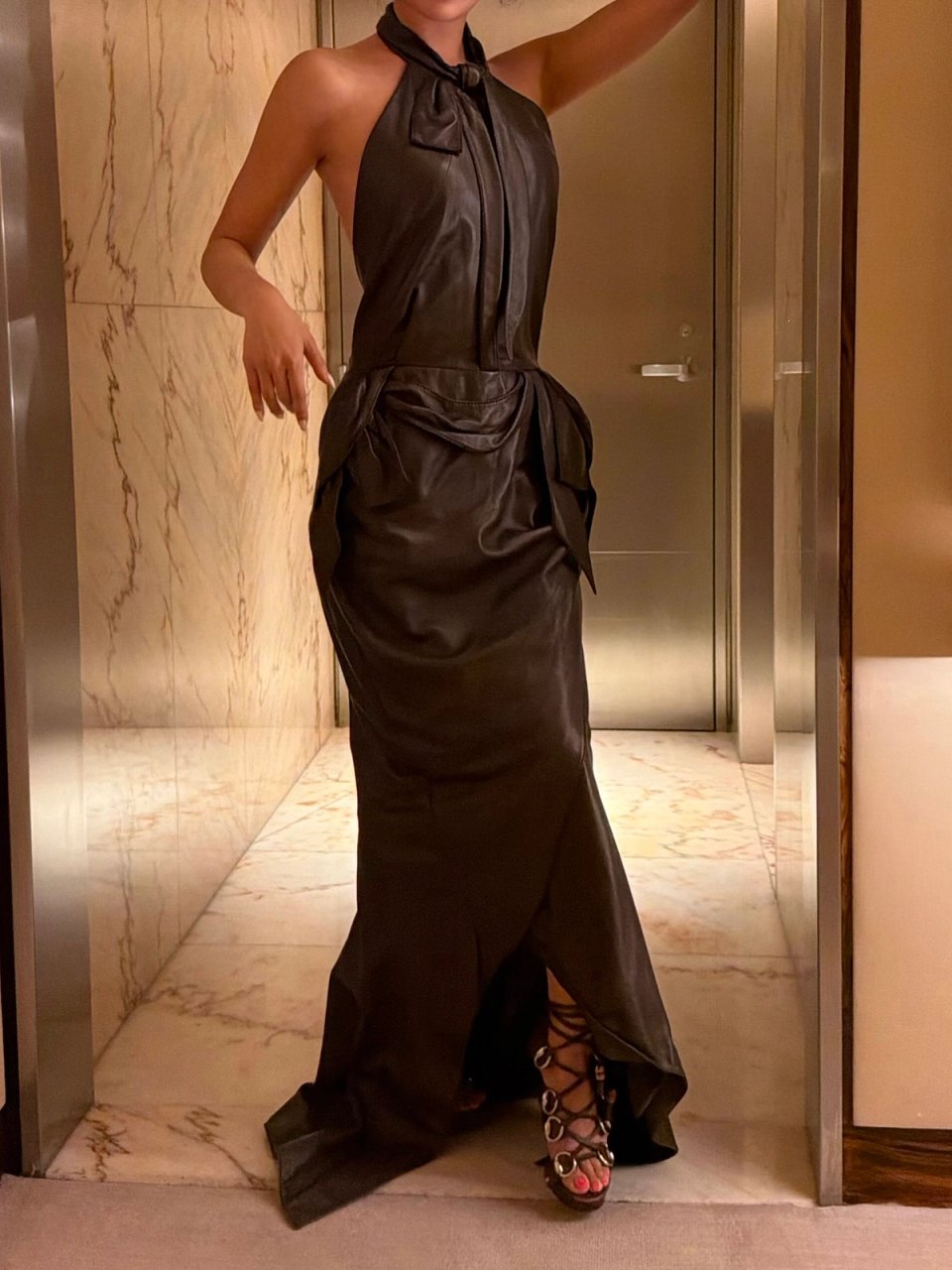
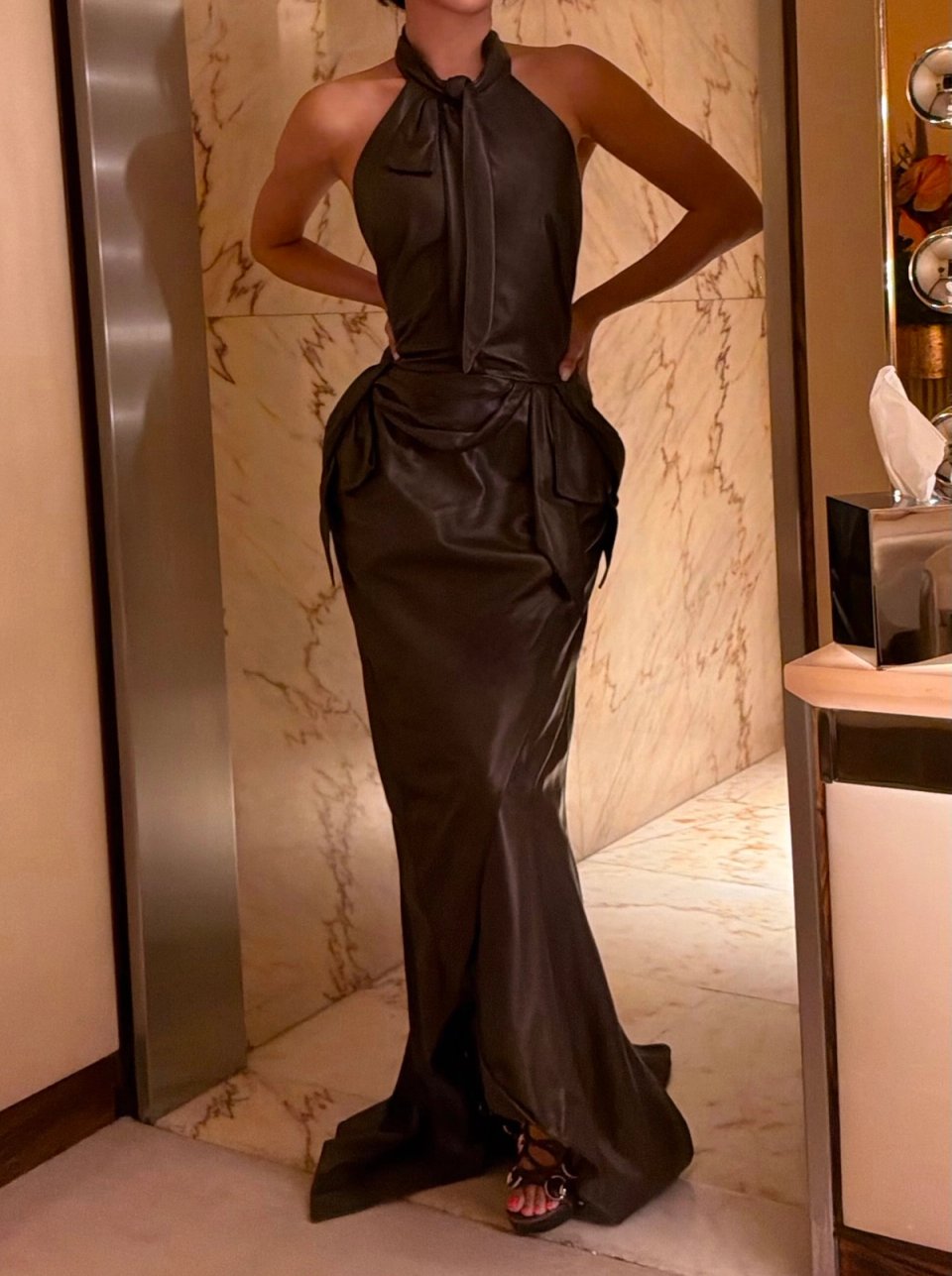
In the collective fashion consciousness, Nina Ricci is often filed under "F" for feminine—all lace, air-light silks, and Parisian romance. But is there a darker, more industrial pocket of the archive we've been ignoring? Enter the brown leather gown: a piece that feels less like a dress and more like a biological upgrade.

We’re calling it Brutalist Barbie. It’s the "Matrix-meets-Monastery" energy that Kim Kardashian has spent the last few years perfecting in her quest for the ultimate tonal, body-con archive. While the rest of the fashion world is drowning in Coquette-core pink, the Ricci girl is opting for architectural cowhide that looks like it was poured into a bottle of melted Godiva chocolate and vacuum-sealed to the body.

The Archive: Architecture Without a Sketchbook

To understand how a house known for "refined, romantic, always feminine" designs created such a dominant silhouette, you have to look at the process. Maria "Nina" Ricci was famously hands-on; she didn't believe in sketches, choosing instead to drape fabric directly onto live mannequins to ensure they had a perfect shape.

This "modeling on the go" allowed her to treat materials—even stubborn ones like leather—with the fluidity usually reserved for her signature silk gowns. It is this technical mastery that allows a heavy, chocolate-brown leather dress to behave with such effortless, liquid grace.

Fast Facts for the Purist:

  • The Late Start: Nina Ricci didn't open her own house until she was 49 years old, proving that "Main Character Energy" has no expiration date.
  • A Family Affair: While Nina draped, her son Robert managed the business and famously created the perfume division in 1941 to help revive the brand during war relief efforts.
  • Evolution of Hide: Though known for romance, the house began to evolve into more modern, fitted designs under various creative directors, from Jules-François Crahay to the sleek 90s obsession of Gerard Pipart.

The Styling: Gucci Bamboo Grit

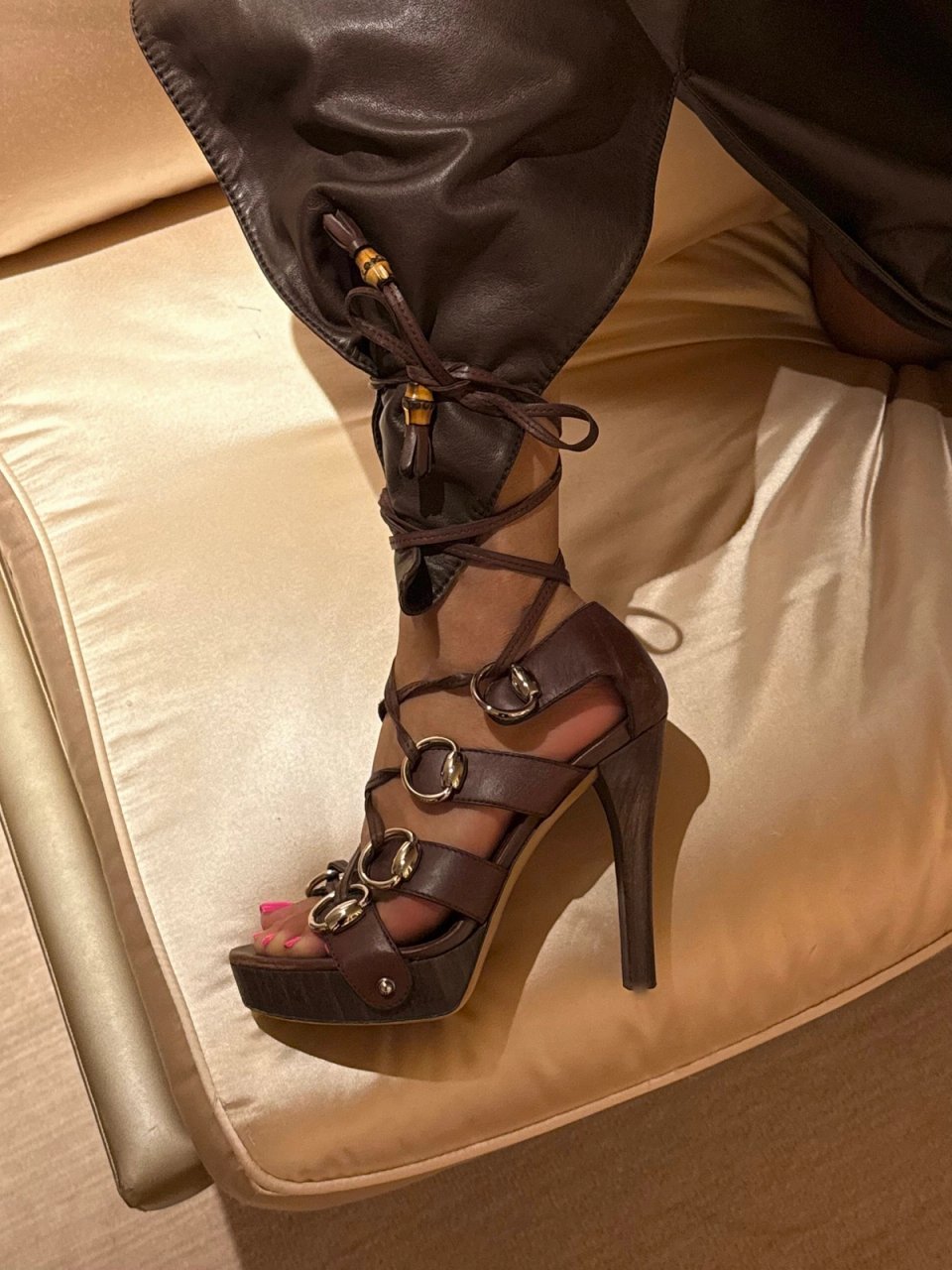
This isn’t a gown you wear with a dainty kitten heel. To truly lean into the "Brutalist Barbie" aesthetic, you need an anchor. Pairing this mahogany skin with archival Gucci bamboo heels is a stroke of styling genius.

  • The Contrast: You’re mixing the Parisian "refined femininity" of Ricci with the high-octane, "sex sells" energy of Tom Ford-era Gucci.
  • The Result: The bamboo detail adds an organic, almost primal element to the look. It grounds the industrial "liquid leather" with a touch of 90s Italian grit—perfect for the minimalist style favored by archival muses.

The Hot Take: Why it’s Sooooo Kim K

Let’s be real: if this gown were in a vault, it would be on a private jet to Calabasas within the hour. It represents that specific "Second Skin" luxury that has defined the Kardashian era—monochromatic, sculptural, and deeply intimidating. Black leather is a trope, but brown leather is a character. It’s warmer, rarer, and looks infinitely more sophisticated against the skin.

So, is "Brutalist Barbie" the new fashion north star? If it looks this good in Nina Ricci, the answer is a resounding yes.

WE JUST OPENED OUR SHOWROOM IN NEW YORK CITY!