Can Fashion Forgive John Galliano?

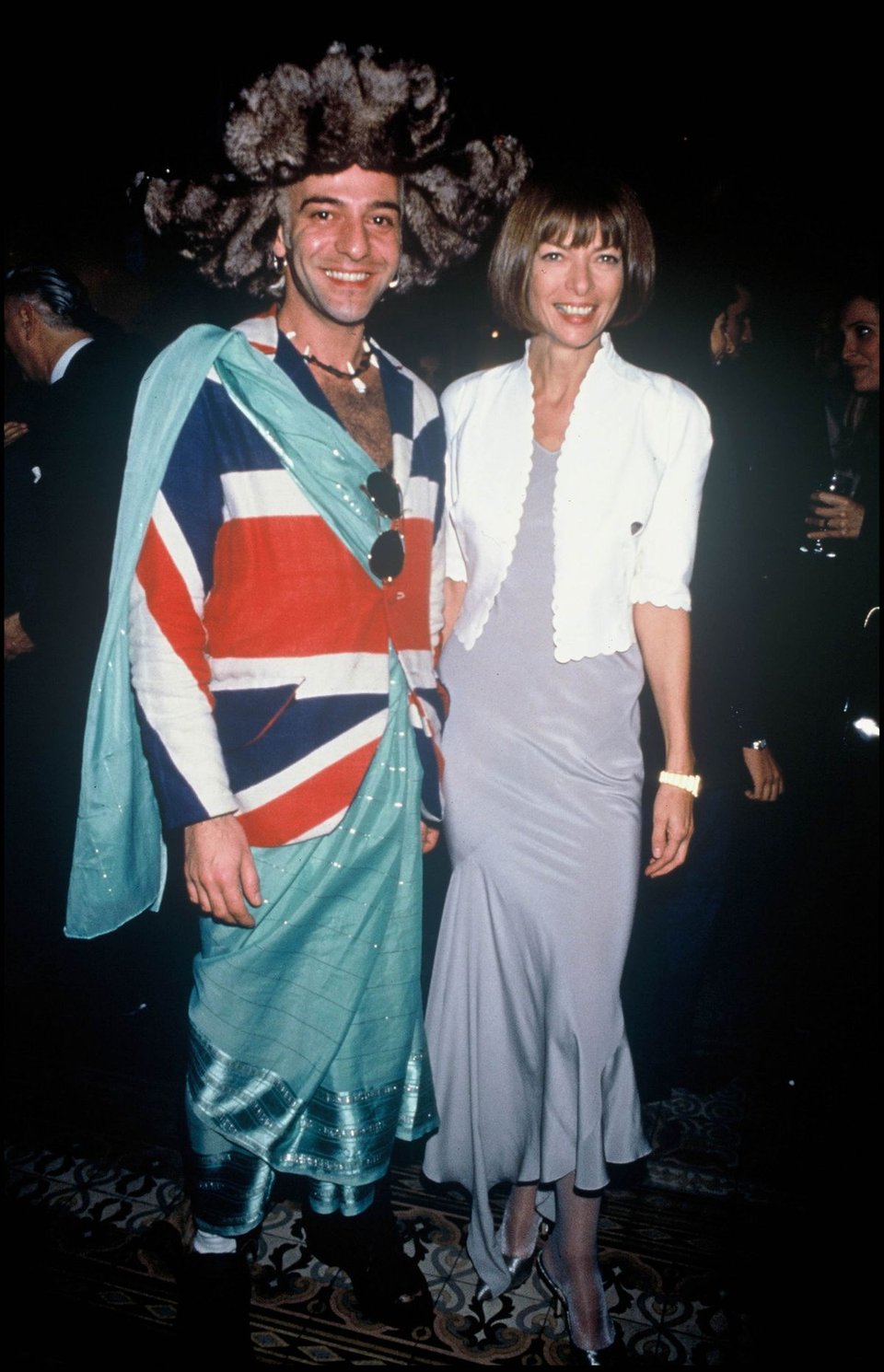

For a moment, it seemed like John Galliano was finally going to get the museum retrospective fashion had been building toward for years. In July, the Metropolitan Museum of Art announced John Galliano: Horizons, a sweeping exhibition dedicated to the British designer’s four-decade career, from his Central Saint Martins graduate collection to Givenchy, Dior, and his transformative years at Maison Margiela. It was meant to open alongside the 2027 Met Gala, putting one of fashion’s most influential—and controversial—designers at the center of the industry’s biggest night.
A month later, it was gone.
On August 31, Galliano and the Met announced that the exhibition would no longer proceed as planned, following mounting criticism over Galliano’s antisemitic and racist remarks in 2011. The Met Gala itself has not been cancelled, but its planned Galliano-centered exhibition has been pulled, with the museum saying that details of a new spring exhibition and the 2027 Gala will be announced at a later date.
The decision has reopened a question fashion has never really figured out how to answer: Can we separate the art from the artist?
And perhaps more importantly, should we?
The Case for John Galliano
There is no honest conversation about modern fashion that doesn't include John Galliano.
His influence is everywhere. His theatrical approach to fashion changed what a runway show could be. His Dior collections transformed historical references into elaborate fantasies, while his work at Maison Margiela demonstrated that his creative language could exist within an entirely different design philosophy. The proposed Met exhibition was set to span his career from 1984 through his final work at Margiela in 2024, making it one of the most comprehensive examinations of his work ever mounted. It also would have been only the third Costume Institute retrospective devoted to a living designer.
To acknowledge this is not to excuse him.
That distinction feels increasingly difficult to make in an industry that tends to think in absolutes. We want our heroes to be heroic and our villains to be irredeemable. But artists are rarely that simple, and fashion history certainly isn't.
Galliano's 2011 remarks were horrific. They resulted in his dismissal from Dior and a French court conviction for hate crimes. His career, however, did not end there. After entering rehabilitation and spending years confronting his addiction and the consequences of his behavior, he returned to fashion in 2014 as creative director of Maison Margiela, where he remained until 2024.
For more than a decade, fashion has effectively been asking itself whether his work can exist independently from his worst moment.
The Met exhibition would have forced that question into the largest possible room.
Separating the Art From the Artist
“Separate the art from the artist” is one of those phrases that sounds easier than it actually is.
We use it when an artist's work means something to us but their personal history makes that admiration uncomfortable. We say that the work exists independently. That a painting is still a painting. A film is still a film. A dress is still a dress.
But fashion complicates this argument because the designer is so deeply embedded in the work.
A Galliano dress is not simply an object. It is research, storytelling, references, technique, spectacle, fantasy and personality translated into fabric. His clothes are inseparable from the theatrical world he created around them. To exhibit the work is, inevitably, to tell the story of the person who made it.
But that does not necessarily mean that exhibiting someone's work is the same as forgiving them.
This is where museums should matter.
A museum is not supposed to be a hall of fame. It is supposed to preserve, contextualize and interrogate culture. Its job is not necessarily to tell us who was good and who was bad. Sometimes its job is to show us why someone mattered—and allow us to sit with everything that makes that legacy uncomfortable.
John Galliano's work can be historically significant without John Galliano becoming morally exemplary.
Those two ideas can exist at the same time.
The Problem With Making Galliano the Celebration
The problem, perhaps, was never Galliano inside the museum.
It was Galliano at the center of the Met Gala.
The Costume Institute exhibition and the Met Gala are connected, but they serve very different purposes. The exhibition is an opportunity for scholarship and historical examination. The Gala is a spectacle. It is celebrities, designers, red carpets and millions of eyes watching fashion turn itself into entertainment.
A retrospective about a complicated artist could have created room for nuance. A Met Gala built around that artist risks turning the nuance into celebration.
That distinction matters.
The backlash was intensified by the timing and symbolism surrounding the proposed exhibition. Critics pointed to the fact that the exhibition was expected to open around Yom HaShoah, Holocaust Remembrance Day, while others—including Jewish leaders, donors and New York City Council Speaker Julie Menin—objected to giving Galliano such a prominent institutional platform because of his history of antisemitic remarks.
The question, then, isn't simply whether Galliano deserves to be remembered.
He does.
The harder question is how he should be remembered.
Does Redemption Have a Place in Fashion?
Galliano himself seemed to understand the difficulty of the moment.
In his statement announcing the withdrawal, he acknowledged the pain caused by his past words and said that meaningful atonement cannot be achieved through an exhibition or a single public gesture. Instead, he described it as an ongoing responsibility demonstrated through conduct over time.
That may be the most important part of this entire debate.
Because the argument isn't really about whether someone can apologize. It is about what an apology is supposed to make possible.
Does remorse mean someone should eventually be allowed back into the cultural conversation? Does fifteen years of sobriety, accountability and changed behavior alter how we understand a person? Can someone do something genuinely terrible and still produce work that changes an entire industry?
There are no easy answers.
And perhaps there shouldn't be.
Forgiveness is personal. Accountability is collective. Art history, meanwhile, has a tendency to outlive both.
What Happens to the Archive?
Fashion loves reinvention. Designers disappear and return. Brands resurrect old collections. Archives become inspiration for new generations. Yesterday's “out” becomes tomorrow's reference.
But an archive is not supposed to be comfortable.
If we remove every complicated person from fashion history, eventually we are left with a version of fashion that never existed. The industry has always been shaped by difficult personalities, questionable decisions, cultural contradictions and people who were both brilliant and deeply flawed.
That doesn't mean everyone deserves a retrospective.
It means we need better ways of discussing why certain people remain important.
Perhaps the answer was never to pretend Galliano's past didn't happen. Perhaps the answer was to make it impossible to ignore.
Imagine an exhibition where the spectacular Dior gowns sit alongside the story of 2011. Where his creative genius isn't presented as evidence of his goodness. Where his return to Maison Margiela is examined not simply as a triumphant comeback, but as a complicated case study in rehabilitation, accountability and the fashion industry's appetite for genius.
That would not be a celebration without consequence.
It would be an archive doing what an archive is supposed to do.
So, Can Fashion Forgive John Galliano?
I'm not sure fashion gets to decide.
Forgiveness belongs to the people who were hurt. The Jewish and Asian communities who were targeted by Galliano's words are not obligated to accept his apology simply because the fashion industry has decided that his work is important.
But neither should acknowledging the harm require us to pretend his contribution to fashion never happened.
Maybe separating the art from the artist isn't actually about separation at all.
Maybe it is about holding both things in the same frame.
John Galliano can be one of the most influential designers of his generation. He can also be responsible for words that caused profound harm. His clothes can be extraordinary. His behavior can be indefensible. He can be genuinely remorseful. People can still refuse to forgive him.
All of these things can be true.
The mistake is believing that acknowledging one requires us to erase the others.
The Met's decision to cancel John Galliano: Horizons may have been the right decision for this particular moment. But the larger question isn't going away. Fashion will continue to encounter artists whose work is easier to admire than the people behind it.
And when it does, perhaps the goal shouldn't be to decide whether they are worthy of our love or our cancellation.
Perhaps the goal is to learn how to look at the work—and the person who made it—with our eyes open.
Shop the Galliano Archive
Want to experience the work for yourself? Explore our curated John Galliano collection, featuring archival pieces from across the designer’s career, alongside our selection of Christian Dior by John Galliano—iconic pieces from one of fashion’s most defining eras.