Who Killed Tom Ford Gucci?


Twenty years after Tom Ford left Gucci, the Horsebit bags he made famous are still going viral. So, did his Gucci ever really die?
Who killed Tom Ford Gucci? It is a question that feels increasingly difficult to answer. Tom Ford left Gucci in 2004, but the fashion house's most provocative era continues to resurface through the archive. Every few years, the same silhouettes return to runways, vintage markets and celebrity wardrobes, reminding us why Tom Ford's Gucci remains one of the most influential chapters in modern fashion history.
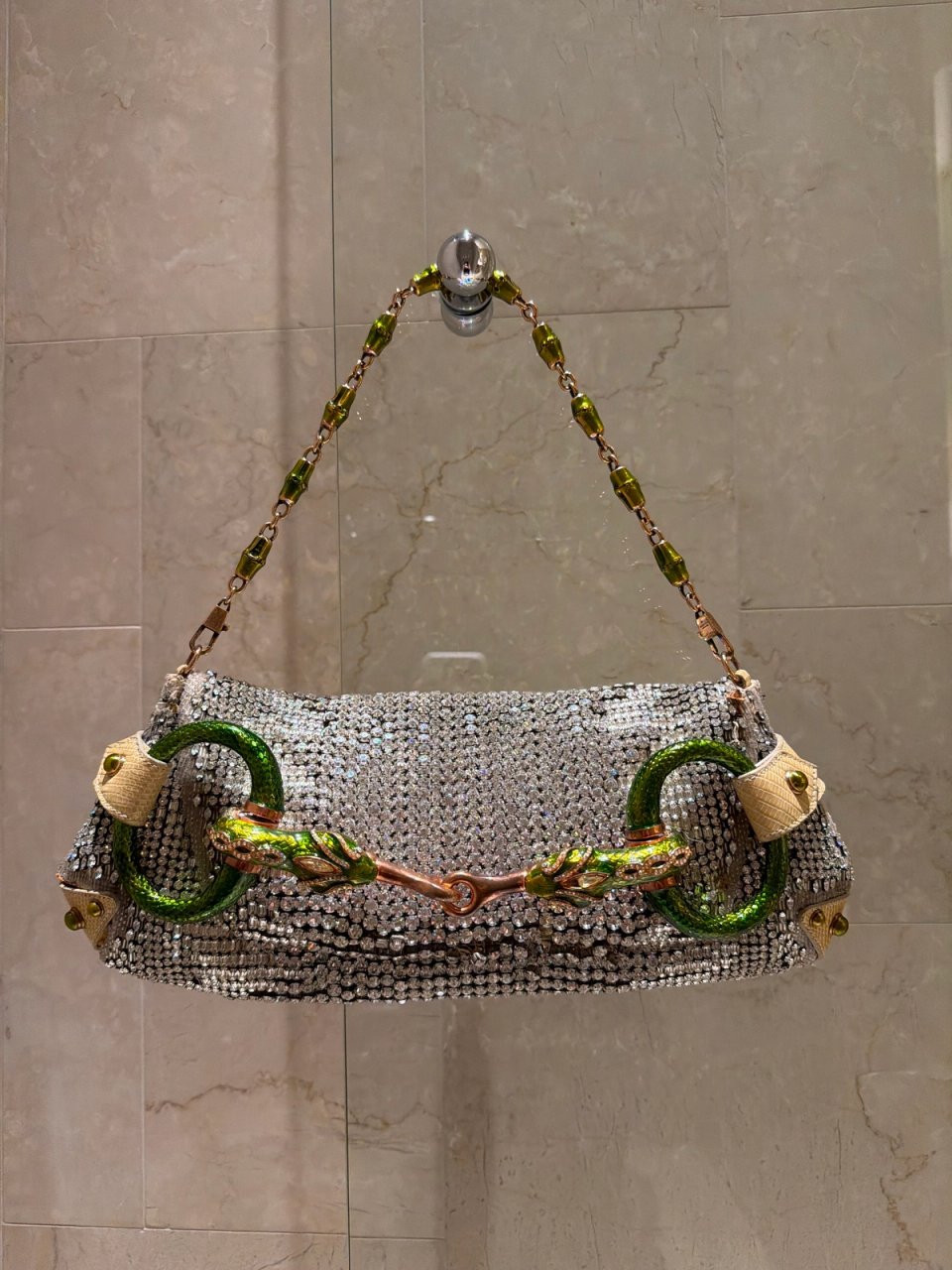
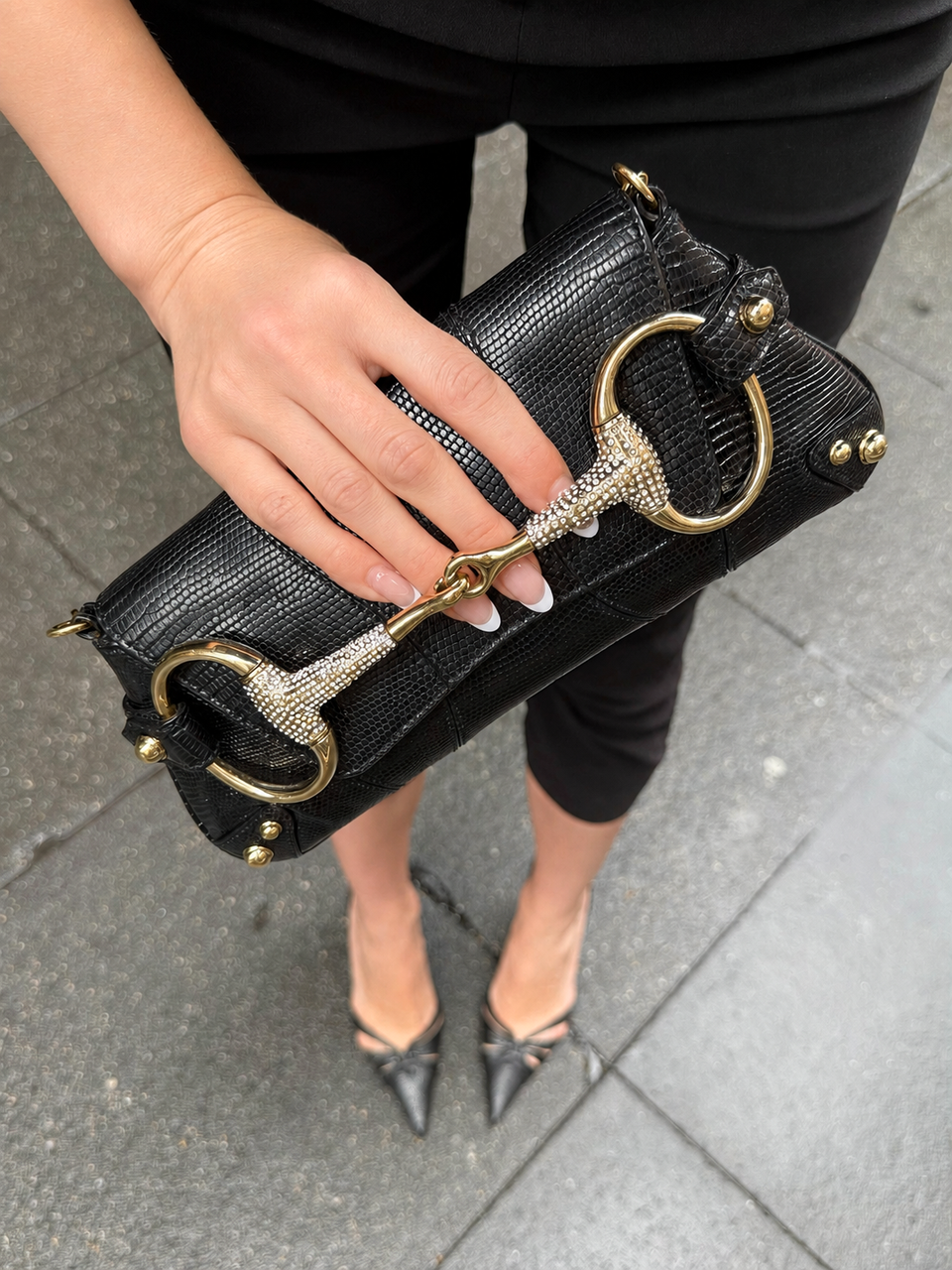
At Into Archive, we have seen the obsession firsthand. Tom Ford-era Gucci bags have repeatedly gone viral across social media, particularly the highly recognizable Horsebit styles that defined the house's early-2000s aesthetic. Now, two more rare examples have arrived: a Gucci by Tom Ford 2000s Black Lizard Leather GG Rhinestone Horsebit Bag and a Gucci by Tom Ford 2004 Limited Edition Crystal Serpent Head Horsebit Bag. Both capture the excess, glamour and unmistakable attitude that made vintage Gucci by Tom Ford so collectible today.
The History of the Gucci Horsebit
The Horsebit is one of Gucci's most recognizable house codes, but its history predates Tom Ford by decades. Originally inspired by equestrian hardware, the motif became a defining part of Gucci's identity before Ford transformed it into something much more provocative.
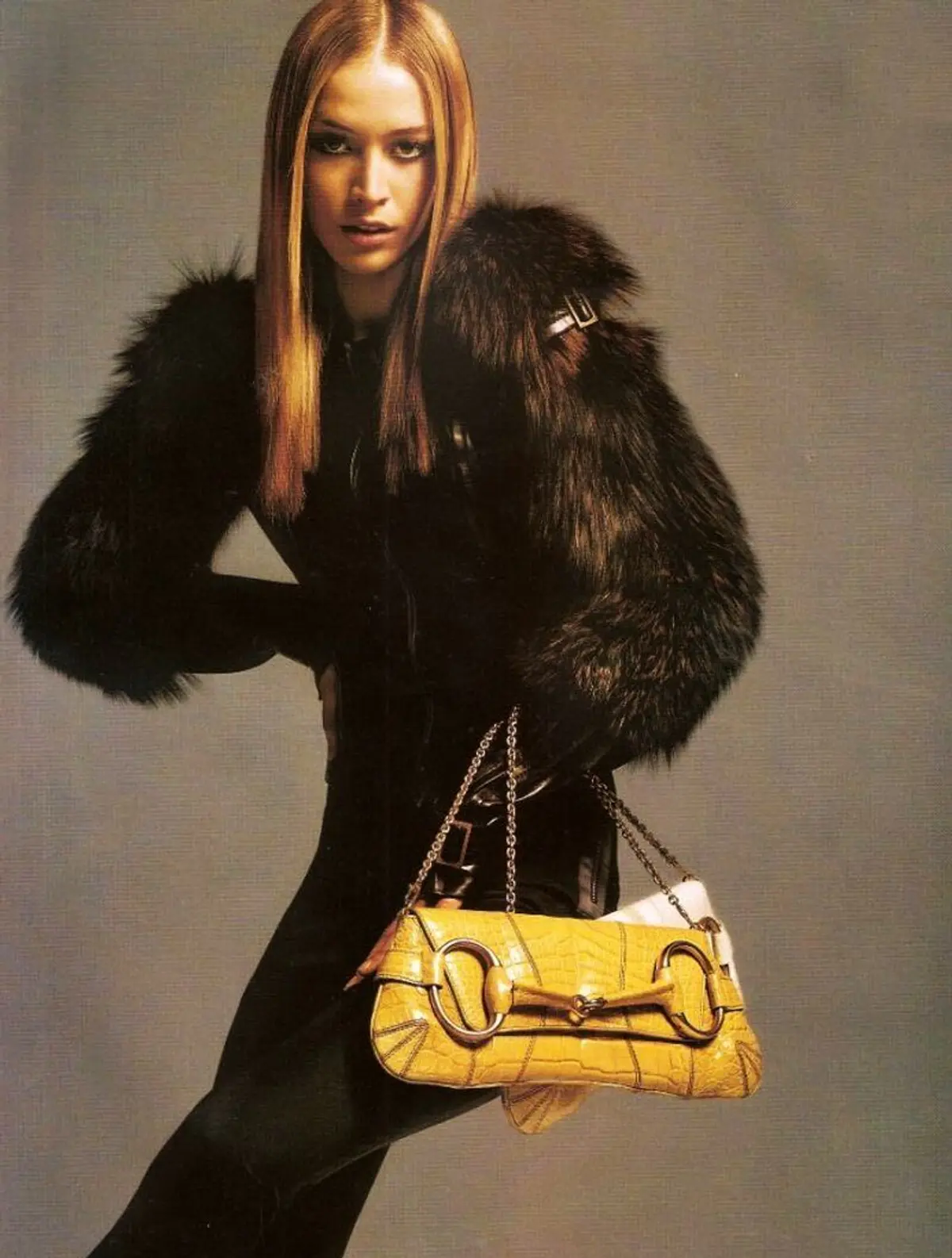
During Ford's tenure at Gucci, traditional house signatures were exaggerated rather than treated delicately. The Horsebit became larger, more sculptural and more glamorous, appearing across ready-to-wear, accessories and handbags. Instead of functioning as a subtle heritage detail, it became the centerpiece.
That approach was everywhere in Tom Ford's early-2000s Gucci collections. His Fall 2003 runway was filled with sharp tailoring, leather, corsetry, revealing silhouettes and polished eveningwear, creating the seductive, maximalist image that would become synonymous with his Gucci era. The accessories followed the same formula, with the Horsebit bag emerging as one of the collection's most recognizable pieces.
The original Gucci Horsebit clutch appeared across the Fall 2003 and Spring 2004 collections, with its elongated silhouette and oversized hardware offering a distinctly Tom Ford interpretation of the house's equestrian heritage. Two decades later, the design would return to the runway and send a new generation searching for the vintage originals.
Tom Ford Gucci and the Return of the 2000s
The renewed interest in Tom Ford Gucci is part of a much larger fashion obsession with the early 2000s. Styles once considered overly glamorous or excessive are increasingly being reexamined as some of the most exciting pieces in the vintage and archival fashion market.
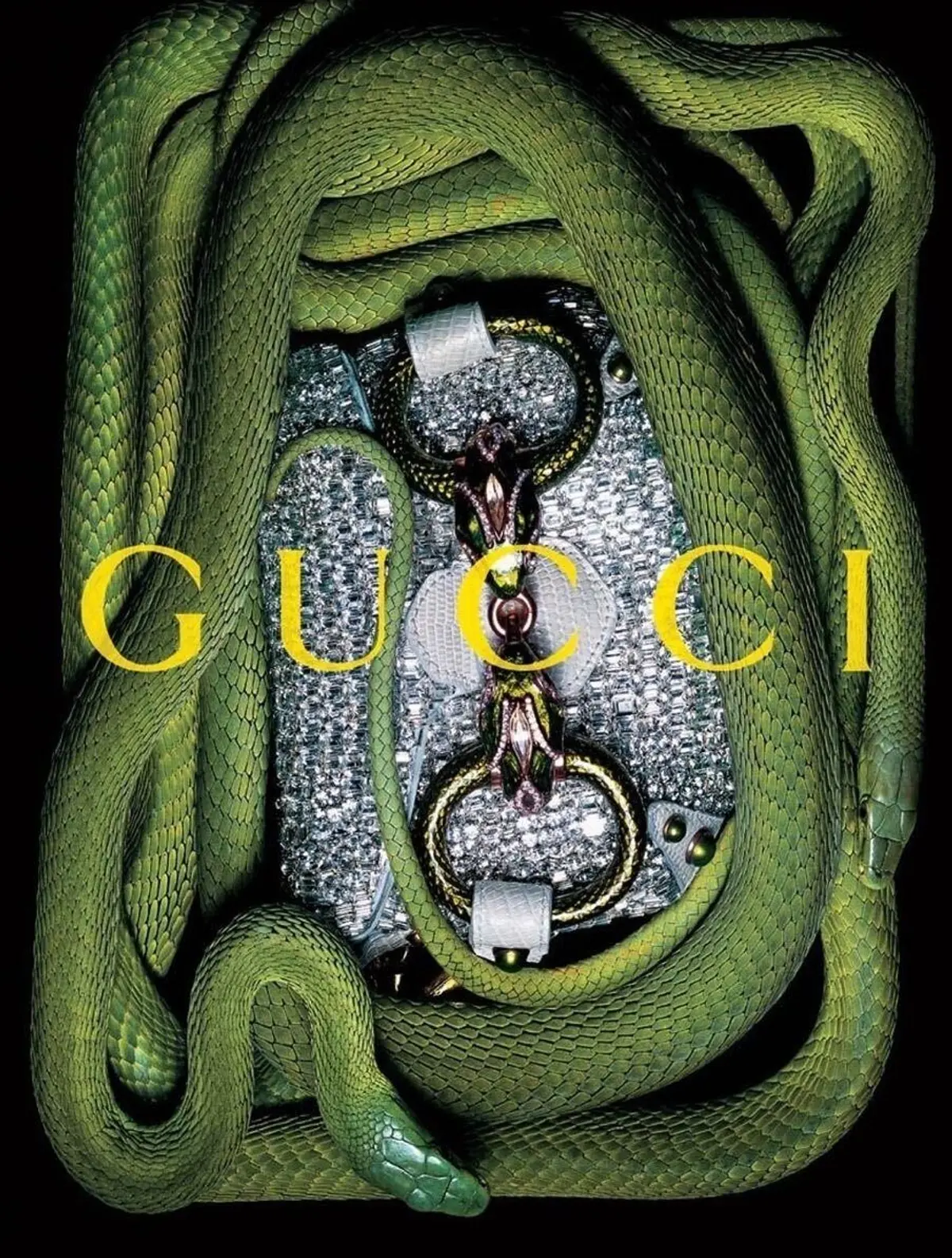
Gucci itself returned to the Horsebit for Fall 2023, revisiting the iconic silhouette more than twenty years after its original appearance. The runway revival brought renewed attention to vintage Gucci Horsebit bags, particularly the original Tom Ford-era designs that inspired the collection.
The timing says a lot about how fashion understands its own archive. A reissue can recreate a silhouette, but an original carries something else: the materials, proportions and cultural context of the period that produced it.
That is what makes vintage Gucci bags from the Tom Ford era so compelling. They are not simply references to the early 2000s. They are the actual objects that defined it.
The Black Lizard Gucci Horsebit Bag
Our Gucci by Tom Ford 2000s Black Lizard Leather GG Rhinestone Horsebit Bag is a particularly maximalist example of the designer's approach to Gucci accessories. Crafted in black lizard leather and finished with the house's GG motif, the bag is centered around an embellished Horsebit detail covered in rhinestones.
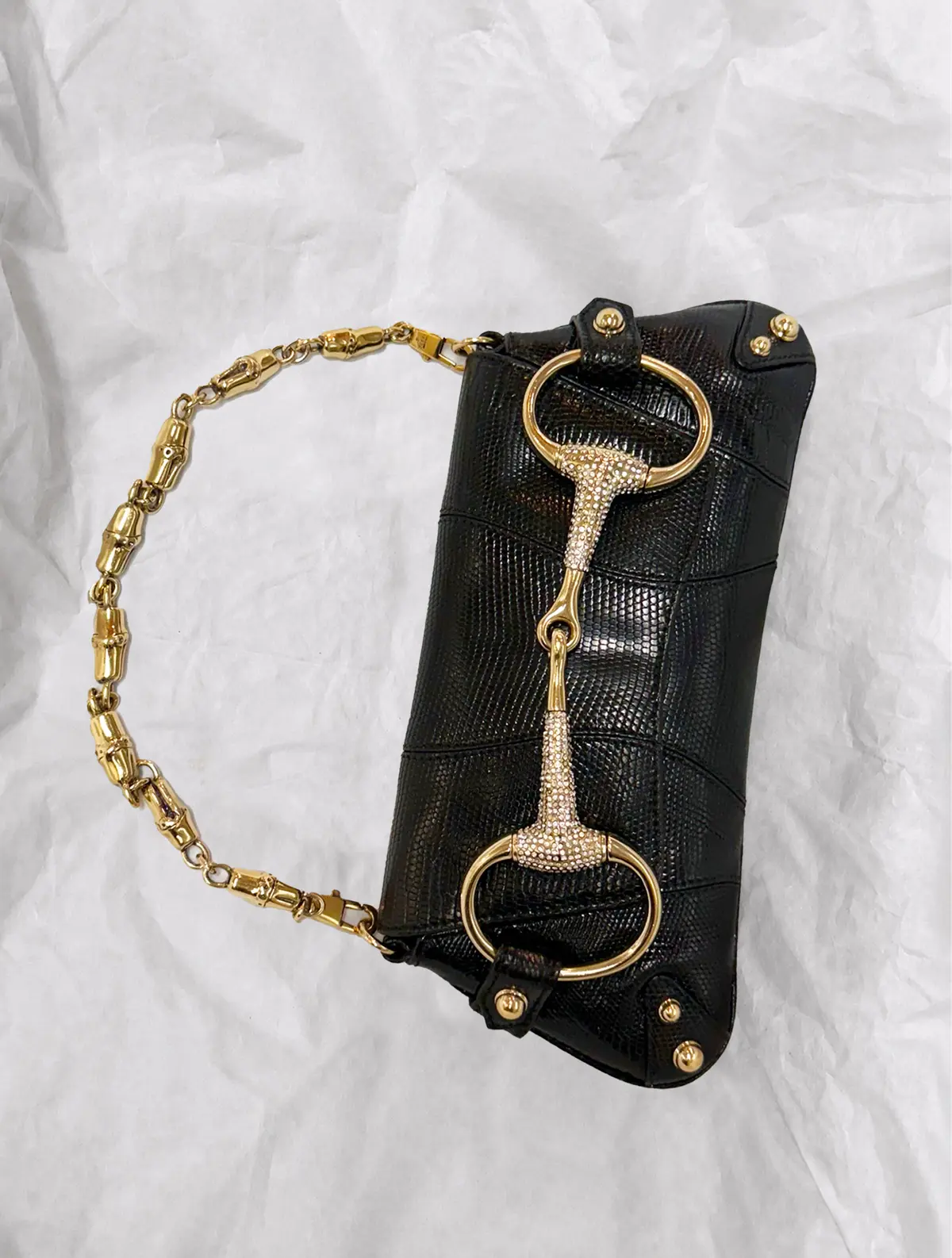
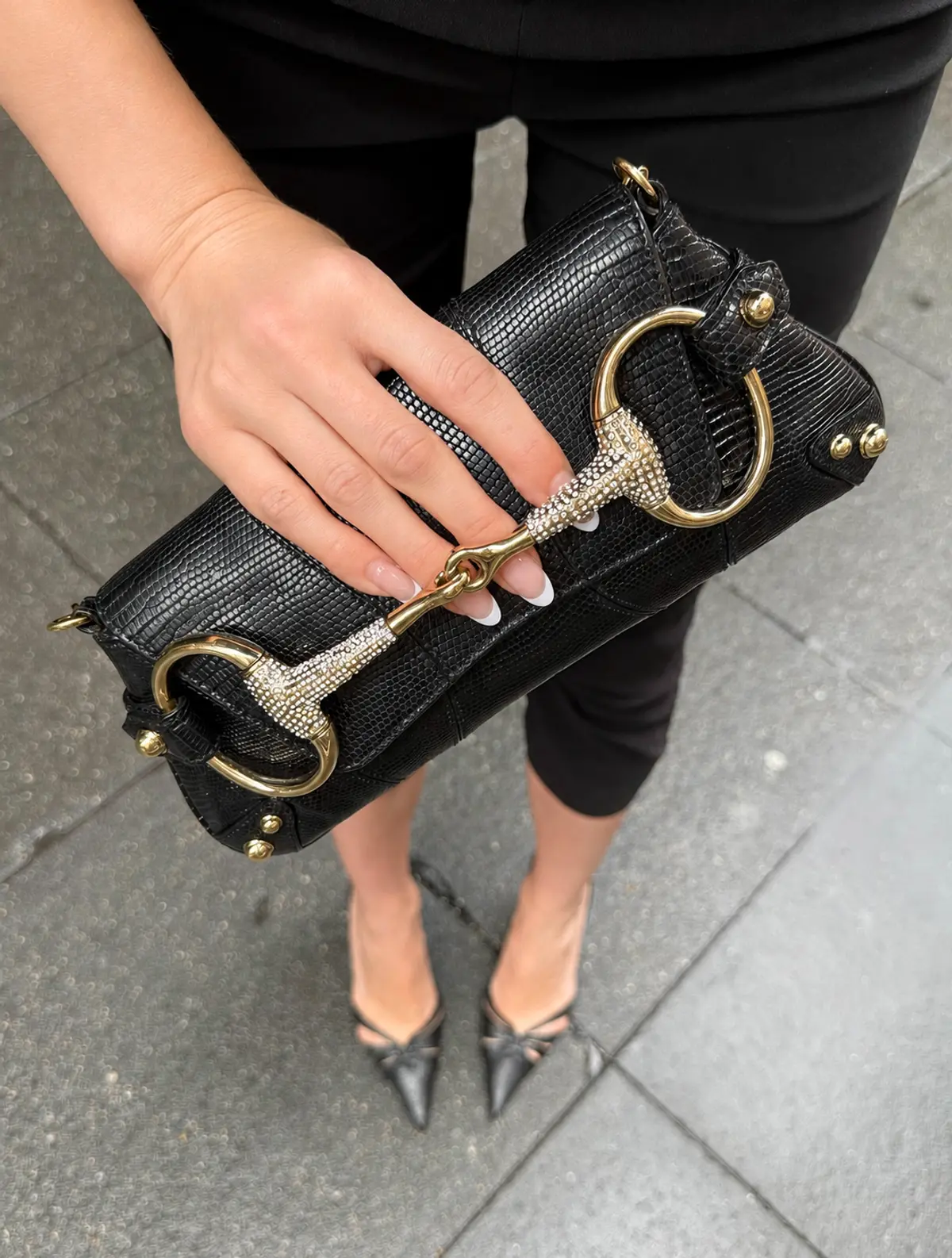
It is difficult to imagine a more concentrated version of the Tom Ford Gucci aesthetic. Exotic leather, recognizable monogramming and oversized embellishment come together in a handbag that refuses to be background decoration.
The Horsebit itself almost becomes jewelry. Rather than simply identifying the bag as Gucci, it dominates the design and gives the silhouette its unmistakable character. This is exactly what Ford did so well throughout his tenure: take an established Gucci code and push it until it became something new.
For collectors interested in archival Gucci, pieces like this are especially significant because they represent a very specific moment in the house's history. They belong to the period when Tom Ford had transformed Gucci into one of fashion's most sexually charged and commercially powerful brands.
The 2004 Crystal Serpent Head Horsebit Bag
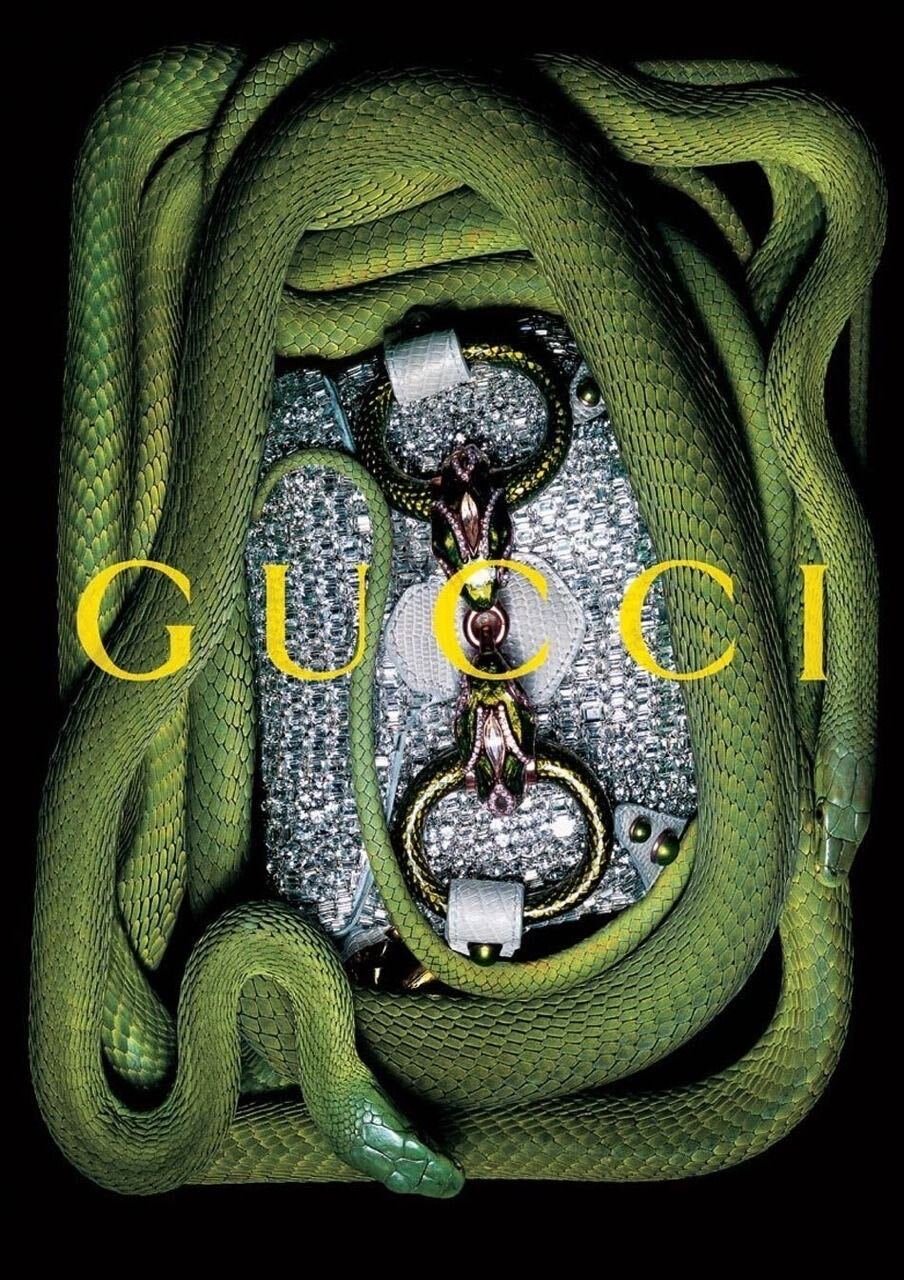
Then there is the Gucci by Tom Ford 2004 Limited Edition Crystal Serpent Head Horsebit Bag, an even more extravagant interpretation of the same idea.
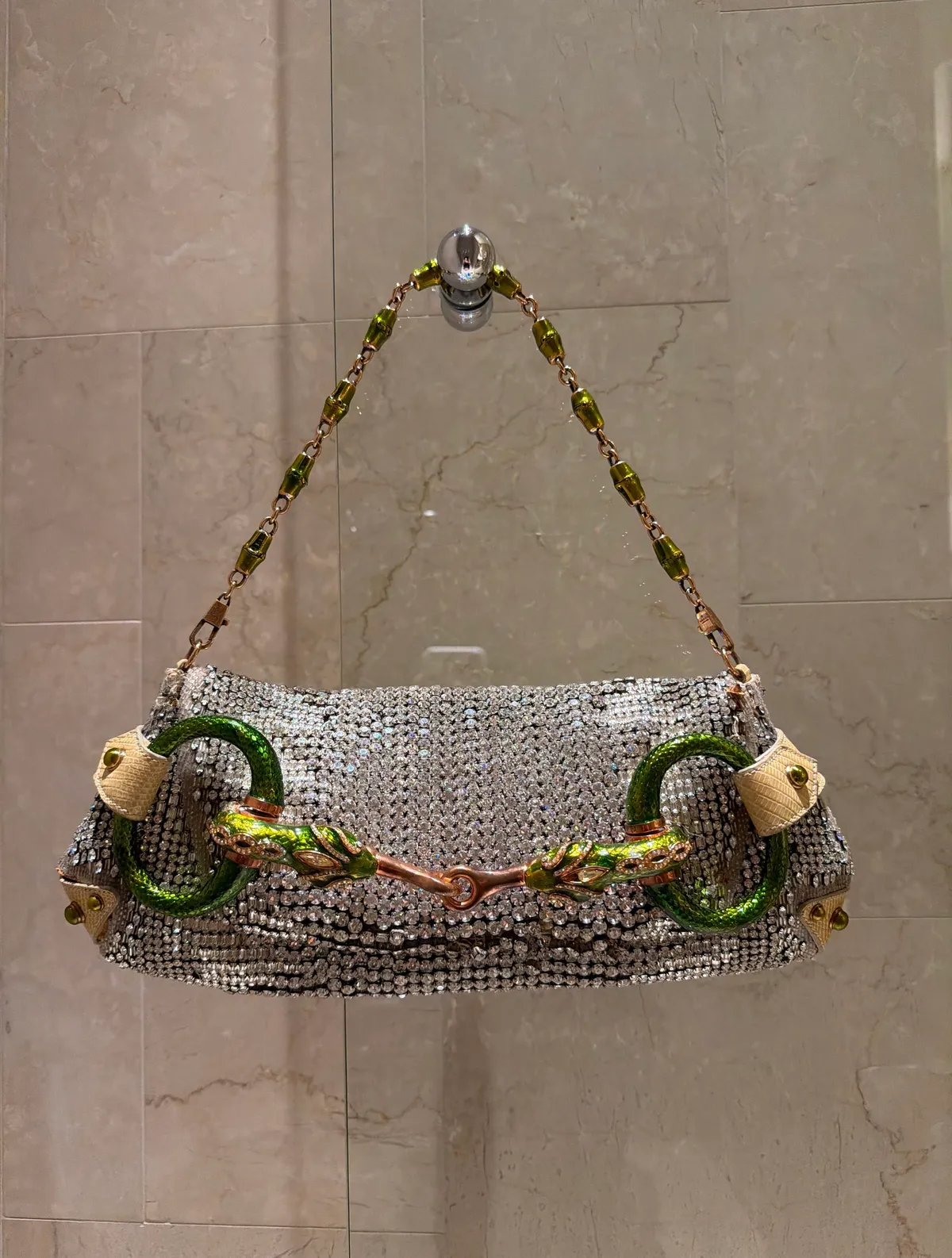
The limited-edition design replaces the expected Horsebit treatment with a crystal-covered serpent head, turning the bag's hardware into a sculptural focal point. It is strange, glamorous and unapologetically excessive, which is precisely why it feels so representative of late Tom Ford Gucci.
The 2004 date is significant. This bag belongs to the final chapter of Ford's tenure at Gucci, the same year that his Fall 2004 collection became his farewell to the house. That final runway brought together many of the signatures that had defined his Gucci: dramatic eveningwear, sensual silhouettes, luxurious materials and an almost theatrical approach to glamour.
The serpent bag feels like an accessory from that same world. If the Horsebit represented Gucci's equestrian heritage, Ford's version was interested in turning that heritage into fantasy.
Why Tom Ford Gucci Still Matters
It would be easy to dismiss the current interest in Tom Ford Gucci as another cycle of Y2K nostalgia. But the continued demand for original pieces suggests something more substantial is happening.
The early 2000s are increasingly being treated as an important period in fashion history, particularly for accessories. Designers, stylists and collectors are looking beyond contemporary releases and returning to the original bags, shoes and jewelry that shaped the visual language of the era.
Tom Ford's Gucci is particularly relevant because it existed at the intersection of fashion, celebrity culture and overt luxury. His designs were made to be seen. They were glamorous without apology and recognizable without needing an explanation.
That quality feels especially appealing now.
After years of minimalism and quiet luxury dominating the conversation around handbags, a rhinestone Horsebit or crystal serpent head feels almost radical. These bags are not trying to disappear into a wardrobe. They are designed to become the most memorable part of it.
The Original Horsebit vs. the Revival
Gucci's return to the Horsebit in 2023 only reinforced the appeal of the originals. The contemporary versions introduced the silhouette to a new audience, while vintage collectors began looking more closely at the Tom Ford-era bags that started it all.
There is an important difference between wearing an archival Gucci Horsebit bag and wearing a modern interpretation of one. The newer design can reference the past, but the vintage version is the past.
Its proportions, materials and construction belong to the moment when Ford was redefining Gucci. Its wear can tell you that it has actually lived through the years since. And its rarity means that no two pieces necessarily feel exactly the same.
For an archival fashion collector, that history is part of the value.
So, Who Killed Tom Ford Gucci?
Maybe nobody did.
Tom Ford's time at Gucci ended in 2004, but his influence continues to appear everywhere from contemporary runways to vintage stores and celebrity wardrobes. The Horsebit has been revived, referenced and reinterpreted, yet the original Tom Ford Gucci bags continue to attract the most attention.
Perhaps that is because the archive has something contemporary fashion cannot manufacture: context.
The Gucci Horsebit bag was created during a period when fashion was comfortable with excess, glamour and a certain amount of bad taste. The rhinestones, exotic leather and crystal serpent details were never meant to be understated. They were meant to be looked at.
And twenty years later, people are still looking.
That may be the real reason Tom Ford Gucci keeps going viral. The bags never stopped being good. Fashion just had to catch up with them again.
→ Shop the Gucci by Tom Ford 2000s Black Lizard Leather GG Rhinestone Horsebit Bag
→ Rent the Gucci by Tom Ford 2004 Limited Edition Crystal Serpent Head Horsebit Bag
→ Explore our archival Gucci collection
→ Book a private showroom appointment
About Into Archive
Into Archive is a New York-based archival fashion showroom specializing in rare and collectible designer pieces. Our collection spans iconic fashion houses and designers across decades, connecting collectors, stylists, celebrities and fashion enthusiasts with pieces that continue to shape fashion history.